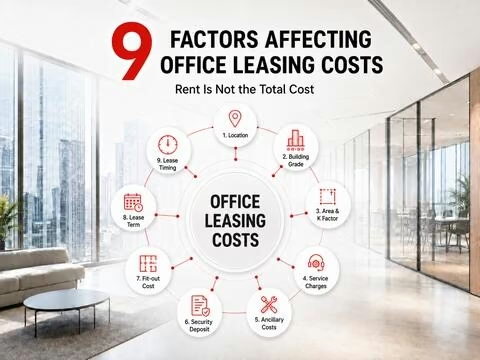
Nine factors affecting office rental costs include: building location and area, building grade, leased area and space efficiency ratio, service and management fees, ancillary costs, security deposit, initial fit-out costs, lease term, and timing of lease. Many businesses, when comparing options, focus only on the quoted rent per m² without fully understanding which factors actually determine that price – making it difficult to negotiate or assess whether a given rate is genuinely reasonable. This article analyzes the cost structure of office rentals, the nine key factors influencing pricing, and how to optimize costs effectively without compromising operational quality.
What does office rental cost consist of?
Office rental costs fall into four main groups: fixed monthly costs, variable costs based on usage, one-time costs, and costs adjusted over the lease term – total actual costs are often significantly higher than the initially quoted rent.
1. Fixed monthly costs
Includes the base rent per m²/month, building service/management fees, and VAT – these are predictable costs that remain stable in the short term.
2. Variable costs based on usage
Includes electricity, parking fees, overtime access fees, and internet – these vary depending on the frequency and actual level of use, and are difficult to predict accurately before operations begin.
3. One-time costs
One-time costs include the security deposit, interior design and construction costs, and premises reinstatement costs at the end of the lease – this group is easily overlooked during initial budgeting because these hidden costs only surface when renting an office only arise at the beginning or end of the lease term.
4. Costs adjusted over the lease term
This group receives less attention but has a significant long-term impact – including rent escalation clauses, with rent typically fixed for the first 1–2 years before being adjusted at an agreed rate. Businesses signing long-term leases should pay particular attention to this group, as cumulative increases over multiple years can materially affect the total rental budget.
These four cost groups are not fixed and are influenced by various factors – from location and building grade to timing of lease. The following section analyzes the nine specific factors that determine office rental costs that businesses need to understand.
What factors determine office rental costs?
Office rental costs are influenced by nine main factors: building location and area, building grade, leased area and space efficiency ratio, service and management fees, ancillary costs, security deposit, initial fit-out costs, lease term, and timing of lease. Understanding each factor helps businesses budget more accurately and negotiate from a more informed position, rather than simply comparing quoted rental rates at face value.
Building location and area
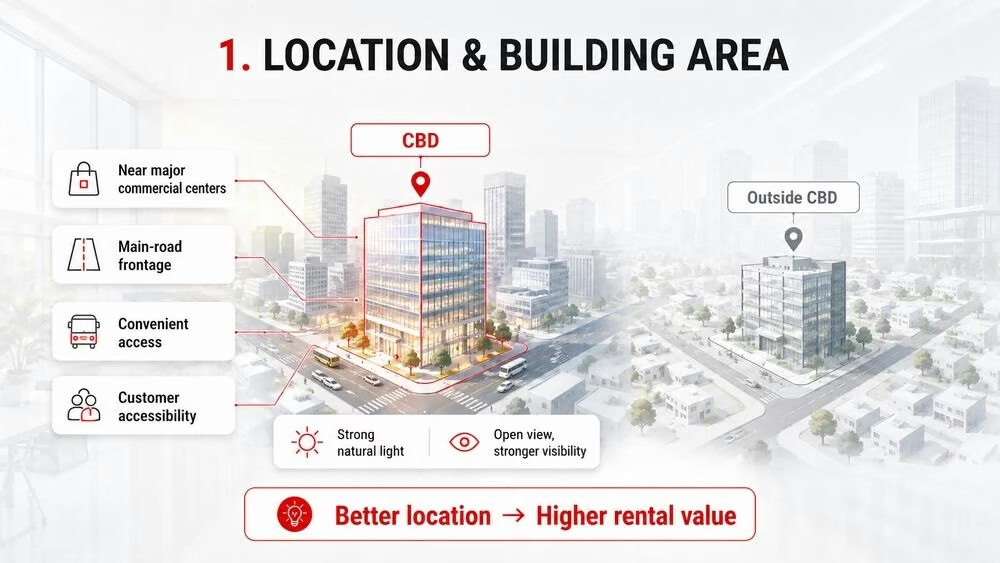
The closer an office is to the Central Business District (CBD), a major road frontage, or a key arterial route, the higher the rental rate compared to peripheral or alley locations – due to customer accessibility and convenience of commute. Even within the same building, different positions can carry different prices – floors with good views, ample natural light, or proximity to elevators typically command higher rates than darker or less accessible units.
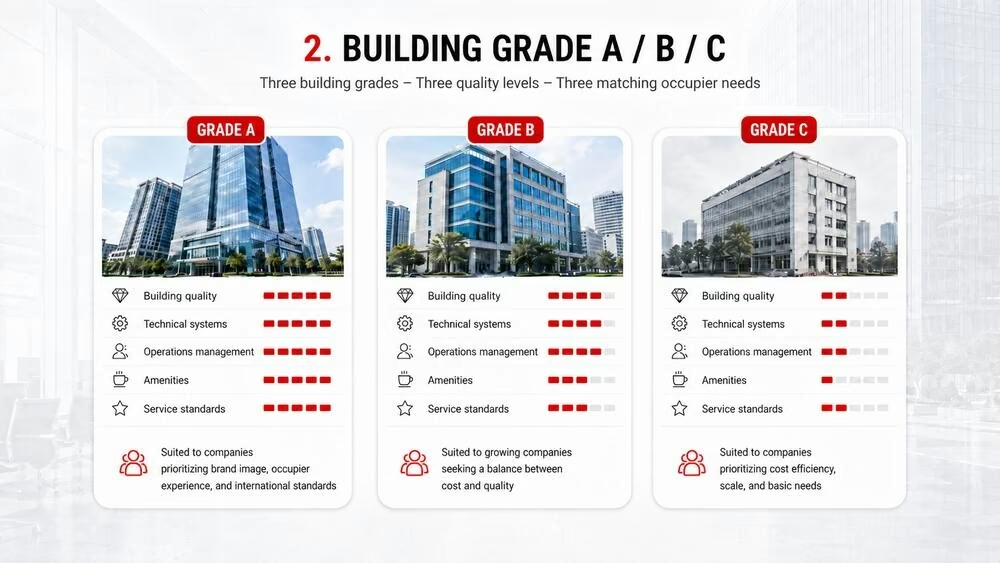
Building grade (A/B/C)
Grade A buildings with international standards and professional management carry significantly higher rents and service fees than Grade B and C. This price difference directly reflects the quality of technical systems, the professionalism of the management team, and the range of amenities – businesses should assess whether the premium is justified by their actual requirements, rather than defaulting to the highest grade.
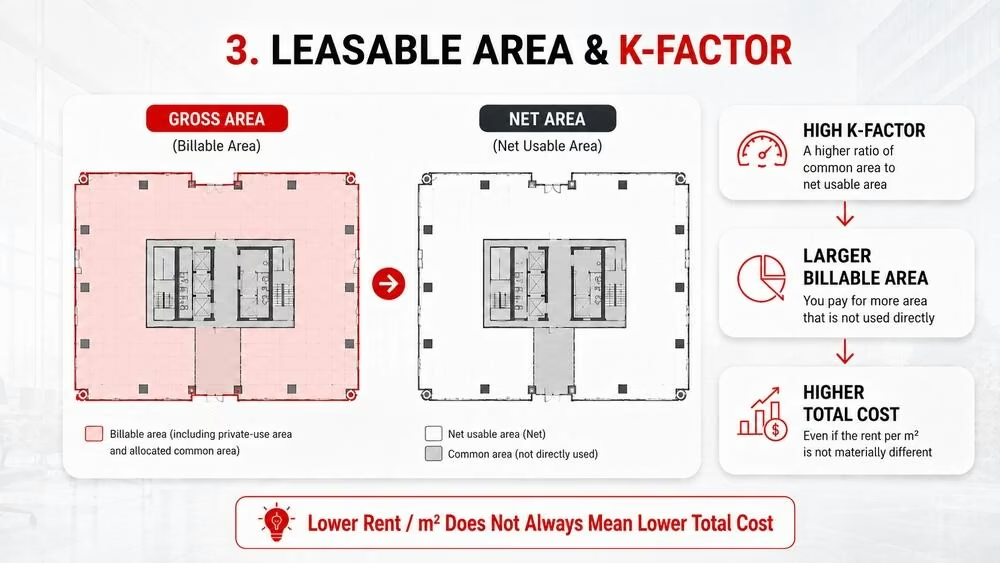
Leased area and space efficiency ratio (K-factor)
Rent is typically quoted per m²/month, but actual usable area also depends on the K-factor – the ratio between the nominal leased area (Gross) and the actual usable area (Net). The higher the K-factor, the more businesses pay for shared spaces, even if the quoted rate appears attractive – this is a factor easily overlooked when comparing prices across buildings.
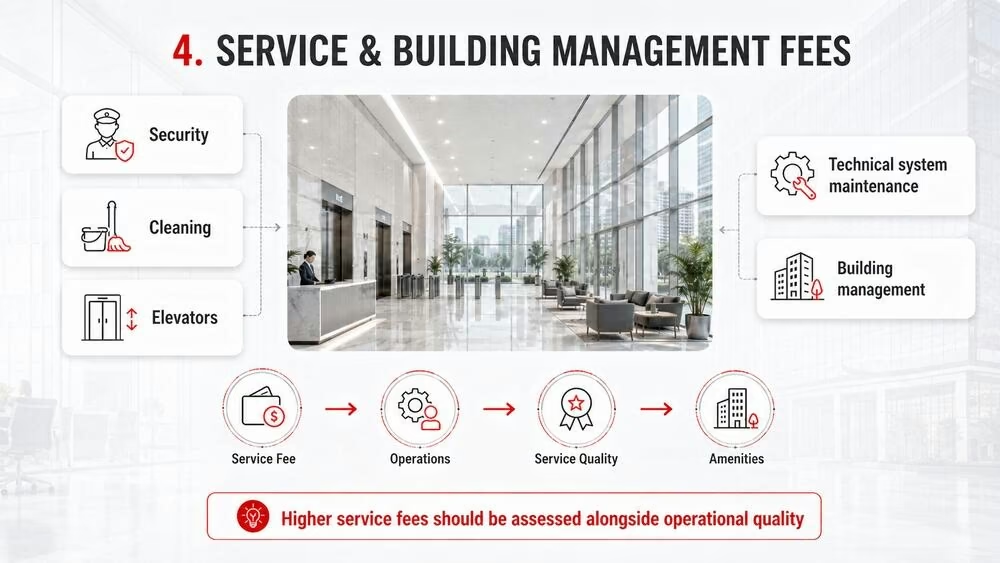
Service and management fees
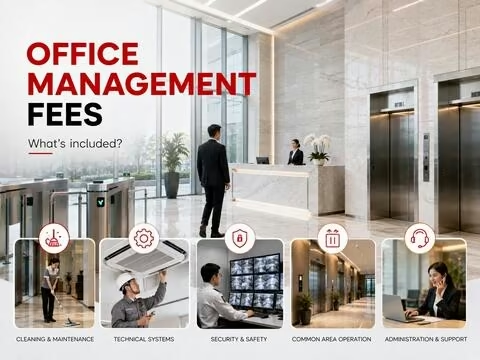
Service fees cover the operation of common areas such as security, cleaning, elevator operation, and technical system maintenance. These fees generally increase in line with building grade – Grade A and B buildings typically charge higher service fees than Grade C, accompanied by more professional management standards and a broader range of amenities.
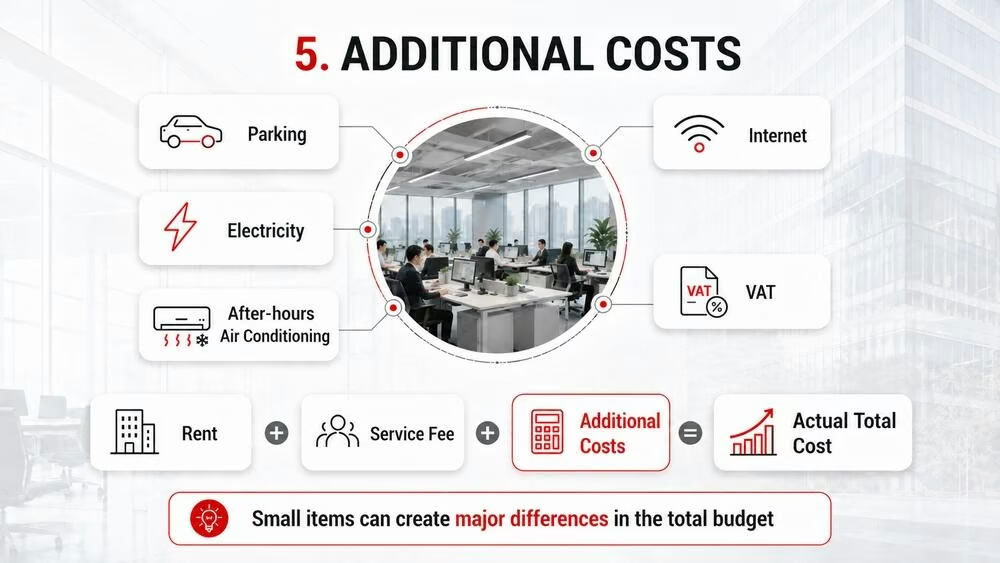
Ancillary costs (parking, after-hours air conditioning, internet, VAT)
Beyond rent and service fees, businesses need to account for ancillary costs such as parking fees based on headcount, electricity for air conditioning during after-hours work, internet fees if not bundled, and VAT applied to the total contract value. For businesses that regularly work after hours (such as IT and BPO companies), after-hours air conditioning charges can significantly impact the total budget if the building applies high hourly or chilled-air-volume-based fees.
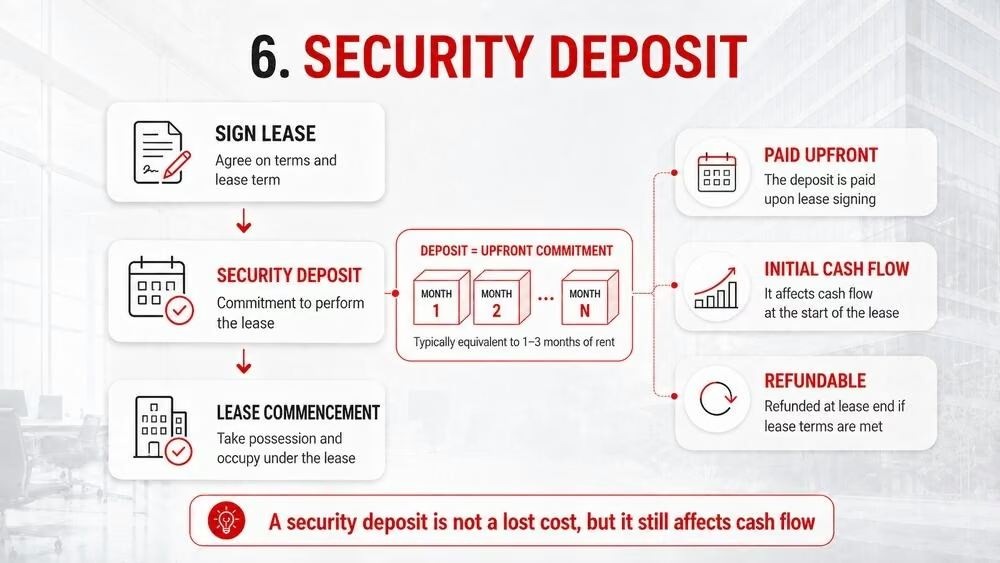
Security deposit
The office lease deposit is a one-time upfront payment, typically equivalent to several months’ rent, to secure the tenant’s commitment to the lease. Although refundable at the end of the contract under the agreed conditions, it still affects the business’s initial cash flow – particularly for high-value contracts.
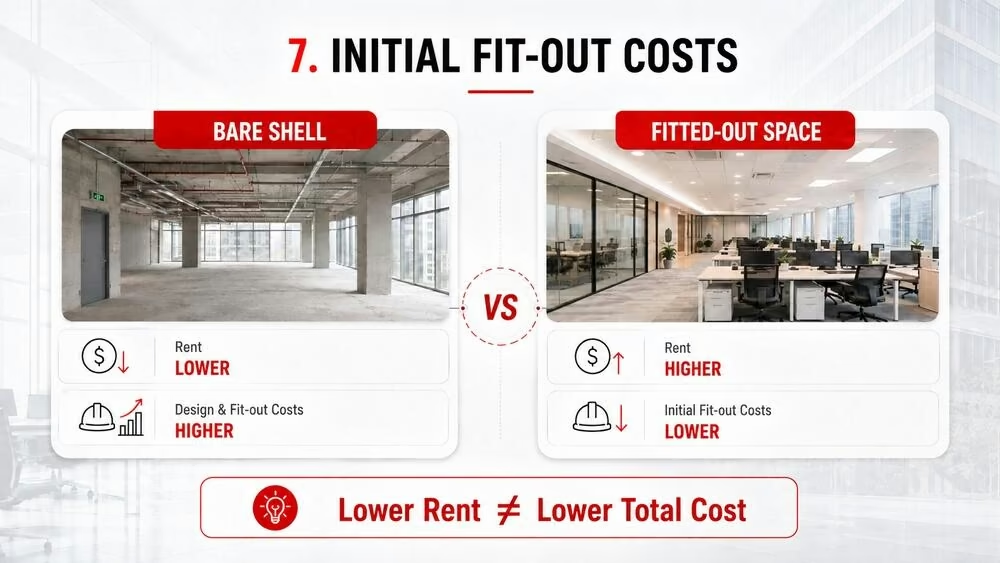
Initial fit-out costs
Design and interior construction costs depend on the condition in which the premises are handed over – shell-and-core spaces (bare concrete only) carry lower rents but require the business to invest fully in fit-out, while base-built or furnished spaces typically come with higher rents but lower upfront investment. Businesses should weigh these two options based on their long-term usage plans.
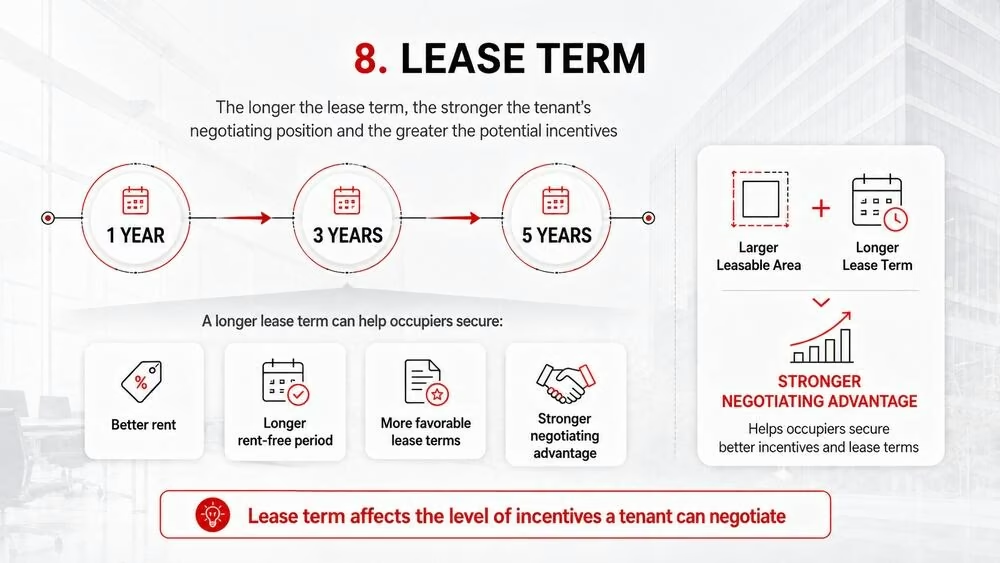
Lease term
Long-term leases (three to five years or more) typically come with benefits such as fixed pricing or longer rent-free periods compared to short-term leases. Larger leased areas also tend to give businesses stronger leverage to negotiate better discounts, as the contract value is sufficient for landlords to consider offering incentives.
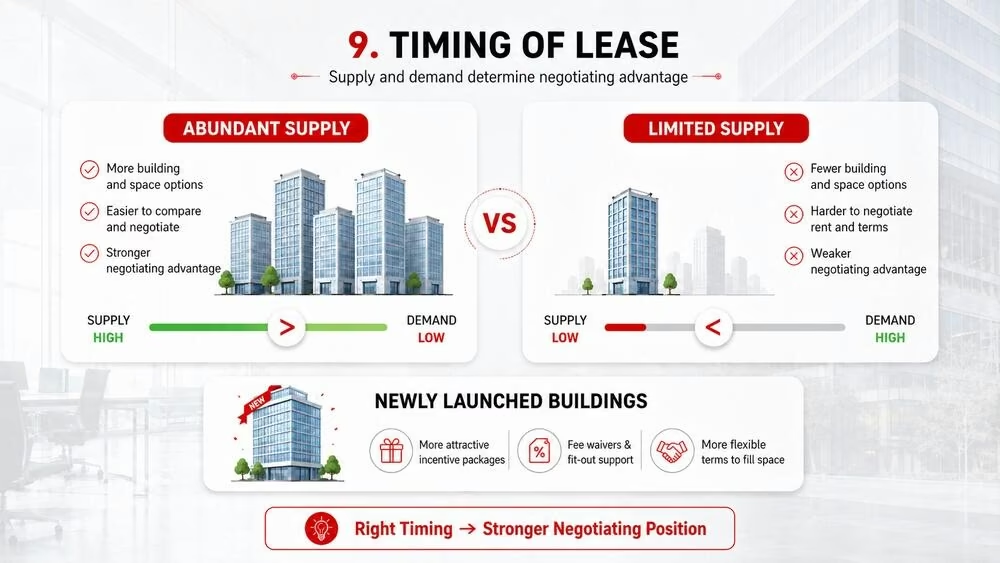
Timing of lease
Rental rates are also influenced by market supply and demand at the time of negotiation – when suitable space is scarce or a building has high occupancy, landlords are generally less inclined to offer incentives compared to periods of abundant supply. Businesses can take advantage of moments when a newly operational building needs to fill up quickly, or during periods of market softening, to negotiate more favorable terms.
How to optimize office rental costs?
Optimizing office rental costs requires a strategic approach from the needs assessment stage, through option comparison, to contract negotiation – rather than simply seeking the lowest rent per m².
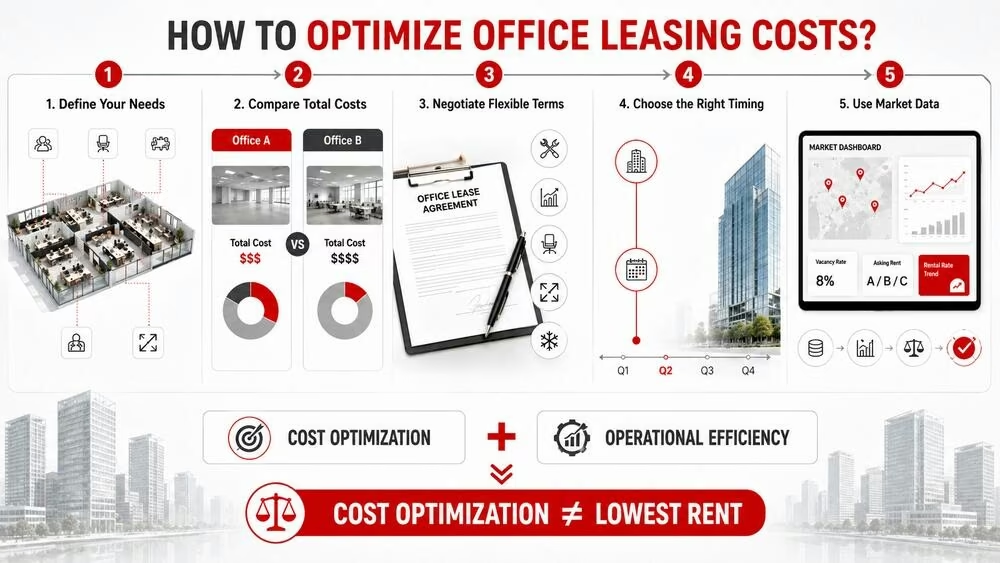
Accurately define space requirements before searching
Businesses should assess staffing levels and operational needs over the next three to five years, including meeting room requirements, frequency of client visits, and expansion plans – rather than only counting current headcount. Renting too much space causes unnecessary expense, while too little impacts productivity; defining requirements accurately from the outset helps avoid both situations.
Compare total cost of occupancy, not just rent per m²
A lower-quoted office is not necessarily a more economical choice if it requires significant investment in fit-out or generates higher operational costs. Businesses should calculate the total cost of occupancy – including rent, service fees, fit-out costs, and ancillary expenses – before comparing options, rather than focusing solely on the headline quoted rate.
Negotiate flexible lease terms
Beyond the rental rate, businesses should proactively negotiate a fit-out free period, annual rent escalation caps, landlord contributions to premises improvements, and the right of first refusal to expand when needed. For businesses that regularly work after hours, the method of calculating after-hours air conditioning charges should also be agreed upfront. In many cases, these terms deliver greater value than reducing the rate by a few units per square metre.
Choose the right time to lease within budget
Rental rates and incentive levels tend to fluctuate with market supply and demand conditions at any given time. Businesses can take advantage of newly operational buildings that need to fill up quickly, or periods when market supply is abundant, to gain additional negotiating leverage on price and other terms.
Work with an advisory firm with market data
The main challenge for businesses when renting an office is typically not finding a space, but rather evaluating total cost of occupancy and selecting a model suited to their growth plan. Working with a market-knowledgeable advisor helps businesses compare multiple options simultaneously, identify potential hidden costs, and negotiate from a stronger position using real market transaction data – and typically at no additional cost, as brokerage fees are paid by the landlord.
RSQUARE – Free office leasing advisory
RSQUARE supports businesses in analyzing and optimizing office rental costs based on real market data, helping businesses understand total cost of occupancy before making a leasing decision.
- Market rate data by area and building grade: drawn from a database of over 55,000 properties, enabling businesses to benchmark whether a price under consideration is reasonable relative to the market
- Total cost of occupancy calculation for each option: supporting businesses in accounting fully for rent, service fees, fit-out costs, and ancillary expenses to compare options accurately, rather than relying on quoted rates alone
- Representation in negotiating favorable terms: fit-out free periods, annual rent escalation caps, and other incentives, based on real transaction data from the market
- Advice on optimal timing: helping businesses identify favorable market conditions to gain additional negotiating leverage on price
- Completely free service for tenants: brokerage fees are paid by the landlord; businesses incur no additional cost when using the advisory service
For businesses requiring support in calculating and optimizing office rental costs within budget, RSQUARE provides free advisory services, accompanying businesses from cost analysis through to contract finalization in Ho Chi Minh City and Hanoi.
Frequently asked questions about office rental costs
Does office rental cost include management fees?
This depends on the individual building’s contract – some include management fees within the quoted rent, while others list them as a separate line item. Businesses should clarify this from the outset and request an itemized breakdown to avoid miscomparison when evaluating different options.
Does a short-term lease increase office rental costs?
There is a tendency for this – short-term leases typically come with fewer incentives such as long-term fixed pricing or extended fit-out free periods compared to long-term leases. Businesses should weigh the flexibility of a short-term lease against the potentially higher cost per m² that may result.
How many months’ deposit is typically required for office rental?
The standard deposit typically ranges from one to three months’ rent, depending on the type of office and building grade.
Office rental costs are shaped not only by the listed price per square meter, but also by a combination of factors including location, building grade, actual leasable area, management fees, overtime fees, utility costs, and contract terms such as deposits and lease duration. Businesses that understand these factors are better positioned to plan their budgets, negotiate lease terms, and avoid unexpected hidden costs.
With extensive experience advising on office leasing in Ho Chi Minh City and office leasing in Hanoi, RSQUARE supports businesses throughout the entire process of searching for, comparing, and negotiating office space — from analyzing the actual costs of each building to helping secure the most favorable contract terms. Contact RSQUARE for tailored advice on office leasing options that fit your budget and operational needs.