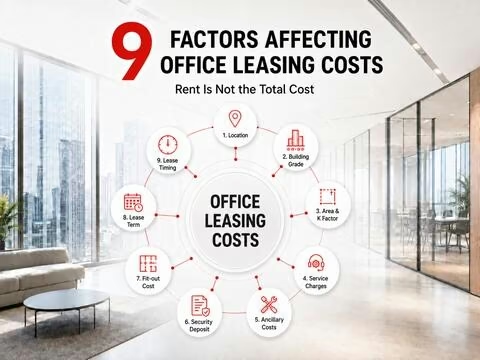
Electricity and water costs in office rentals are operating expenses paid by the tenant for electricity and water consumed during operations. The tenant bears the majority of these costs, though the boundary of responsibility is defined by the lease agreement. Electricity is calculated based on actual consumption multiplied by the unit rate, while water is typically calculated per headcount or per leased area. The building’s unit rate may exceed the original EVN rate due to added operating fees. This article explains how these costs are calculated, the factors that affect them, how to budget for them, and how to account for them as deductible business expenses.

Who pays for electricity and water when renting an office?
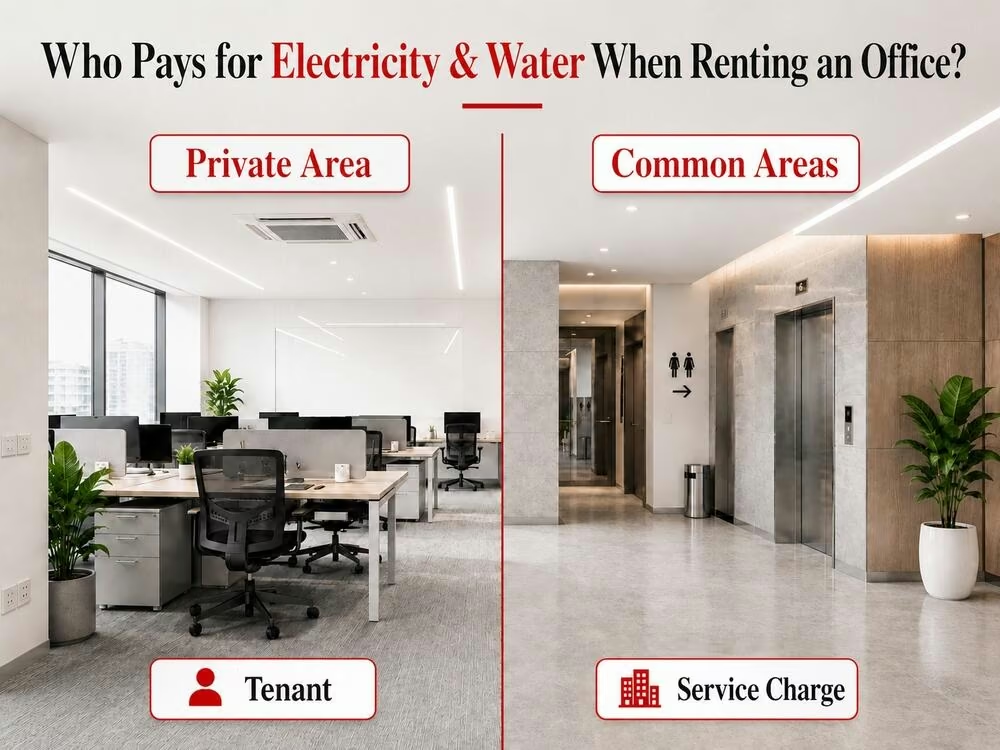
The tenant bears the majority of electricity and water costs, but the boundary of responsibility is defined by the lease agreement. Within the exclusive leased area, the tenant pays 100% based on actual usage. In common areas, the tenant contributes indirectly through monthly service fees.
The exclusive leased area is the portion of the office used solely by the tenant, so the tenant bears all electricity and water costs arising within it. Common areas include lobbies, corridors, elevators, and shared restrooms. Electricity and water in these areas are included in the service fee, allocated proportionally to each tenant by leased area.
There are three common mechanisms for billing electricity and water. Offices with individual meters pay based on actual consumption readings. Serviced offices and coworking spaces include basic electricity and water in the rental price. Electricity and water for common areas are always included in the building management fee.
When issues arise, the responsibility for costs is allocated as follows:
| Incident | Responsible Party | Notes |
| Water leaks or electrical faults due to deteriorating building infrastructure | Landlord | Relates to structural and shared technical systems |
| Losses due to tenant forgetting to switch off equipment or internal equipment failure | Tenant | Usage errors, internal management |
| Exceeding package allowance | Tenant | Excess portion paid per agreement |
The above boundaries reflect market practice. Tenants should carefully review three points in the lease to determine exactly what they are responsible for:
- Applicable rate schedule – whether electricity and water are billed at the original EVN rate or a fixed rate set by the building.
- Central air conditioning electricity – whether billed separately per m² or per hour of after-hours operation.
- Advance deposits – some buildings require a one-month deposit on estimated electricity and water costs upfront.
How is electricity calculated for a rented office?
Office electricity is calculated based on actual consumption measured in kWh multiplied by the unit rate, plus air conditioning electricity if billed separately by the building. The unit rate follows EVN’s commercial tariff or a fixed rate set by the building.
Electricity consumption falls into two categories. The first is lighting and power outlets within the leased area, serving lights, computers, and office equipment. The second is air conditioning electricity, which is typically billed separately in buildings with central air conditioning systems.
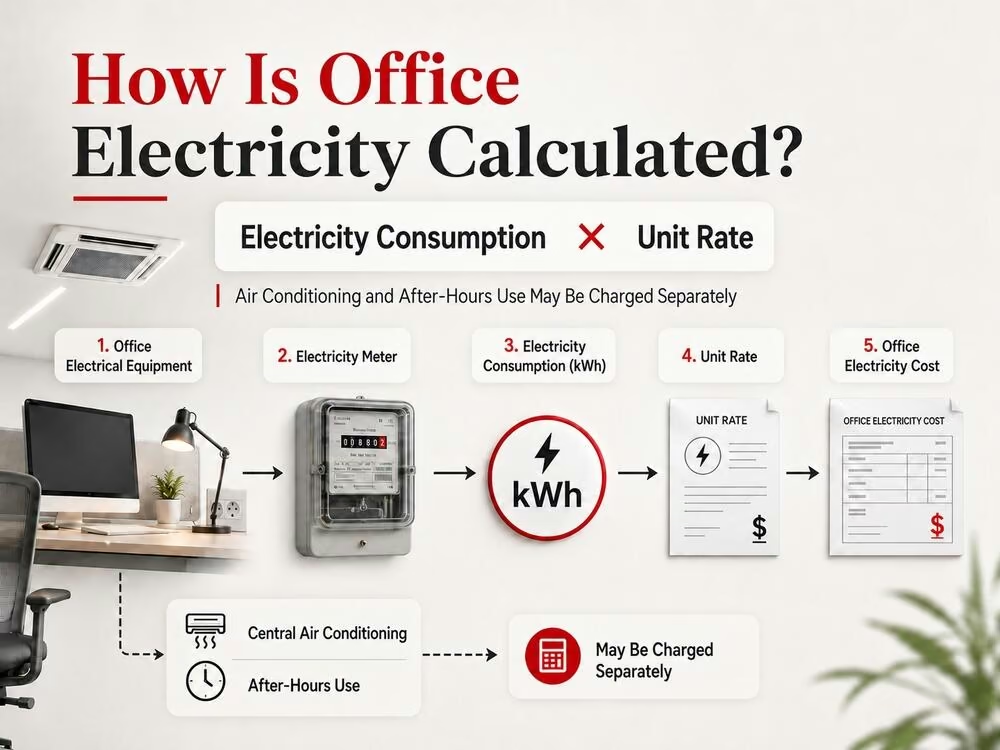
The calculation method varies by type of electricity:
| Type | Common Calculation |
|---|---|
| Lighting and outlets | Individual meter multiplied by kWh rate |
| Local air conditioning (split) | Combined into the tenant’s electricity meter |
| Central air conditioning (VRV, chiller) | Billed separately per leased floor area or metered individually |
| After-hours electricity | After-hours air conditioning surcharge per agreement |
The electricity unit rate is based on one of two foundations. The first is EVN’s commercial tariff, divided into peak, normal, and off-peak periods. The second is a fixed rate set by the building itself, applied uniformly at all times of day.
Before signing the lease, tenants should clarify three points: whether central air conditioning electricity is billed separately or included in the unit rate; the applicable business hours; and the time threshold from which after-hours electricity charges apply.
How is water calculated for a rented office?
Office water costs are typically calculated per headcount or per leased area, as offices rarely have individual water meters per floor. Some buildings include water directly in the monthly service fee.
Water differs from electricity in how it is allocated. The building’s water supply system runs on shared vertical risers serving multiple floors, making it impractical to install individual meters per leased floor. As a result, most buildings estimate water consumption based on headcount or area rather than direct metering.
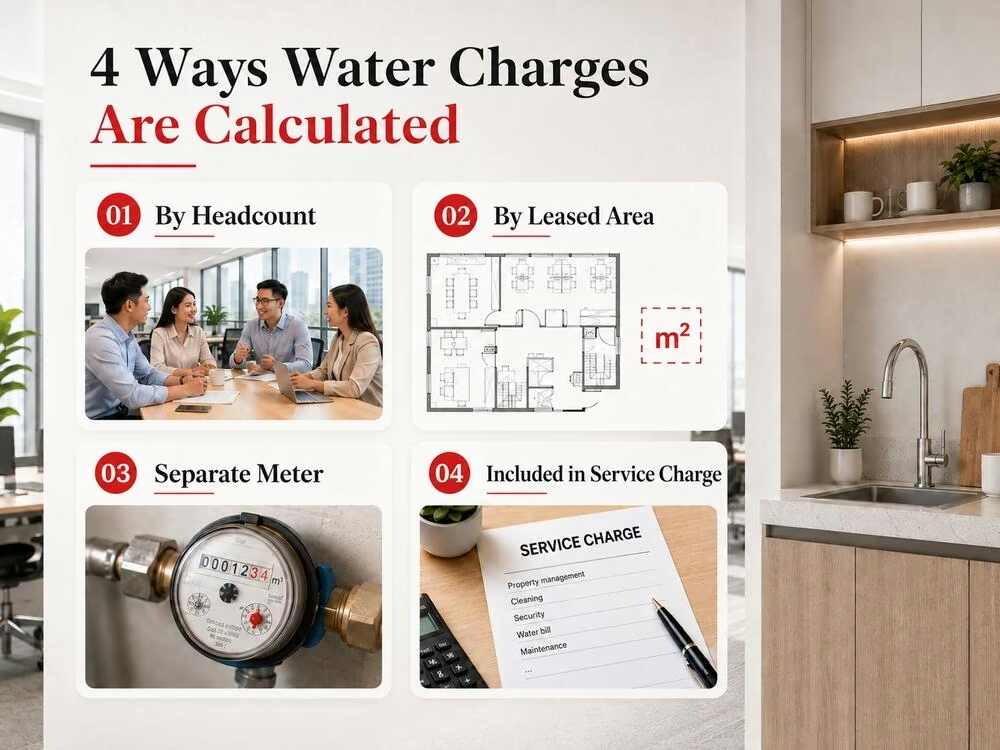
There are four common methods for calculating water costs:
| Method | Mechanism |
|---|---|
| Per headcount | Number of staff × water allowance × unit rate |
| Per leased area | Leased floor area × allocation coefficient |
| Individual meter | Actual reading × unit rate – uncommon |
| Included in service fee | Applied to serviced offices and coworking spaces |
The water unit rate is based on the water utility’s commercial tariff or a fixed rate set by the building. Water costs typically represent a small share of total utility expenses, so most budget-related questions focus on electricity.
Can a building’s electricity and water rates exceed EVN/water utility rates?
A building’s electricity and water rates may exceed the source rates. For offices, the unit rate is typically set by agreement in the lease, allowing the building to add operating fees, system losses, or apply a fixed rate rather than passing through the exact EVN rate.
The key distinction lies in which category of user the regulation applies to. Retail electricity price caps for residential tenants differ from those for offices and commercial users. Many tenants confuse the two categories and form incorrect expectations about the rates applied to them.
Building rates exceed source rates for several operational reasons. Electricity passes through the building’s internal systems, incurring transmission losses, transformer operating costs, central air conditioning expenses, and technical management staff costs. These are added to the final unit rate paid by the tenant.
The rate basis follows EVN’s commercial tariff divided by time-of-use periods. Buildings may apply the highest period rate or set a single flat average rate to simplify billing.
Tenants can identify a rate differential through three signs: a fixed unit rate that does not change by time of day; the building does not issue original EVN invoices; the rate differs significantly from EVN’s published commercial tariff.
Can tenants negotiate electricity and water rates when renting an office?
Tenants can negotiate, but the scope is limited. Electricity and water unit rates typically follow building-wide policy and are difficult to reduce; negotiable elements are more likely to be found in the billing mechanism and supplementary charges.
Negotiating room depends on the tenant’s position. Building grade, leased area, lease term, and occupancy rate all affect negotiating leverage. Tenants leasing large areas on long-term contracts have a clearer advantage when discussing terms.
The base unit rate is difficult to reduce for operational reasons. Buildings apply a uniform rate schedule to all tenants to ensure fairness and ease of management, so individual adjustments are rare.
Rather than focusing on the unit rate, tenants should negotiate more flexible items:
- After-hours electricity fee – the rate and the time threshold from which it applies.
- Water allocation method – whether calculated per headcount or per leased area.
- Electricity and water deposit – the number of months required as an advance.
- Central air conditioning electricity – whether billed separately or included in the general unit rate.
Can tenants request separate electricity and water meters?
Electricity can usually be separated; water is more difficult. Individual electricity meters per leased floor are fairly common, while individual water meters are less practical due to the shared vertical water supply system.
The two systems differ in how separable they are. Electricity can be sub-metered at the floor distribution board, allowing consumption per floor to be measured. Water runs on shared risers throughout the building, so separation requires pipe modifications that are costly and rarely approved.
The feasibility of separate metering varies by office type:
| Office Type | Separate Power Meter | Separate Water Meter |
| Grade A, B (with existing sub-meters) | Usually available | Rare – allocated by formula |
| Traditional offices, shophouse offices | Depends on infrastructure | Difficult |
| Coworking, serviced offices | No – included in rental | No – included in rental |
To request separate metering, tenants must ensure three conditions are met: the floor distribution board infrastructure allows sub-meter installation; the lease clearly states which party bears installation costs; and a meter reading is taken at the handover date.
5 factors affecting electricity and water costs when renting an office
Electricity and water costs in office rentals are affected by five main factors: leased area, building grade, location, hours of use, and the building’s operational management policy. Area and hours of use determine consumption volume, while building grade and operational policy determine the applicable unit rate.
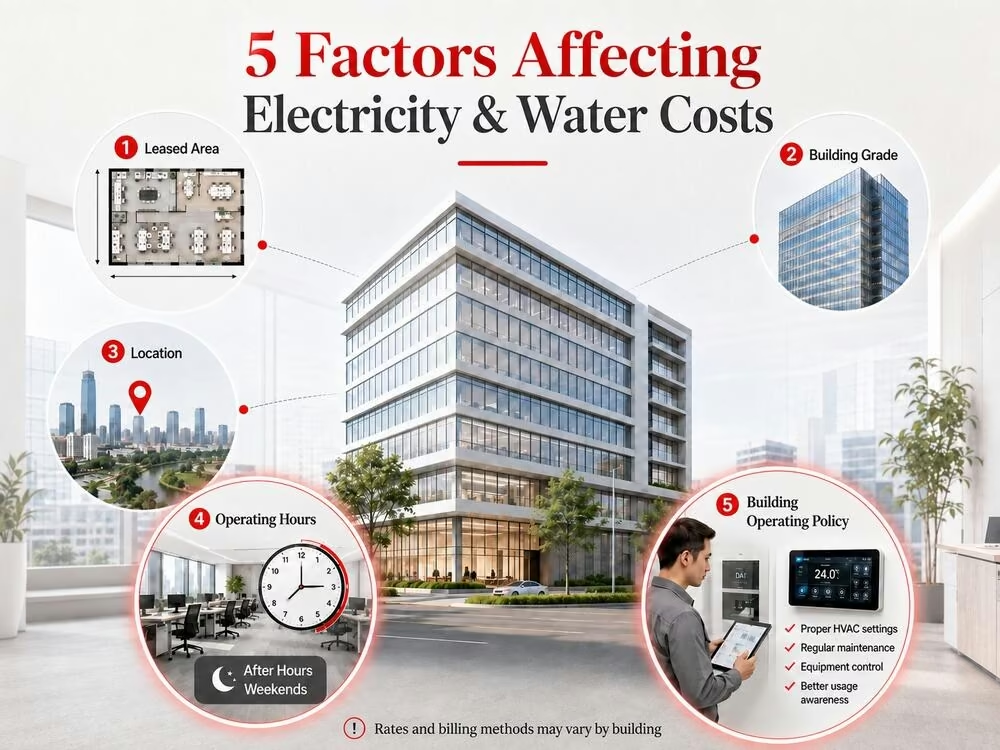
Leased area
The larger the leased area, the higher the electricity and water costs, as the office requires more lighting equipment, air conditioning, and staff. Water costs calculated by area or headcount both increase with scale, while central air conditioning electricity is allocated directly by leased floor area in m².
Building grade
The higher the building grade, the higher the electricity and water unit rates tend to be, due to the greater cost of operating technical systems. Grade A buildings use VRV or chiller central air conditioning, dedicated transformers, and technical operations teams – all of which are factored into the unit rate. Grade C buildings have simpler infrastructure, so their unit rates are closer to the source rate.
Location
Location indirectly affects electricity and water costs through the prevailing unit rate level and the building’s policy for that area. Commercial electricity and water tariffs are applied uniformly nationwide, but buildings in central districts tend to carry higher operating fees and surcharges.
Hours of use
The longer the hours of use – particularly outside business hours – the higher the electricity costs, due to after-hours air conditioning surcharges. Electricity rates are divided into peak and off-peak periods, and operating outside business hours generates after-hours air conditioning fees charged by the hour.
Building operational management policy
The operational policy determines the billing method and unit rate, making it the most direct factor affecting the final invoice. Each building sets its own terms: whether to apply the original EVN rate or a fixed rate, whether to bill central air conditioning separately or include it, the after-hours threshold and fee level, and how water costs are allocated.
How to budget accurately for electricity and water when renting an office?
Budgeting for electricity and water starts with understanding the building’s billing method, estimating consumption based on area and headcount, then adding supplementary charges such as after-hours electricity and central air conditioning fees. This approach helps tenants avoid large discrepancies between estimates and actual invoices.
The two main costs operate on different mechanisms. Electricity depends on the number of devices and operating hours, while water depends on headcount. Combined with operational surcharges, these two items form the total monthly estimate.
Tenants can budget through five steps:
- Ask the building about the electricity and water billing method and applicable unit rates.
- Estimate the number of staff and actual working hours.
- Confirm whether central air conditioning electricity is billed separately or included in the unit rate.
- Add after-hours fees if the business operates outside standard business hours.
- Reserve funds for the initial electricity and water deposit.
Three costs that are commonly overlooked when preparing estimates are after-hours air conditioning fees, the electricity and water security deposit, and the difference between the building’s unit rate and the original EVN rate. Accounting for all three brings the budget closer to actual costs.
How are office electricity and water costs recorded in accounting?
Office electricity and water costs are recorded as operating expenses for the period, under the category of purchased services. Businesses may deduct these costs when calculating corporate income tax, provided they have valid invoices and supporting documents.
The expense is classified by the department using the service. Electricity and water serving office operations are recorded under general and administrative expenses, or under selling expenses if they serve the sales department.
Three requirements must be met for the expense to be deductible: a valid invoice, the expense must serve business operations, and payment must be made by bank transfer for invoices above the threshold specified by regulations. If any of the three conditions is not met, the expense may be disallowed during tax finalization.
A complete set of documents required for accounting purposes:
- Lease agreement clearly stating which party is responsible for electricity and water costs.
- Valid value-added tax invoice.
- Bank transfer payment document.
- Cost allocation schedule if the invoice is issued in the landlord’s name.
Frequently asked questions about electricity and water costs when renting an office
This section answers common questions about taxes, invoices, and electricity and water surcharges in office rentals.
Are office electricity costs subject to VAT?
Yes. Electricity supplied to offices is subject to value-added tax, which is shown on the invoice when the building issues a valid VAT invoice. If the building charges a fixed rate and does not issue a VAT invoice, the business will have difficulty claiming input tax credit for this expense.
Can tenants request a separate invoice for electricity and water?
It depends on each building’s policy. Some buildings issue separate VAT invoices for electricity and water, while others include them in the service fee invoice or issue only a payment receipt. Tenants should negotiate for VAT invoices explicitly in the lease agreement to ensure tax credit eligibility and proper cost accounting.
How can a tenant identify which billing method the building is using?
The electricity and water billing method is stated in the lease agreement and the service fee schedule, so tenants should request the rate schedule and a sample invoice before signing. The unit rate itself is a clear indicator: a fixed rate that does not change throughout the day is a building-set rate, while a rate that varies by time period is the original EVN tariff.
If the utility invoice is in the landlord’s name, can the company include it as a deductible expense?
Yes, if sufficient supporting documents are in place. Businesses may still record the expense as deductible when the electricity and water invoice is in the landlord’s name, provided the lease agreement clearly states that the tenant is responsible for the cost, and a payment document and itemized schedule are included. This is treated as the business paying utility costs on behalf of the landlord and allocating them as deductible expenses under a property rental arrangement.
Is there an additional electricity charge for working outside business hours?
Usually yes. Many Grade A and B buildings charge an after-hours air conditioning fee when tenants operate outside standard business hours, as the central air conditioning system must be run separately for those floors. The fee is calculated by the hour or by the area in use, and the definition of business hours and the billing threshold are both stated in the lease agreement.
Electricity and water costs are a fixed line item in a company’s overall office operating budget, and the variance between buildings can meaningfully affect monthly expenses. Understanding how charges are calculated, the applicable unit rates, and related surcharges helps businesses budget more accurately and avoid unexpected costs during the lease term.
To choose an office with a transparent and budget-appropriate utility cost structure, businesses should consult an advisory firm with hands-on experience in each local market. RSQUARE offers office leasing services in Hanoi and office leasing services in Ho Chi Minh City, helping businesses compare operating costs across buildings and find an office that is optimal in both location and budget.