Hidden costs when leasing office space fall into three main categories: monthly operating costs, initial investment and fit-out costs, and end-of-lease costs. These are expenses not clearly stated in the initial contract, unlike the base rent or service fee, which are already specified upfront. They only surface once a business begins operating, starts interior fit-out work, or prepares to end the lease – often pushing the actual total cost well above the original estimate. This article breaks down these three groups of hidden costs, explains how they impact a business’s budget, and outlines how to control them starting from the contract negotiation stage.
What are the 3 hidden costs you don’t know about until you lease an office?
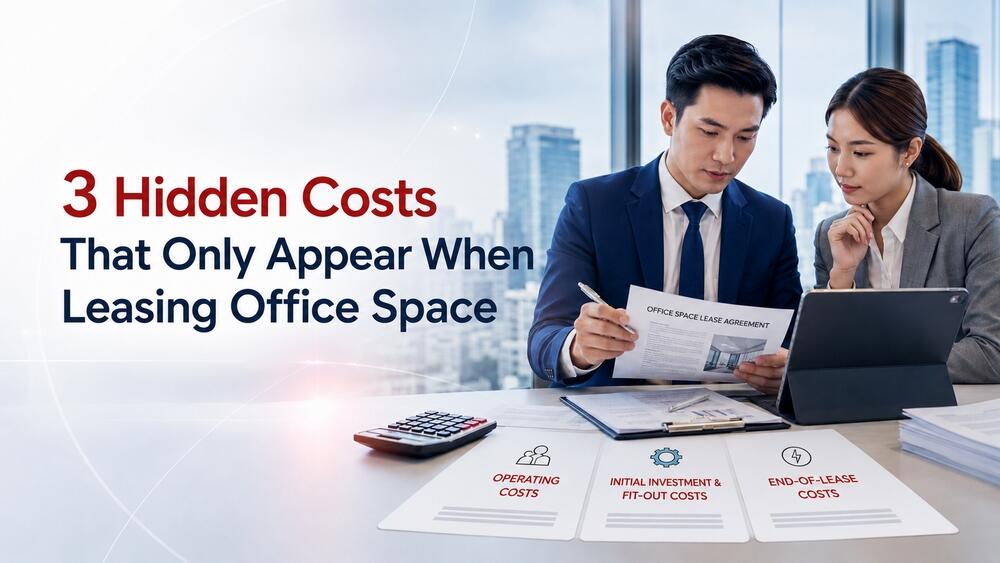
The three hidden cost categories businesses need to understand when renting office space are: monthly operating costs, initial investment and fit-out costs, and end-of-lease costs.
- Monthly operating costs: recurring expenses during the use of the office, such as after-hours fees, parking fees, and utilities not clarified upfront
- Initial investment and fit-out costs: expenses incurred when completing the workspace, beyond the scope of rent and the agreed fit-out period
- End-of-lease costs: expenses arising at the handover stage, typically not detailed in the initial contract
These three cost categories will be analyzed in detail in the following sections, along with specific line items businesses should review before signing a lease.
Monthly operational costs
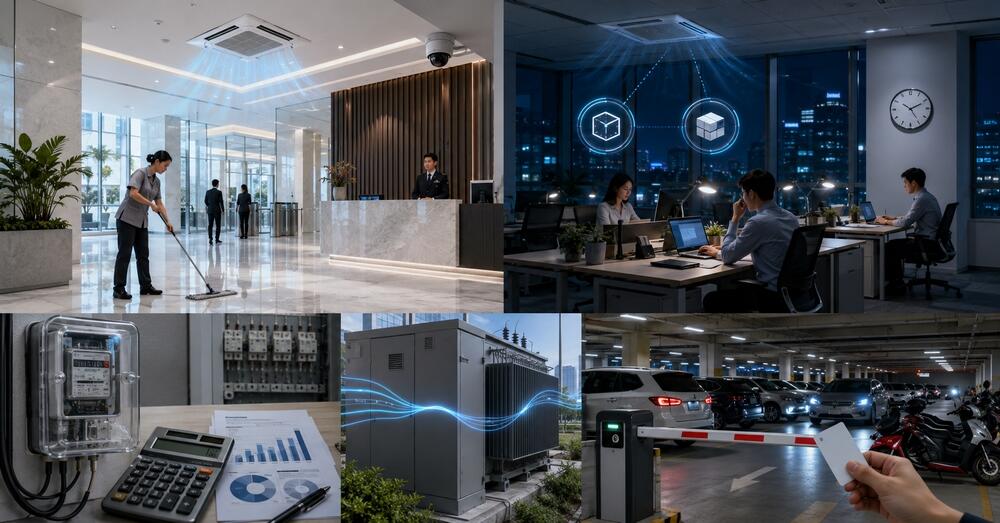
Monthly operating costs are hidden costs that recur throughout the office tenancy, often not fully reflected in the initial quoted rent. They include after-hours fees, maintenance fees with unclear scope, electricity, water and internet charges, and parking fees.
- Overtime fees (air conditioning, electricity): a building’s central air conditioning system typically operates only during business hours. Businesses working overtime or on weekends must pay additional fees, usually charged per time block (3–4 hours per session) or per m² used.
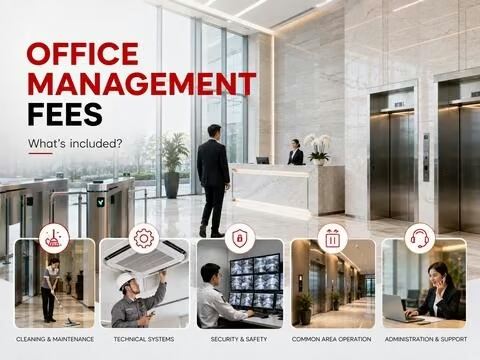
- Unclear scope of maintenance fee: the maintenance fee is mandatory at most buildings, but the scope of services included — cleaning, security, reception, elevator operation — must be confirmed explicitly and should not be assumed to cover all utilities.
- Electricity, water, and internet rates not clearly defined: some contracts do not specify unit prices for each service, leading to unexpectedly high charges. Internet is sometimes tied to the building’s partner provider at above-market rates.
- Non-transparent parking fees: the number of parking spaces allocated per leased area, fees for visiting clients, and backup arrangements when the car park is full are often not stated clearly from the outset.
Recommended check: businesses should request an itemized fee schedule, confirm whether annual increases apply, before incorporating these into the operational budget.
Initial investment & fit-out costs
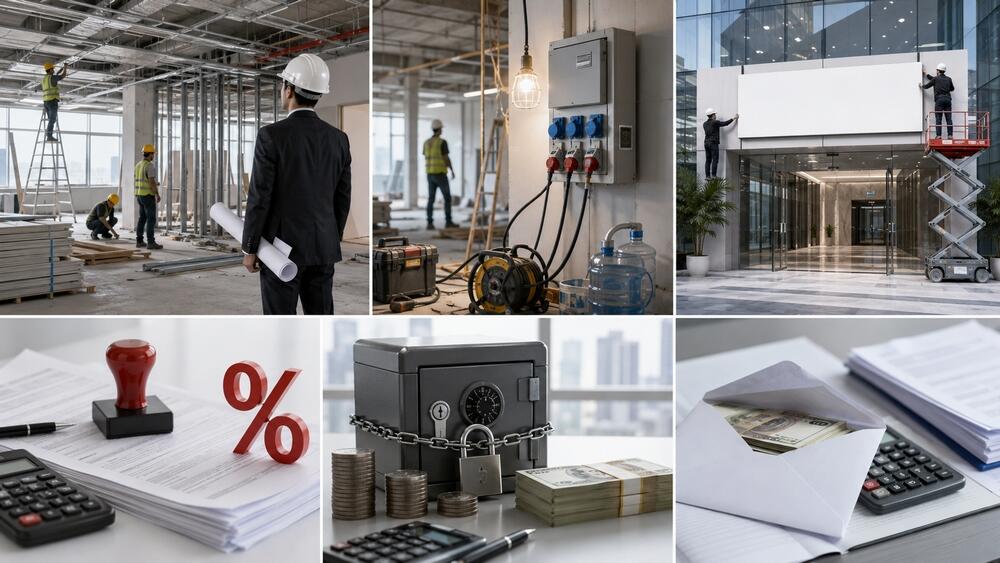
Initial investment and fit-out costs are hidden costs incurred during the workspace completion phase, even when businesses have been granted a rent-free period during fit-out works. There are 5 cost items businesses should be aware of during this phase:
- Mandatory technical requirements from the building: some buildings require the use of central air conditioning systems, soundproofing materials, or fire protection systems to their own standards — requirements that may generate costs beyond the initial estimate.
- Construction supervision fee: buildings typically charge a fee to supervise the tenant’s fit-out contractors throughout the installation process.
- Electricity and water used during construction: incurred before the business officially begins office operations.
- Fit-out deposit: a mandatory security deposit to ensure the fit-out contractor does not damage the building structure, typically refunded after inspection and handover.
- Documentation, layout design, and fire safety permit costs: administrative procedures accompanying construction are generally not supported by the building management.
Recommended check: businesses should carefully review all mandatory technical requirements from building management before preparing the fit-out budget, to avoid unexpected costs once construction has begun.
End-of-lease costs
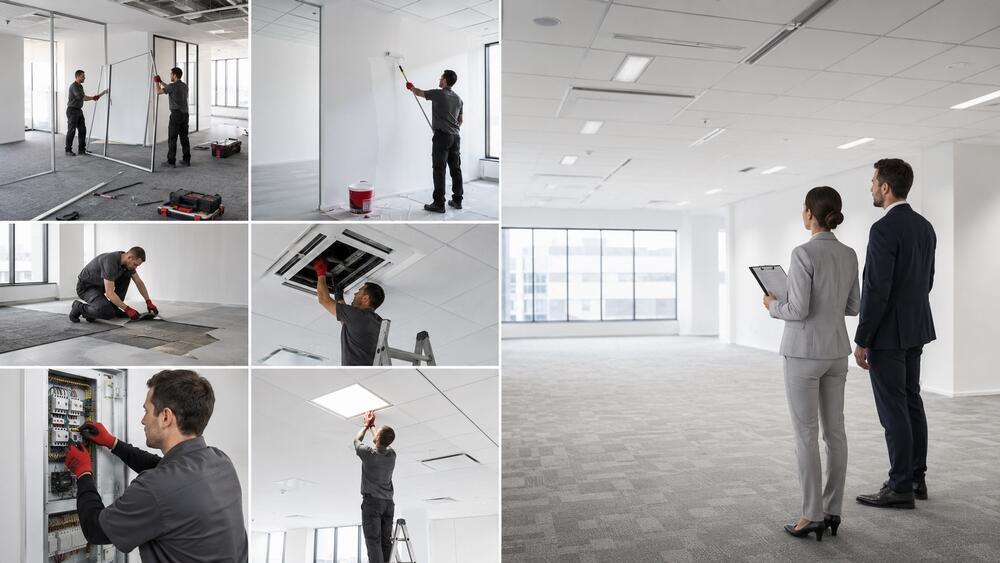
End-of-lease costs are the hidden cost category most easily overlooked, as they only arise at the end of the lease term — a point when businesses are typically less focused on budget control than at the start of the contract. Before the lease ends, businesses should pay attention to the following 4 points:
- Obligation to restore premises to original condition: most lease contracts require the tenant to return the premises to their original state, including removal of partition walls, floor coverings, repainting walls and ceilings, and restoring electrical, mechanical, and plumbing systems.
- Restoration costs can be substantial: particularly if the business has leased for a long period or made significant modifications to the original space.
- Often not addressed in detail in the initial contract: leaving businesses surprised by this expense when preparing to terminate the lease or relocate.
- Negotiation opportunity: businesses can negotiate with the building owner for an exemption from full restoration, or to limit restoration to a basic level rather than full reinstatement.
Recommended check: read the handover and premises reinstatement clauses carefully from the initial negotiation stage — do not wait until near the end of the lease to investigate.
Comparison table: Visible costs vs. hidden costs
Visible costs and hidden costs differ in terms of transparency and predictability — visible costs are clearly stated in the initial quote, while hidden costs only arise during actual operations or at lease termination.
| Criteria | Visible Costs | Hidden Costs |
| Definition | Fixed fees quoted clearly from the outset | Fees arising during the course of use or at lease termination |
| Predictability | Easy to predict — exact figures known from the contract | Difficult to predict — depends on usage frequency and ancillary terms |
| When They Arise | Recurring monthly | Non-fixed — may arise during fit-out, overtime work, or at lease termination |
| Typical Items | Rent, maintenance fee, VAT, security deposit | Overtime fees, excess parking fees, fit-out costs and fit-out deposit, premises reinstatement fees |
Although hidden costs typically represent a smaller proportion than the base rent, their unpredictability and tendency to be overlooked during initial budgeting make them the category most likely to cause a gap between the projected and actual total cost. Businesses should request that the landlord or broker provide an itemized breakdown of both cost categories from the negotiation stage, rather than focusing solely on the base rental figure.
How do hidden costs impact business budgets?
Hidden costs affect business budgets in four main ways: causing budget shortfalls against initial plans, negatively impacting cash flow, compressing profit margins, and creating dispute risks or reactive situations in the landlord relationship.

Causing Budget Shortfalls
Office leasing budgets are typically prepared based on visible costs — rent, service charges, VAT — without accounting for incidental expenses. When overtime fees, excess parking charges, and construction management fees are added, the actual total monthly cost can be significantly higher than the initial estimate, breaking the approved financial plan.
Negatively Impacting Cash Flow
Some hidden costs arise suddenly or at sensitive points in the lease lifecycle.
- At the start, the fit-out deposit and fit-out supervision fees coincide with the contract security deposit, creating significant payment pressure at a time when the office is not yet operational and generating no revenue.
- At the end, premises restoration costs arise precisely when the business needs cash flow to relocate to a new premises, creating a double financial burden.
Compressing Profit Margins
Profit margin is the percentage ratio of profit to revenue, reflecting how effectively a business converts revenue into actual profit. When fixed occupancy costs increase without a corresponding increase in revenue, profit margins are squeezed. For small and medium enterprises or startups already operating on thin margins, absorbing recurring hidden operational costs each month directly affects net profit and overall business performance.
Creating Reactive Situations, Dispute Risks, and Poor Office Selection Decisions
When businesses fail to anticipate reinstatement clauses or technical infrastructure upgrade costs, they may face large payments after the lease expires, leading to disputes with the building owner and delays in the handover timeline. Misjudging the total cost from the outset also leads to poor office selection decisions — either choosing an office that exceeds the budget but is locked into a contract with no exit, or selecting a low-rent office with high hidden costs that proves operationally inefficient over the long term.
Hidden costs are not merely an accounting issue — they directly affect cash flow, profitability, and the sustainability of a business’s long-term office leasing strategy, and must therefore be managed and negotiated from the initial contract negotiation stage.
How to control and negotiate hidden costs before signing the contract
Managing hidden costs is most effective when businesses prepare proactively and negotiate before signing the contract, rather than waiting until costs arise to address them. The six steps below help businesses minimize the risk of unexpected costs.
Prepare Operational Requirements Before Viewing Premises
Before inspecting any office, businesses should clearly define their actual operational requirements: working hours (does the team regularly work overtime or on weekends?), the number of motorcycles and cars requiring parking, and the expected level of fit-out intervention (basic partition walls only, or full renovation of electrical and network systems). Preparing these criteria in advance allows businesses to ask the right questions when engaging with the building owner, rather than simply inquiring about the rental rate.
Request a Total Cost Summary Rather Than Just the Rental Rate
Rather than asking only for the rental rate per m², businesses should request a total cost breakdown from the landlord, covering maintenance fees, VAT, overtime fees, parking fees, and all other surcharges. This approach allows businesses to compare options accurately, rather than comparing headline rental figures that can be misleading.
Review Overtime Fee, VAT, and Reinstatement Clauses Carefully
These three clauses are where hidden costs most commonly reside. Businesses should confirm exactly how overtime fees are calculated (per m² or per time block), whether prices are inclusive or exclusive of VAT, and the level of premises reinstatement required at lease termination — all of which must be specified in writing, rather than relying on verbal assurances from the landlord.
Document Handover Condition with Photos and Written Records
When taking possession of the premises, businesses should request a formal handover record with photographs documenting the actual condition of the office at the time of handover. This serves as an important reference for comparison when returning the premises, preventing disputes over whether damage was pre-existing or occurred during the tenancy.
Clarify Annual Escalation Clauses
Businesses should request that the contract clearly state the rent and maintenance fee escalation rates applicable to subsequent years, to avoid unexpected price adjustments at renewal. They should also proactively negotiate a maximum annual escalation cap to better manage long-term budget planning.
Negotiate the Fit-Out Period
The fit-out period (rent-free/fit-out period) is the time during which the business does not pay rent while completing the interior. Businesses should proactively negotiate to extend this period, particularly for long-term leases or large spaces, to reduce financial pressure during the period before the office officially becomes operational.
How to budget for the full cost of an office lease from the start?
Accurately budgeting for all office leasing costs requires businesses to consolidate all four categories: visible costs, monthly operational hidden costs, and one-time hidden costs at the start and end of the lease term — rather than calculating only the base rent.
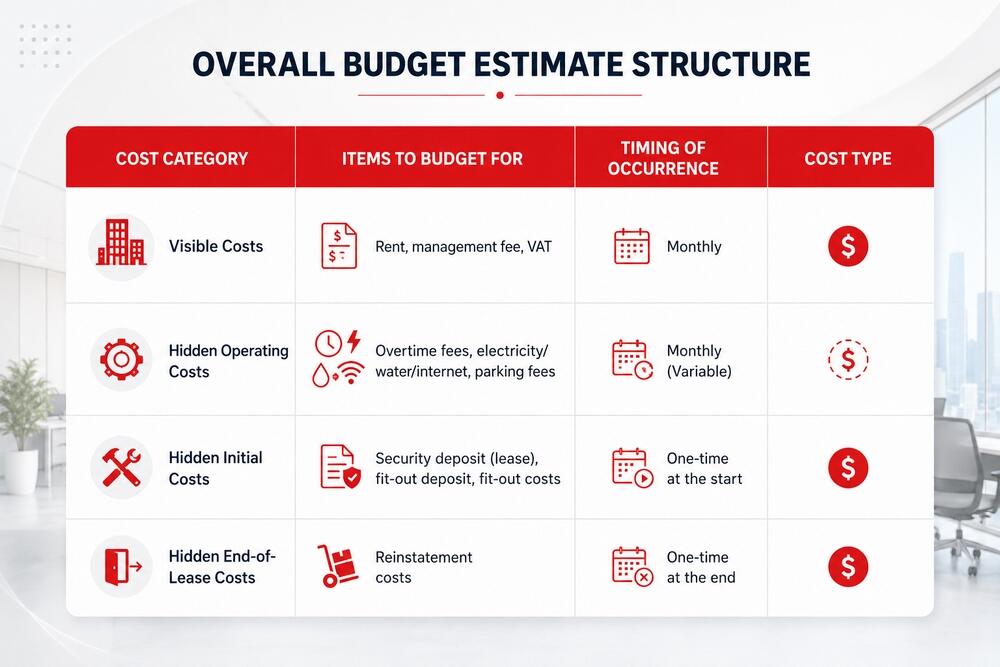
Suggested Overall Budget Structure
| Cost Category | Items to Budget | When Incurred |
|---|---|---|
| Visible Costs | Rent, maintenance fee, VAT | Monthly |
| Hidden Operational Costs | After-hours fees, electricity/water/internet, parking fees | Monthly (variable) |
| Hidden Upfront Costs | Contract deposit, fit-out deposit, fit-out costs | One-time at start |
| Hidden End-of-Term Costs | Reinstatement costs | One-time at end |
Budgeting Principles
- Consolidate all four categories into a single budget table, rather than focusing only on monthly rent
- Set aside a contingency reserve for unpredictable hidden costs, rather than budgeting only for known figures
- Review this budget annually, as some items such as maintenance fees or electricity tariffs may change over time
Accurate budgeting also depends on carefully reading all escalation clauses in the contract.
Escalation clauses and recurring costs to watch for in the contract
In addition to one-time hidden costs, businesses must pay attention to periodic escalation clauses in the contract — factors that affect the office leasing budget over multiple years, not just the first year.
Rent review cycle and escalation rate
Most long-term leases include escalation clauses, commonly applied annually or on a 2–3 year cycle. The specific escalation rate must be written clearly into the contract to avoid unexpected price adjustments at renewal. Businesses should proactively negotiate a maximum annual escalation cap for better long-term budget control.
Maintenance fee escalation clause
The maintenance fee is not always fixed for the entire lease term. Some buildings adjust the maintenance fee annually based on actual building operational cost fluctuations. Businesses must confirm whether there is a maximum escalation cap, and whether changes are notified with reasonable advance notice.
Electricity and water cost fluctuations based on market rates
Commercial electricity tariffs applicable to offices may change in line with government electricity pricing regulations over time. This is a factor outside the control of both businesses and building owners, but it indirectly affects total monthly operational costs — businesses should include a variable buffer when preparing long-term budgets.
Early lease termination penalty clause
If a business needs to change plans mid-lease — due to expansion, downsizing, or strategic changes — the early termination penalty clause will determine the additional costs payable. Businesses must clarify the specific penalty amount from the negotiation stage, rather than only discovering it when actually needing to exit the lease early.
Reading and negotiating these periodic clauses clearly from the outset enables businesses to maintain a stable office leasing budget over many years, rather than focusing solely on first-year costs.
Hidden costs in office leasing — though smaller in absolute terms than the base rent — are the most difficult to predict and the most likely to cause budget variances if businesses do not proactively investigate them from the start. From monthly operational costs to initial fit-out expenses and premises reinstatement costs at lease termination, each item must be clarified in writing before signing, rather than waiting until costs arise to address them.
If businesses require support reviewing all hidden costs before signing an office lease, RSQUARE is available to provide free consultation, helping businesses budget comprehensively and negotiate favorable terms from the outset.