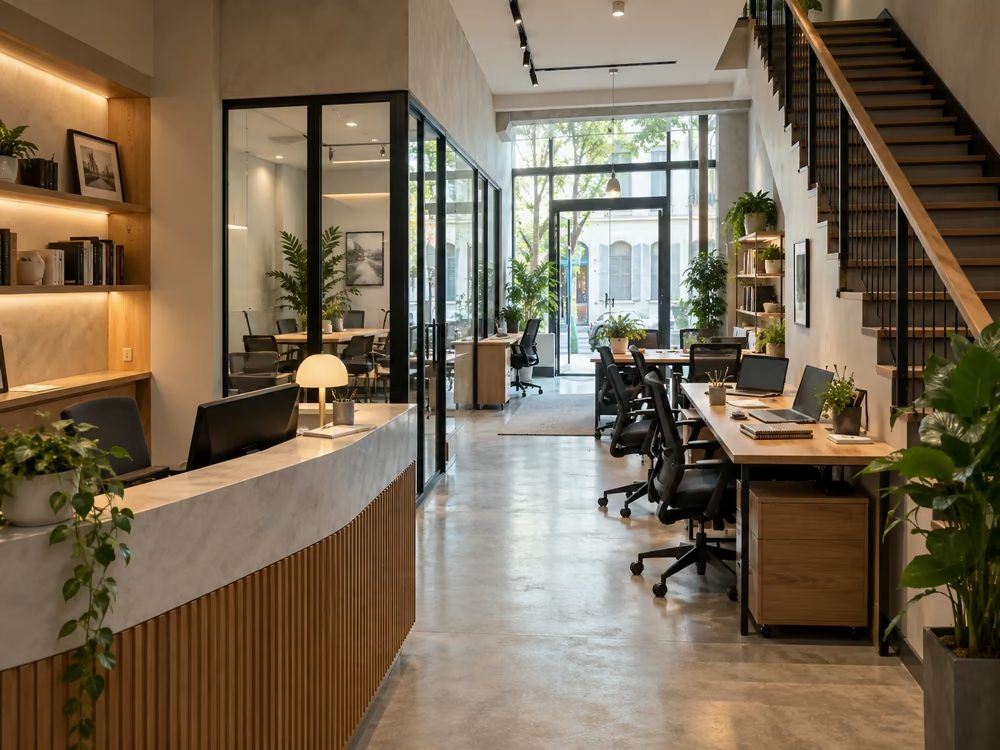
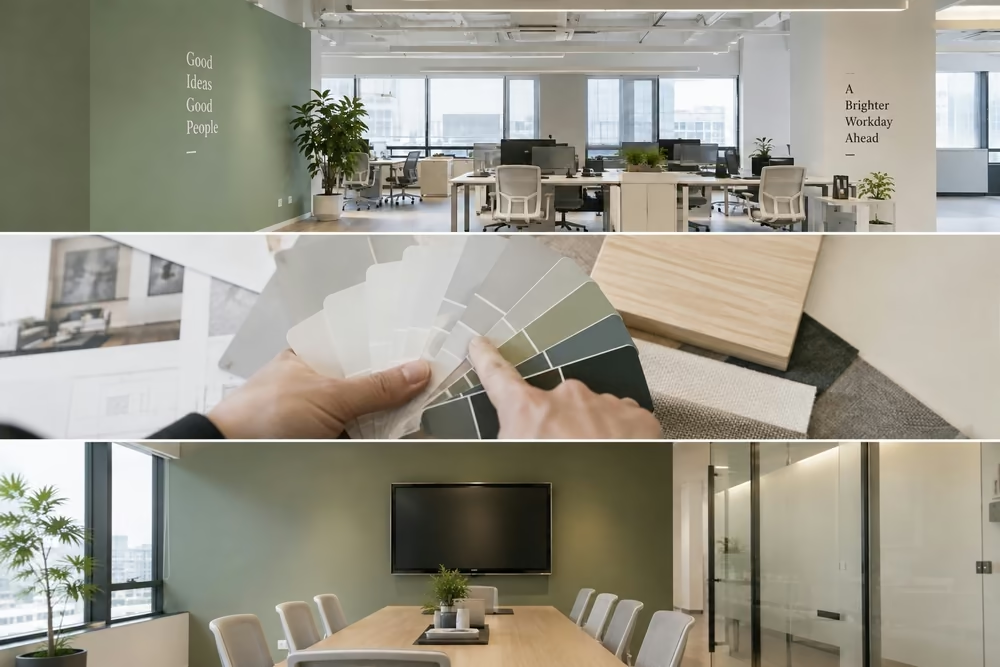
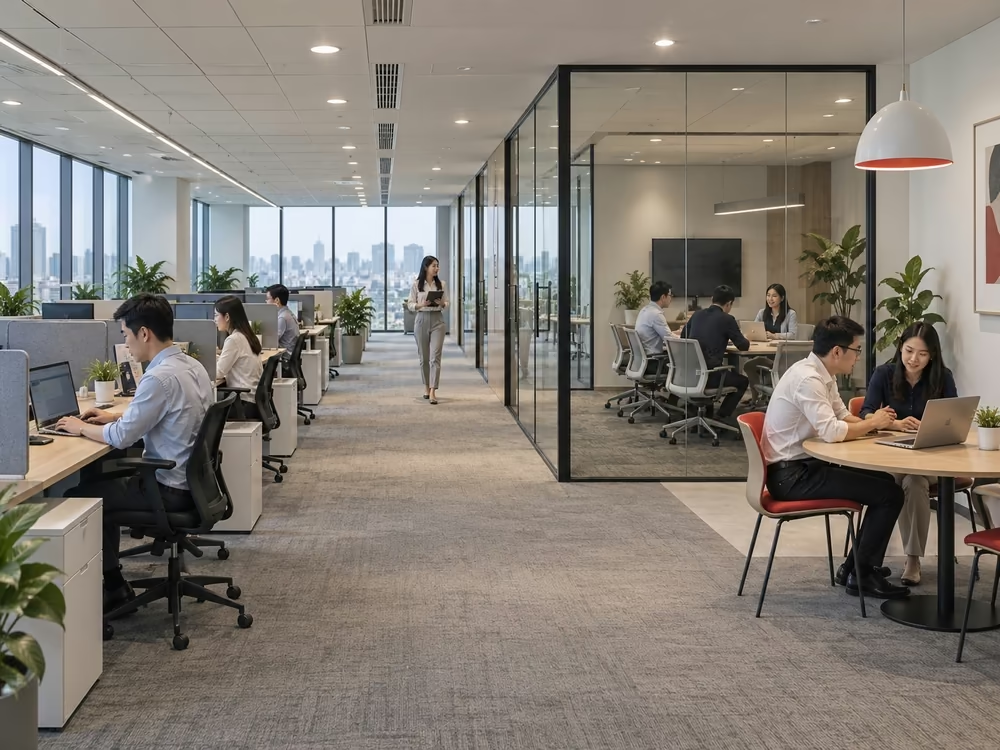
Phone rings, conversations between colleagues, online meetings, and constant movement around the office can break a workday into repeated periods of distraction.
This issue is often more noticeable in open-plan offices, where multiple teams share the same space and interaction happens frequently. Open layouts make communication easier, but without proper control over noise and space usage, employees may find it difficult to stay focused on tasks that require sustained concentration.
Instead of trying to eliminate noise completely, companies can approach the issue from two directions: helping employees manage their individual working environment and organizing the office so that different types of work can take place in more suitable areas.
Below are several practical approaches.
1. Use noise-cancelling headphones when concentration is required
Headphones are one of the simplest solutions when employees need to focus on demanding tasks but cannot move to another area.
Noise-cancelling headphones can reduce the impact of nearby conversations, phone calls, and repetitive background sounds. For employees who are comfortable working with background audio, instrumental music or consistent ambient sound may also reduce distraction from surrounding conversations.
However, headphones should be considered a personal support tool rather than a long-term solution. If most employees need to wear headphones throughout the day just to avoid office noise, the company should review how the workspace is arranged and managed.

2. Divide the office according to different levels of concentration
An office does not need to maintain the same level of quietness in every area.
Activities such as team discussions, phone calls, and quick meetings naturally generate more noise. In contrast, tasks such as data analysis, report writing, financial processing, or other concentration-intensive work are better suited to quieter areas.
Companies can divide the workplace into different functional zones, for example:
- General work areas for daily activities.
- Meeting rooms or phone booths for calls and online meetings.
- Quiet zones for focused work.
- Informal discussion areas located away from primary workstations.
This type of zoning reduces the conflict between communication and concentration without requiring the entire office to remain quiet at all times.
3. Move long calls and discussions away from shared work areas
A short conversation at a desk usually causes limited disruption. The problem becomes more noticeable when long phone calls, online meetings, or group discussions regularly take place next to employees who are trying to concentrate.
Companies should establish clear guidelines on which activities can take place at individual desks and which should be moved to meeting rooms, phone booths, or dedicated discussion areas.
This is particularly important in offices with high employee density or teams that frequently communicate with clients by phone.
Rather than relying on employees to handle each situation individually, clear rules on how different spaces should be used are easier to apply consistently.
4. Schedule focused work during quieter periods
Noise levels are rarely consistent throughout the day.
Early mornings, periods between meetings, or certain working hours may be noticeably quieter. Employees can use these periods for tasks that require deep concentration and move more collaborative work to busier times.
For companies that are not yet able to create dedicated quiet areas, better time management can reduce some of the impact of noise without requiring immediate changes to the office layout.
5. Address recurring noise issues directly
If noise regularly comes from specific behaviours such as speaking loudly, using speakerphone, or making frequent calls from a desk, the issue should be discussed directly rather than allowed to continue.
The purpose of the discussion is not to require complete silence. It is to establish a shared understanding of how the workplace should be used without unnecessarily affecting colleagues.
For broader issues, management or the administrative team can collect employee feedback to identify the most common sources of noise and adjust workplace guidelines accordingly.

6. Review office density and layout
If noise is consistently present across several areas, the cause may not be individual behaviour. It may be related to the layout itself.
Workstations positioned too close to meeting areas, pantries located next to teams that require concentration, or high workstation density can all contribute to higher noise levels.
Companies should therefore review:
- The distance between work areas and discussion areas.
- The location of meeting rooms, pantries, and reception areas.
- Workstation density.
- The feasibility of adding phone booths or focus rooms.
- Ceiling, wall, flooring, and surface materials that affect sound absorption.
In some cases, changing the office layout may be more effective than introducing additional behavioural rules.
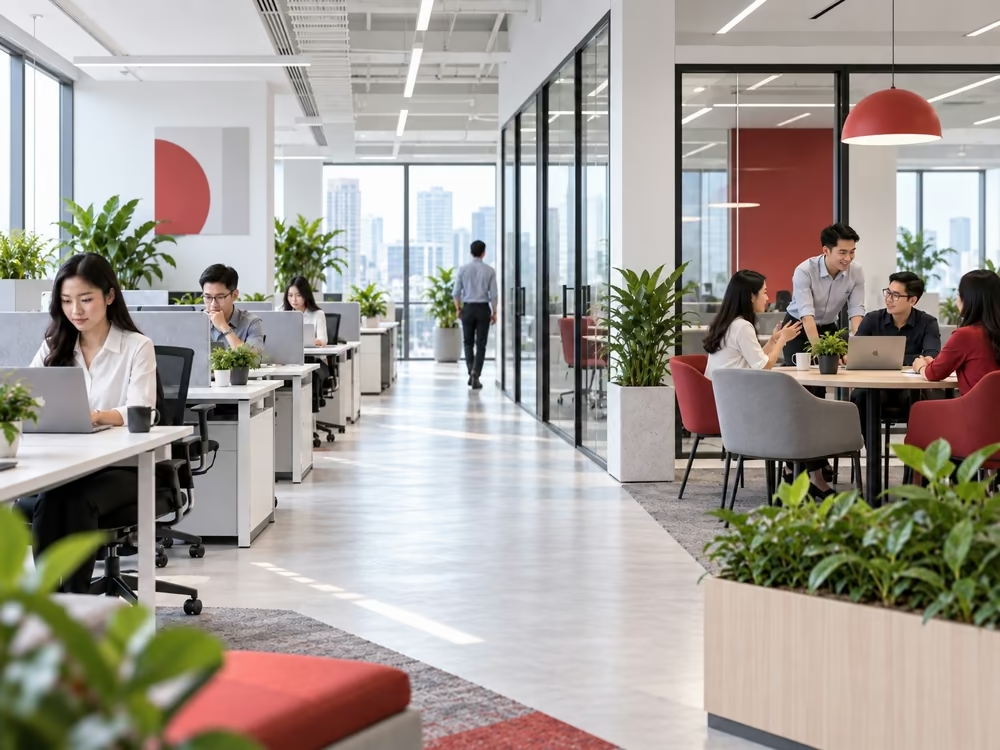
7. Consider noise control when selecting an office
The ability to manage office noise should be considered during the property search stage, especially for companies with teams that require sustained concentration or frequently hold online meetings.
Beyond floor area and seating capacity, companies should also examine floorplate configuration, floor depth, core location, technical areas, and the potential to divide the space into different functional zones. These factors directly affect how work areas, meeting rooms, and quiet spaces can be arranged later.
An office may provide sufficient floor area but still create operational limitations if its layout is difficult to divide effectively.
Not all office noise needs to be eliminated
An office naturally includes conversations, calls, meetings, and interaction between teams. The objective is therefore not to create a completely silent workplace, but to control where noise is generated and ensure employees have suitable options when focused work is required.
If noise becomes a recurring issue, companies should assess space usage, employee density, and office layout together rather than addressing individual incidents separately.
RSQUARE supports companies in searching for and evaluating office spaces based on actual operational requirements, including workforce size, departmental structure, meeting room needs, focused work areas, and future expansion plans. This provides companies with a clearer basis for comparing different office options before making a leasing decision and proceeding with office design.