Office amenities fall into two main groups – essential amenities and value-added amenities – and directly determine the daily work experience and operational efficiency of a business. When searching for office space, many businesses focus only on area and rental price without fully evaluating the amenities included, leading to unplanned costs or a work experience that falls short of expectations after signing the lease. This article compiles a comprehensive list of standard and value-added office amenities, compares the differences across building grades, and outlines a method for evaluating amenities before signing – giving businesses a complete picture when selecting the right office space.
What are office amenities?
Office amenities are the services, equipment, and supplementary facilities provided within a workspace, designed to enhance the comfort, convenience, and productivity of employees.
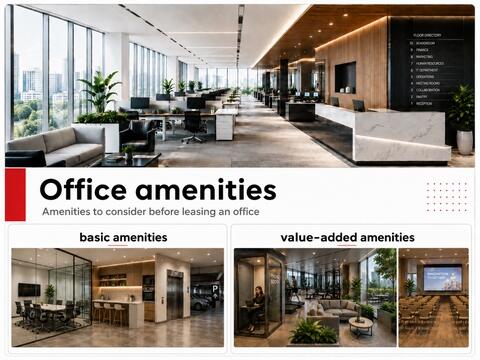
Two main amenity groups
- Essential amenities: the fundamental elements required in any rental office to ensure smooth day-to-day operations – such as reliable internet, fire protection systems, elevators, air conditioning, parking, restrooms, and reception
- Value-added amenities: facilities that elevate the work experience and reinforce a company’s image – such as a fully equipped pantry, gym, relaxation area, phone booths, or green spaces
The role of office amenities for businesses
Investing in office amenities is one of the key factors that helps businesses attract and retain talent, while building a professional, welcoming, and productive working environment. The majority of businesses searching for office space prioritize buildings with a wide range of integrated amenities, as this reduces upfront investment costs and lessens the operational burden compared to sourcing and managing everything independently.
Note on amenity provision
Not all amenities come pre-installed in an office – some essential amenities are typically available in traditional office buildings or serviced offices, while others (personal equipment, custom furniture and décor) must be sourced by the tenant based on their specific needs.
Standard office amenities checklist
The twelve amenities below are the basic requirements for a standard rental office, ensuring the business can operate smoothly on a day-to-day basis.
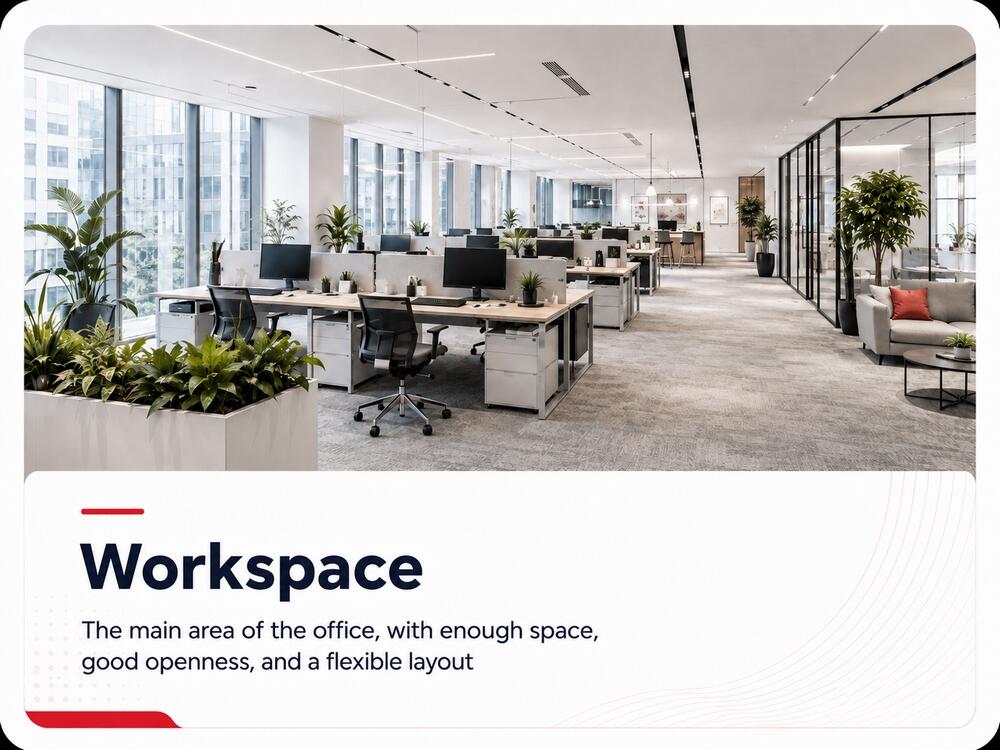
Workspace
The workspace is the primary area and must be sufficiently spacious, well-ventilated, and capable of flexible division to suit the business’s functional needs (open work areas, private zones). Natural light quality and workstation density directly affect staff productivity.
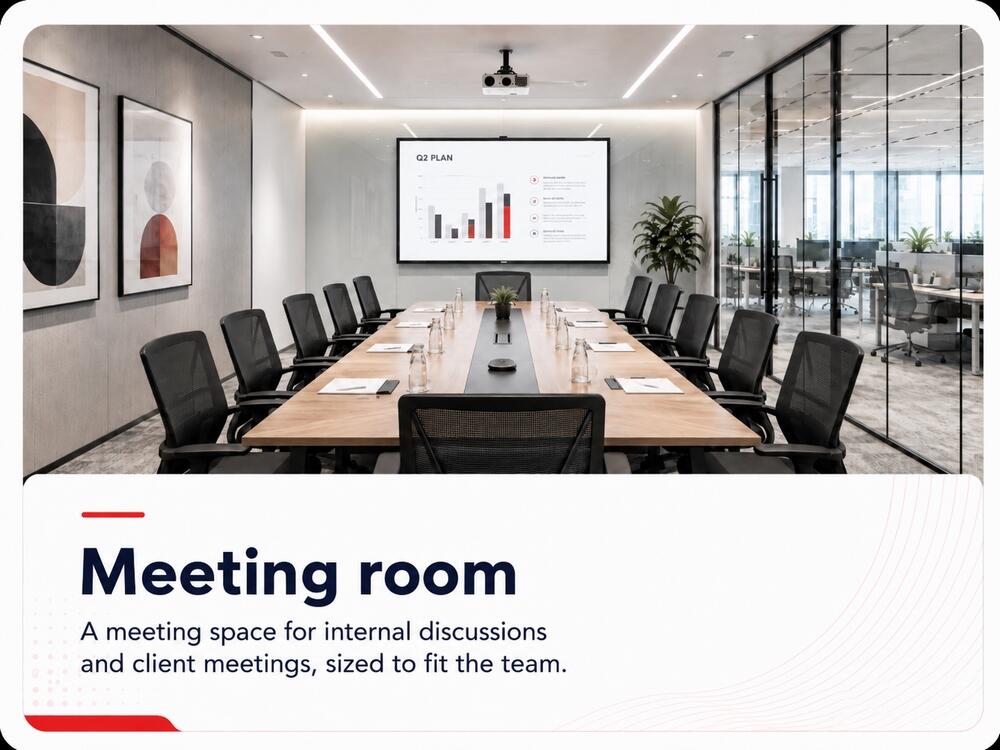
Meeting rooms
Meeting rooms are an essential amenity for internal discussions and client or partner meetings. The number and size of meeting rooms should be proportionate to the headcount and frequency of use. Some buildings also offer shared meeting rooms available for hourly rental when larger spaces are needed.
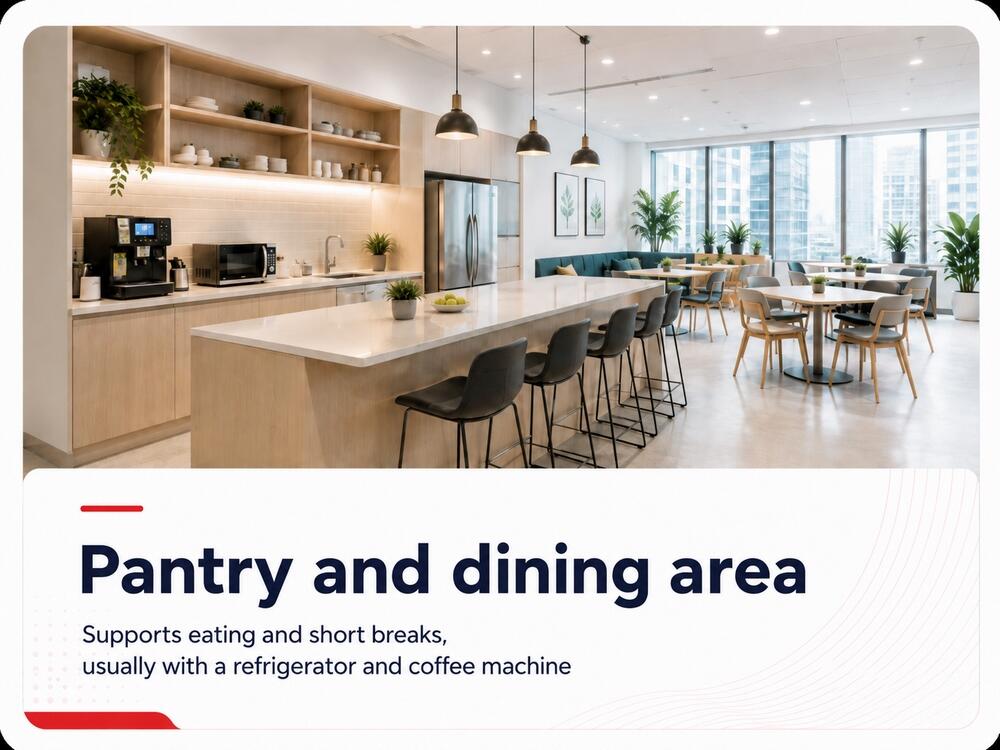
Pantry and dining area
The pantry is a space for eating, making beverages, and taking short breaks during the workday. A well-equipped pantry (refrigerator, microwave, coffee machine) contributes to employee comfort and team cohesion.
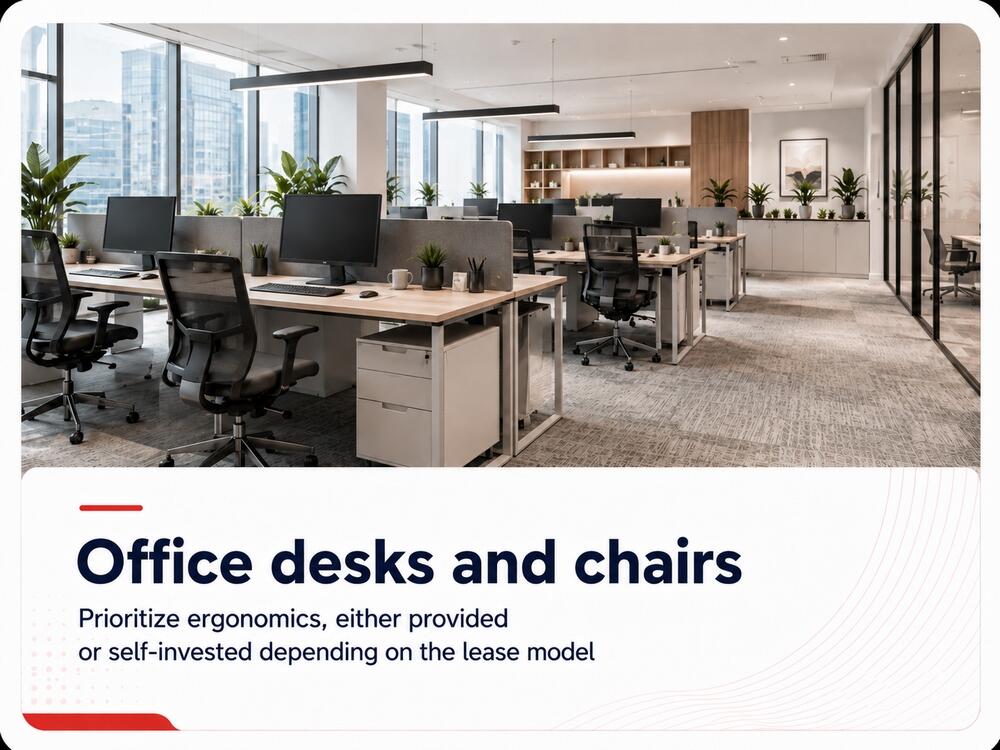
Office furniture
Desks and chairs are the basic equipment for daily work – they may be provided by the building (in serviced offices) or sourced by the tenant (in traditional offices). The quality and ergonomics of the furniture directly affect the long-term health and productivity of staff.
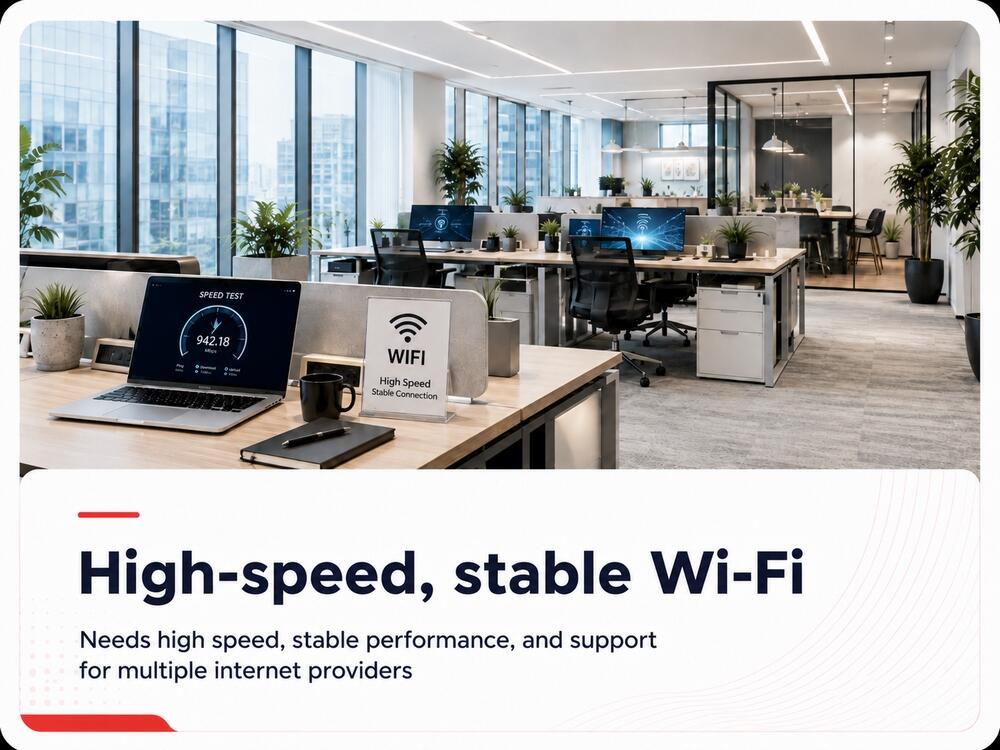
High-speed, stable Wi-Fi
A stable internet connection is an indispensable amenity for most businesses today. Businesses should confirm whether the building supports multiple internet service providers for a dedicated line – particularly important for technology companies or those handling large volumes of data.
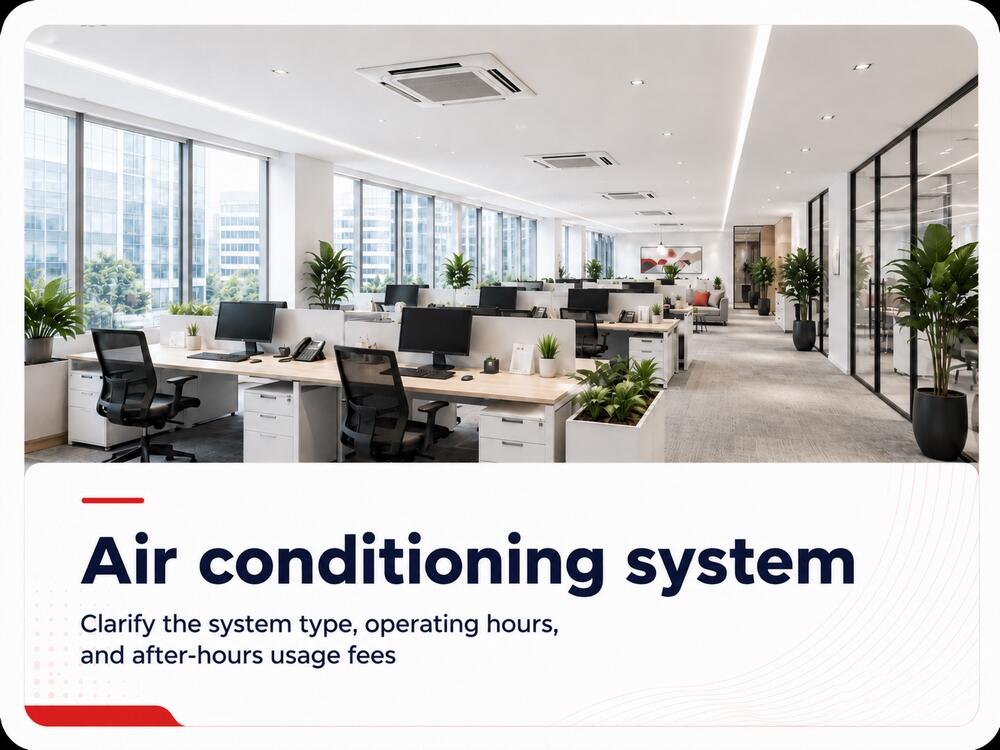
Air conditioning system
The air conditioning system (central or individual units) maintains a comfortable working temperature year-round. Businesses should pay attention to the operating hours of central air conditioning and the policy for charging outside standard business hours.
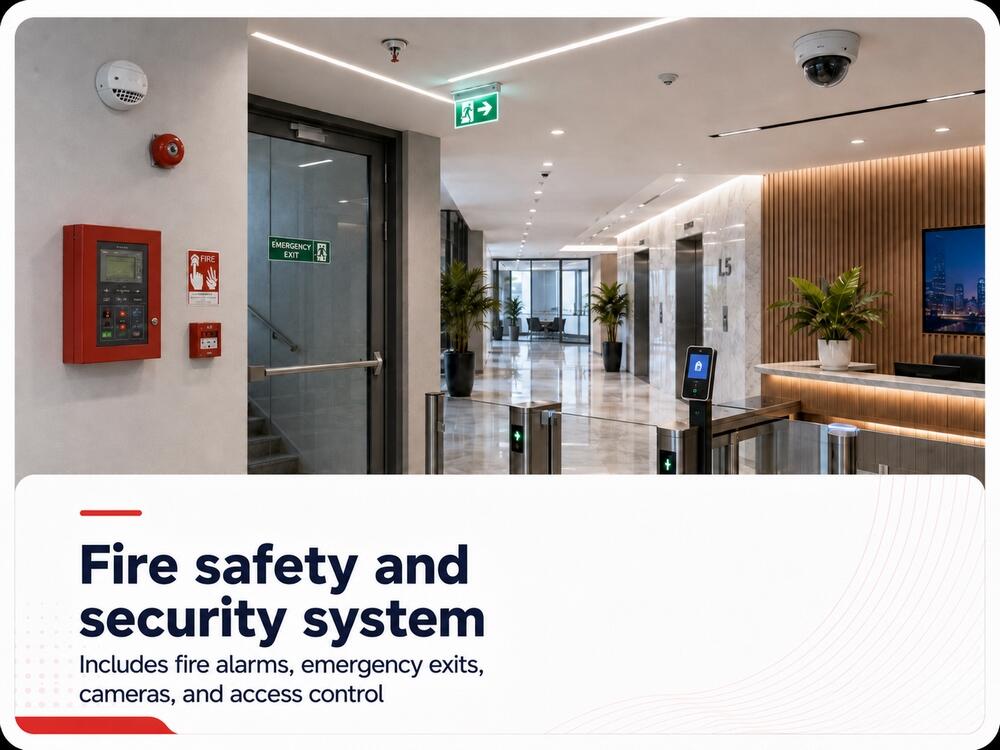
Fire protection and security systems
This is a legally required amenity, encompassing fire alarm systems, automatic suppression, emergency exits, and security infrastructure such as CCTV and access control. Businesses must confirm the building’s fire protection certificate is valid before signing the lease.
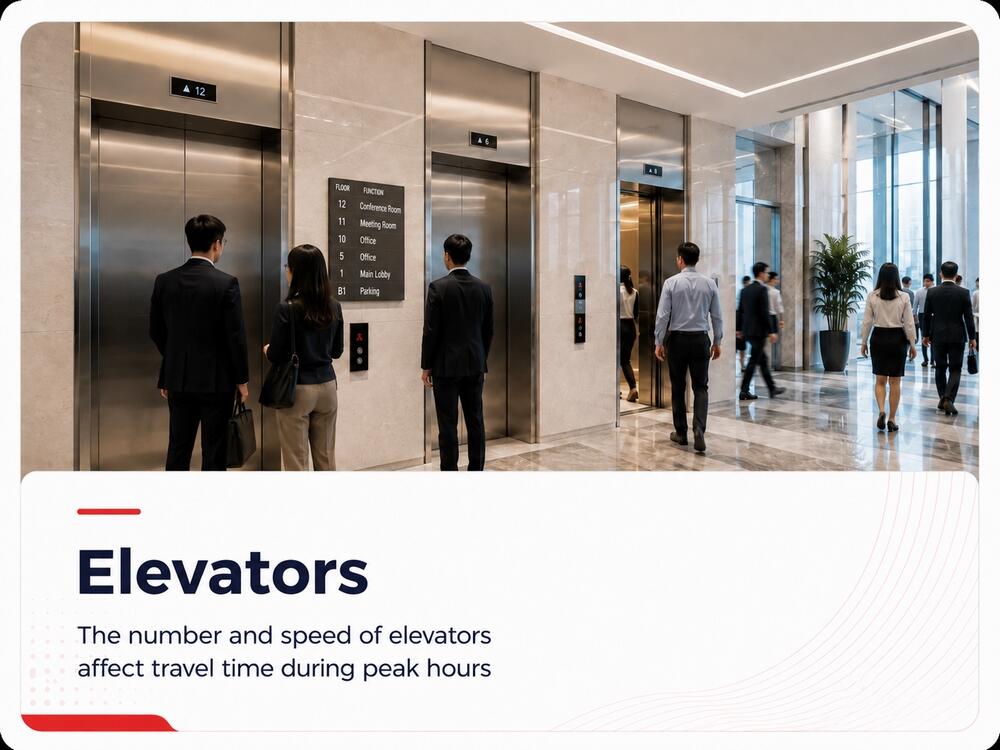
Elevators
The number and speed of elevators directly affect transit time, especially during morning and lunchtime peak hours. For high-rise buildings, the ratio of elevators to the number of tenants is a factor worth observing directly during a site visit.
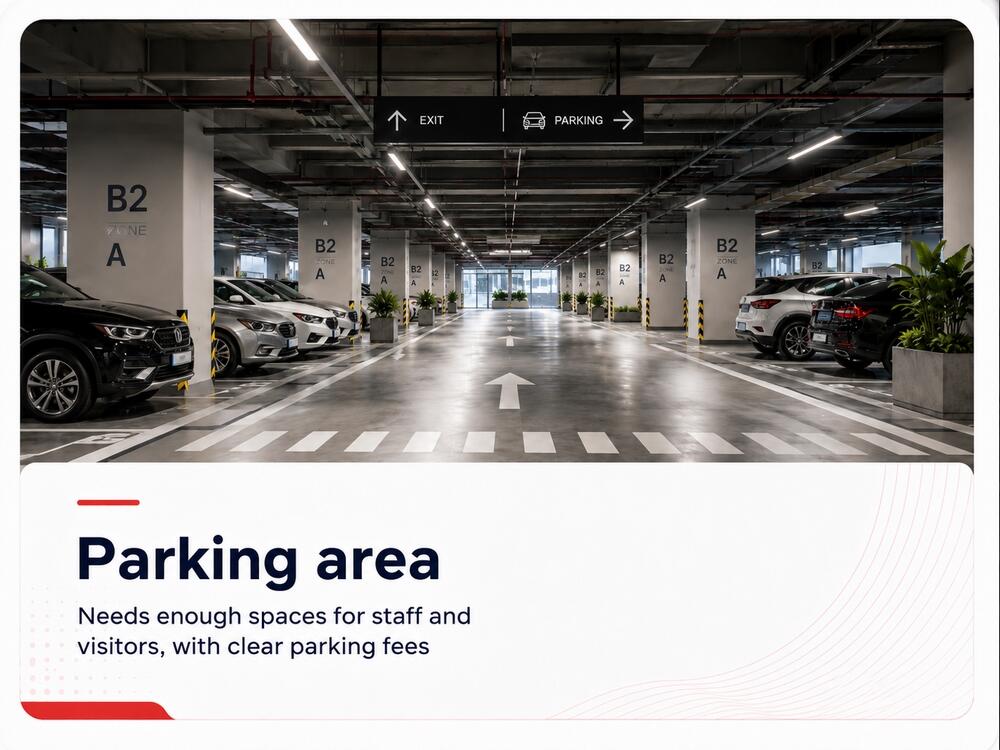
Parking
Motorbike and car parking must meet the needs of staff and visiting clients. Businesses should clarify the number of parking spaces allocated per leased area and the applicable parking fees.
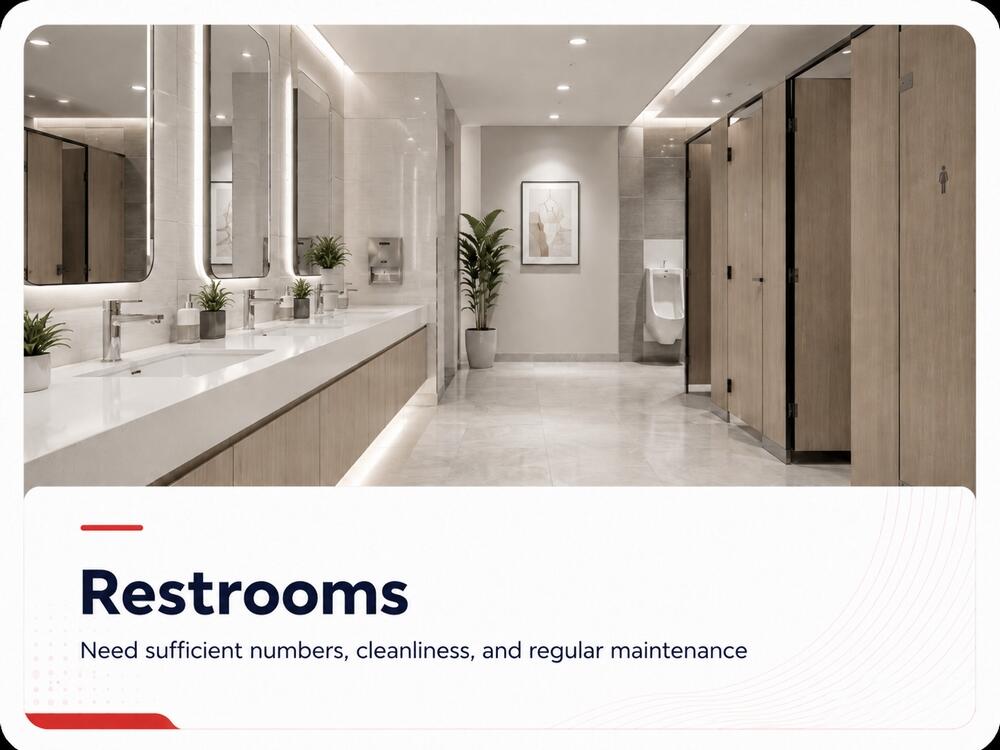
Restrooms
Restrooms must be sufficient in number relative to the staff density per floor, and maintained and cleaned regularly. This is a basic amenity but one that directly affects daily experience and the impression left on visitors.
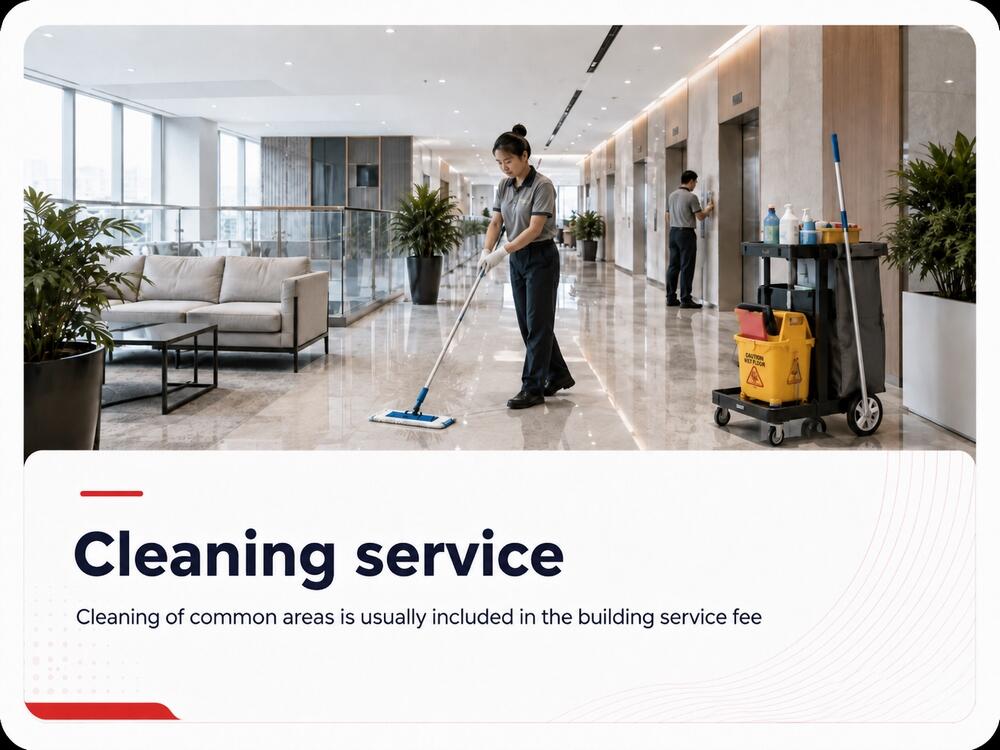
Cleaning services
Cleaning of common areas (corridors, elevators, lobby) is typically handled by the building management unit and is included in the service fee. Businesses should observe the actual cleaning quality during a site visit rather than relying solely on verbal descriptions.
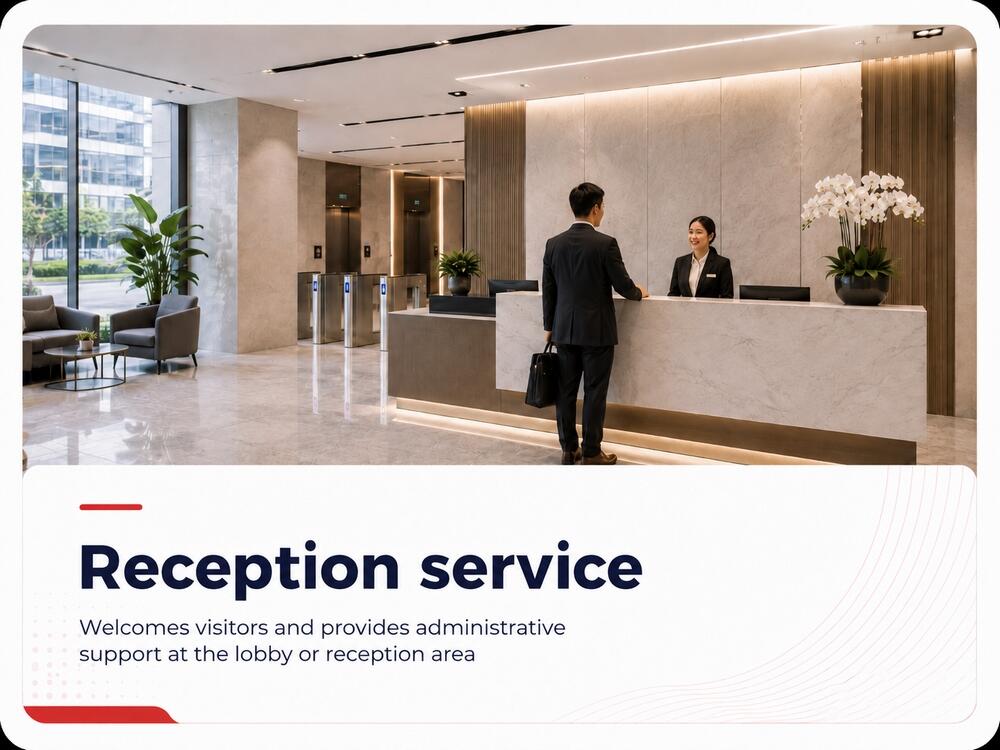
Reception services
Reception staff handle guest welcome, directions, and basic administrative support in the building lobby. In serviced offices, reception services are usually charged separately per tenant, while traditional offices typically share a common building receptionist.
Additional value-added amenities offices may offer
Beyond the required essential amenities, many office buildings today – particularly Grade A buildings or new developments – also provide value-added amenities, which can be divided into two groups: enhanced operational support amenities, and experience and wellness amenities.
Group 1: Enhanced operational support amenities
- Printing and photocopying services: a shared printing area or service for document needs as they arise, without requiring businesses to invest in their own equipment
- Private meeting lounge: a more formal space than a standard meeting room, designed for receiving important partners and clients
- Audio-visual and presentation equipment: pre-installed in meeting rooms or conference halls to support presentations and seminars without businesses needing to provide their own equipment
- Phone booths: small, soundproofed spaces for private business calls
- Smart building management app: allows booking of meeting rooms, parking management, or receiving operational notifications via mobile phone
- Conference hall/event space for hourly rental: for hosting seminars, training sessions, or events at a larger scale than standard meeting rooms
Group 2: Experience and wellness amenities
- Gym/fitness area: for employees to exercise without leaving the building
- Recreation and relaxation areas: game rooms, reading corners, or rooftop areas for breaks during the workday
- Green spaces: landscaped areas, rooftop gardens, or balconies that improve air quality
- Food and beverage area/food court: diverse dining options within the building premises
- On-site health services: some premium buildings offer a medical room or periodic health check-up services
Considerations when evaluating
Not every business needs to prioritize all value-added amenities – the level of necessity depends on industry, company culture, and budget. Operational support amenities (printing, client lounges, presentation equipment) tend to deliver practical value for most businesses, while experience amenities are better suited to technology and creative industries where the work environment directly affects talent attraction. Businesses should assess whether the rental cost increases significantly due to these value-added amenities and weigh the actual return on investment.
How do office amenities differ across Grade A, B, and C buildings?
Office amenities differ markedly across building grades – Grade A buildings typically integrate both essential and value-added amenities in full, while Grade B and C buildings focus primarily on essential amenities, with the level of provision decreasing in that order.
| Amenity group | Grade A | Grade B | Grade C |
|---|---|---|---|
| Air conditioning | Central system, zone-controlled | Central or individual units | Primarily individual units |
| Elevators | High-speed, optimized service density | Meets standard requirements | Minimal, possible long waits during peak hours |
| Security, fire systems | 24/7 access control, fully automated systems | Extended-hours security | Basic level |
| Reception services | Professional, dedicated to individual tenants | Shared building reception | Often absent or limited |
| Parking | Comprehensive, clearly allocated per leased area | Basic provision | May be limited |
| Value-added amenities | Common (gym, relaxation areas, food court, etc.) | Some buildings offer these, not mandatory | Rarely available |
| Green certification | Common (LEED, LOTUS) | Not mandatory | Almost non-existent |
The table above reflects general market trends; actual provision may vary between individual buildings within the same grade.
These differences are directly reflected in rental costs – Grade A buildings with comprehensive amenities typically command significantly higher unit rents than Grade B or C. Businesses should evaluate the necessity of each amenity group based on their industry and budget, rather than defaulting to the highest grade. A business that operates internally with limited client-facing activity may not require the full range of value-added amenities found in Grade A buildings, while still needing essential amenities (air conditioning, security, fire systems) at a solid standard.
How to evaluate office amenities before signing a lease?
Evaluating office amenities before signing a lease goes beyond checking what the building brochure lists – it requires cross-referencing against reality, confirming the scope of use, and clarifying the associated costs for each amenity.
Cross-reference reality rather than relying on descriptions alone
Many amenities are promoted in leasing materials but may differ in actual operation – businesses should conduct a direct site visit and observe the real-world condition of key amenities (air conditioning, elevators, security) rather than relying on verbal introductions.
Confirm the scope of use and limitations
Some amenities advertised as “available” may come with usage restrictions – for example, shared meeting rooms may only be free for a set number of hours per month, or gym access may be limited to tenants on certain floors. Businesses should ask for specific details on the scope and conditions of use for each amenity before signing.
Clarify which amenities are included and which are charged separately
Not all amenities are bundled into the rental or service fee – some value-added amenities (conference halls, health services) may be charged per use or per hour. Businesses should request a detailed breakdown distinguishing included amenities from those billed separately from the outset.
Prioritize evaluation based on actual business needs
It is not necessary to have every value-added amenity – businesses should first identify which amenity groups are genuinely essential for their industry and work culture, and avoid paying for facilities they are unlikely to use.
Document amenity commitments in the lease agreement
For amenities that are critical to operations (number of parking spaces, air conditioning operating hours), businesses should ensure these are written into the contract rather than relying on verbal agreements, to avoid disputes later.
Frequently asked questions about office amenities
Are office amenity costs included in the rental or service fee?
Most essential amenities (air conditioning during business hours, elevators, security, cleaning, shared reception) are typically included in the monthly service fee, while value-added amenities may be charged separately. Businesses should request a detailed breakdown specifying which amenities are included and which incur additional charges – such as after-hours air conditioning or hourly conference hall rental – to calculate the true total cost and avoid unexpected expenses during operation.
Can a tenant request additional dedicated amenities from the building owner?
Yes, but this depends on the building’s policy and the extent to which the change affects shared systems. Amenities that do not impact the building’s structure (custom furniture, equipment within the leased space) can generally be installed freely. For changes that affect shared systems (installing a dedicated air conditioning unit, modifying fire protection systems), written approval from building management is required. Businesses with such needs should negotiate and clarify these terms at the time of signing.