Boutique Office is a small-scale office model that limits the number of tenant businesses, with design and services customized for each client. This model differs from traditional Grade A/B/C offices, coworking spaces and serviced offices in terms of tenant scale and level of personalization. The article analyzes 9 identifying characteristics of Boutique Office, compares it with 3 common office types, and identifies which business groups it suits – from SMEs, agencies to family offices. The content also covers costs, contract terms and development trends in Vietnam.
What is a boutique office?
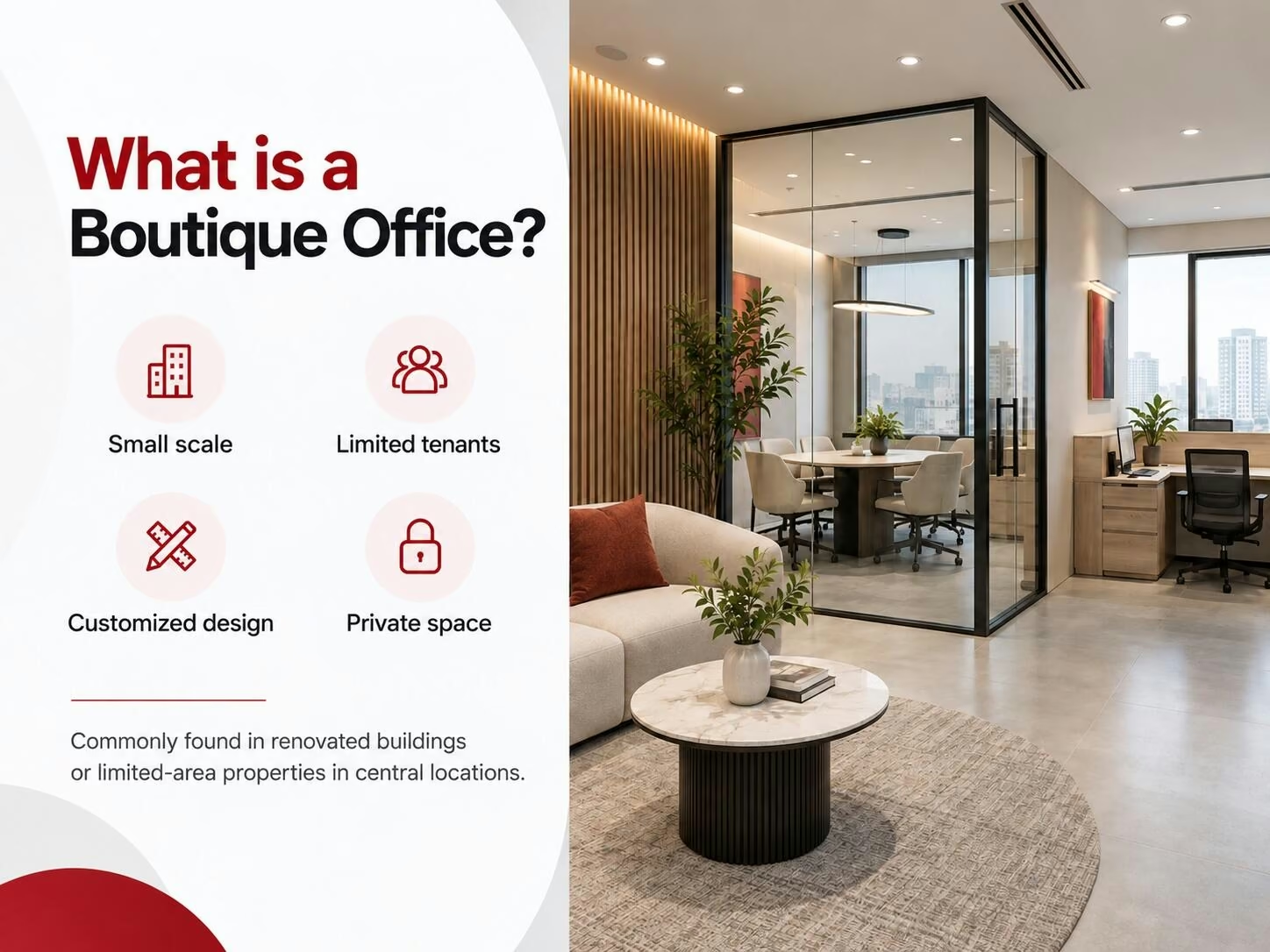
Boutique office is a small-scale office model that limits the number of tenants and offers customized design for each business. The small number of tenants allows the landlord or operator to flexibly personalize the space and services according to the specific needs of each business, instead of applying a mass design standard for multiple tenants like traditional offices.
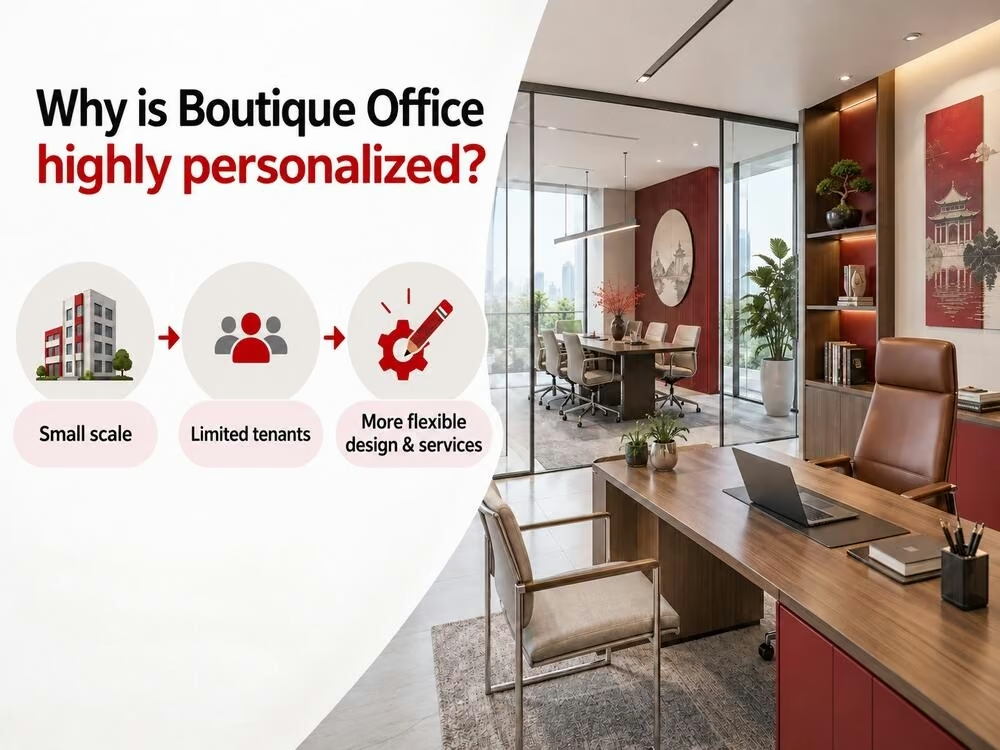
The term “boutique” originates from French, originally referring to a small shop with a limited number of products and a distinctive character. This same logic applies to the office model: small scale comes with greater differentiation and personalization compared to mass-market office models.
Boutique offices are typically located in renovated buildings or projects with limited floor area in central areas. Small land funds in prime locations naturally create small office sizes, which suit the limited-tenant characteristic of this model.
Characteristics of Boutique Office
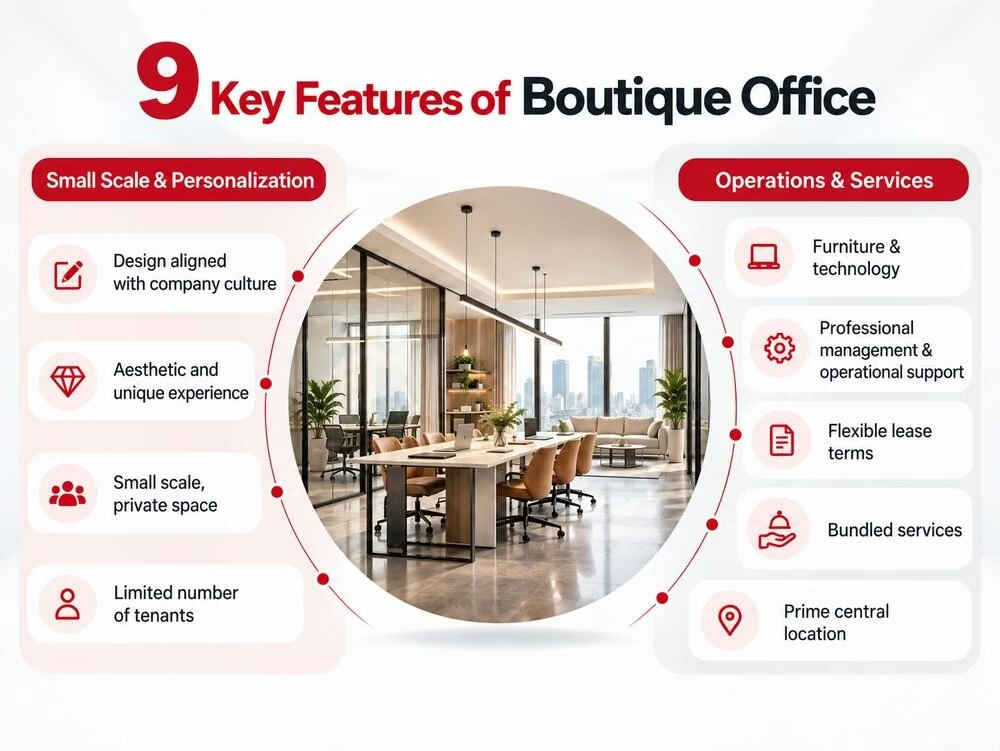
Boutique Office is identified through 9 specific characteristics, revolving around two main axes: level of personalization/small scale and quality of operations. These characteristics distinguish Boutique Office from other office-for-lease models on the market.
Design personalized to corporate culture
The small number of tenants allows the landlord or operator to customize the space according to each business’s own requirements, instead of applying a mass design standard for multiple tenants at the same time. This approach allows the office to accurately reflect the identity and culture of each tenant company.
High aesthetics, prioritizing user experience
Boutique Office focuses on specific factors such as natural light, high-end finishing materials and reasonable space layout. These factors create a better working experience for staff and a more professional impression when receiving customers or partners.
Small scale, private space
The small scale of Boutique Office suits lean teams and is convenient for 1-on-1 discussions at the leadership level. The private space helps businesses hold sensitive meetings without being interrupted by the activities of other tenants.
High level of exclusivity
Boutique Office limits the number of tenant businesses within the same building, while also equipping separate lobbies and elevators for each tenant. This operating mechanism creates a higher level of exclusivity and privacy compared to traditional offices.
High-end furniture and technology
Boutique Office is typically equipped with access control security systems, modern HVAC (air conditioning) systems and carefully selected furniture. These fixtures ensure high operating standards and meet the professional work needs of tenant businesses.
Professional 24/7 operations and management
Boutique Office has an on-site management team supporting tenants outside office hours. Continuous operating service helps businesses handle issues promptly, without depending on a fixed working schedule.
Flexible lease terms
Traditional office lease contracts usually last 2-5 years, while Boutique Office offers more flexible short-term or medium-term contracts. This format suits startups and family offices – entities that need flexibility in their space usage plans.
All-inclusive service, integrated cost
Boutique Office combines items such as rent, management fees, internet, cleaning services and maintenance into a single invoice. This integrated format helps businesses budget more easily and avoid unexpected miscellaneous costs.
Prime location in central/upscale urban areas
Boutique Office is typically concentrated in areas such as District 1, Thu Thiem, Thao Dien and Phu My Hung. These locations offer convenient transport connectivity advantages and reinforce a professional brand image for tenant businesses.
How does Boutique Office differ from other office types?
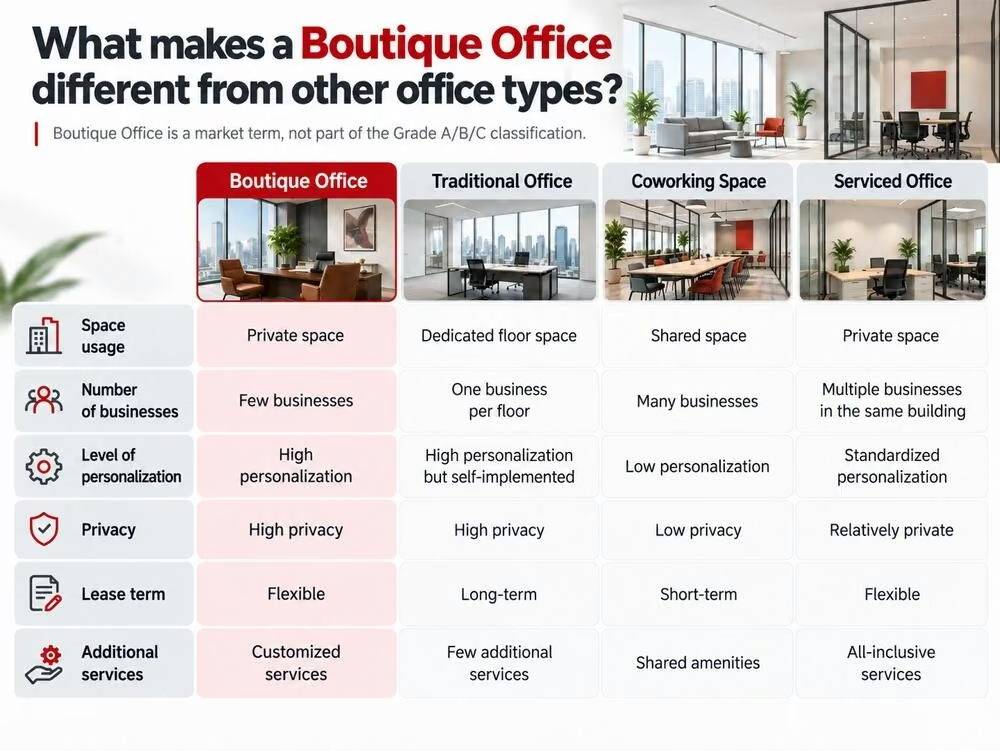
Boutique Office differs from the other 3 office types mainly in tenant scale (dedicated to 1 business) and the level of service personalization. These two factors are compared in detail in each section below.
Compared to traditional offices (Grade A/B/C)
Grade A/B/C is an official classification system based on international standards applied by organizations such as CBRE and Savills, while “Boutique Office” is a market term, not an official classification category. This is a fundamental difference to note, to avoid confusion between the two different classification systems.
In terms of operations, traditional offices are divided into multiple departments or leased to multiple businesses within the same building. Boutique Office limits the number of tenants, with the space tied to a single business. In terms of contracts, traditional offices are usually signed for 2-5 years, while Boutique Office offers shorter or medium-term contracts.
Compared to Coworking Space
Coworking Space is a shared space in the form of hot desks or dedicated desks, where multiple businesses and individuals share common facilities. Boutique Office is a separate space, not shared with any other entity.
In terms of cost and target users, Coworking Space has a lower cost, suited to freelancers, startups or short-term project teams. Boutique Office suits businesses that need a private and stable space over a longer period. In terms of security, Coworking Space is more prone to information exposure due to the open space with many people coming and going, while Boutique Office has private rooms and strict access control systems.
Compared to Serviced Office
Boutique Office and Serviced Office are both “all-inclusive” models, providing furniture, services and flexible contracts for tenants. This similarity should be noted first to highlight the real difference between the two models.
Serviced Office typically belongs to large operating chains such as WeWork, Toong, CirCo and Dreamplex, serving multiple businesses within the same system with uniform design according to the chain’s common standard. Boutique Office limits the number of tenants within a building, with design customized for each client instead of applying a common design standard.
This difference is most clearly reflected in the level of personalization: Serviced Office prioritizes uniformity to scale operations across multiple locations, while Boutique Office prioritizes distinctiveness to serve the specific needs of each tenant business. Businesses that need a space with their own brand identity are usually better suited to Boutique Office, while businesses that need a flexible office network across multiple cities are usually better suited to Serviced Office.
Benefits of leasing a Boutique Office
Boutique Office brings 4 main benefits to tenant businesses: optimized costs, operational flexibility, elevated brand image and a creative working environment.
Reasonably optimized costs
Boutique Office saves costs thanks to all-inclusive service – combining rent, management fees and other services into a single invoice, so no unexpected miscellaneous costs arise. Short-term or medium-term contracts also help businesses avoid long-term capital commitments.
Operational flexibility
Short-term or medium-term contracts make it easy for businesses to scale usage up or down as personnel change, without being bound like the 2-5 year contracts of traditional offices.
Elevated corporate image and brand
The private space combined with a central location suits receiving partners, investors and important customers, helping reinforce a professional business image.
Creative working environment
The small space with customized design allows businesses to arrange it flexibly according to their own way of working, without being constrained by the fixed template of large-scale offices.
Which businesses does Boutique Office suit?
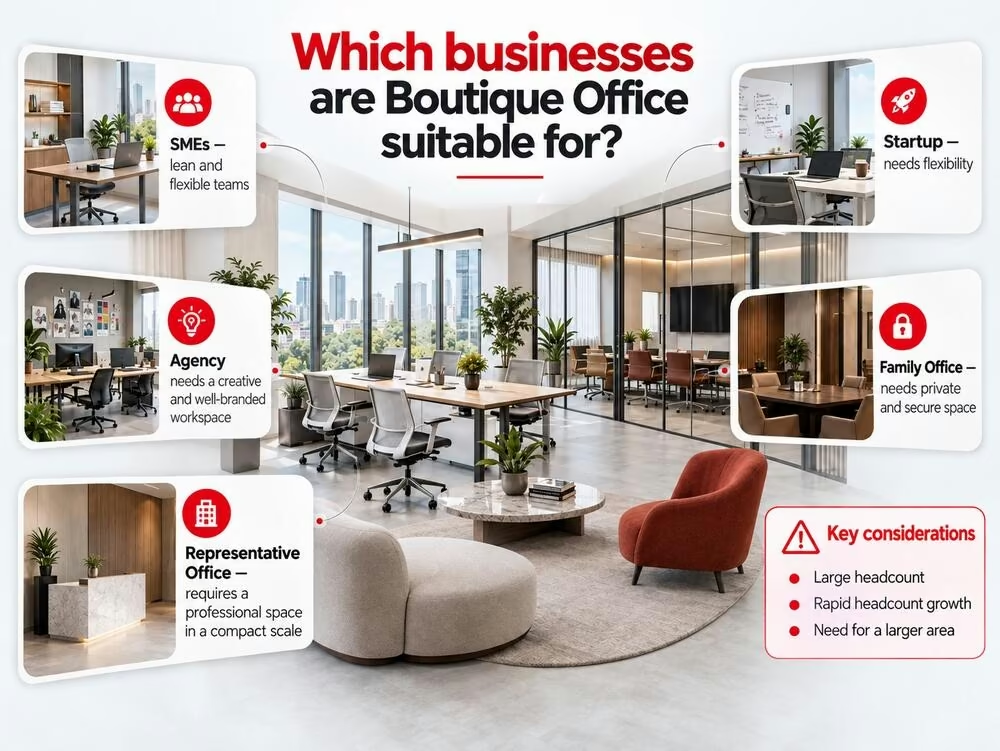
Boutique Office suits 5 business groups: SMEs, agencies or creative companies, representative offices, startups and family offices.
- SME: needs a professional space at an optimized cost, suited to a small, lean team size
- Agency/creative company: needs a space that expresses its own brand identity, suited to the creative nature of the work
- Representative office: needs a location in a central area to receive partners without requiring a large scale
- Startup: needs a flexible contract to easily adjust scale as the team changes
- Family office: needs a private, closed-door space for highly confidential 1-on-1 discussions
Boutique Office is not suited to large-scale businesses or those planning rapid headcount expansion, since the floor area and number of seats in this model are limited by the initial design.
Current status and development trends of Boutique Office in Vietnam
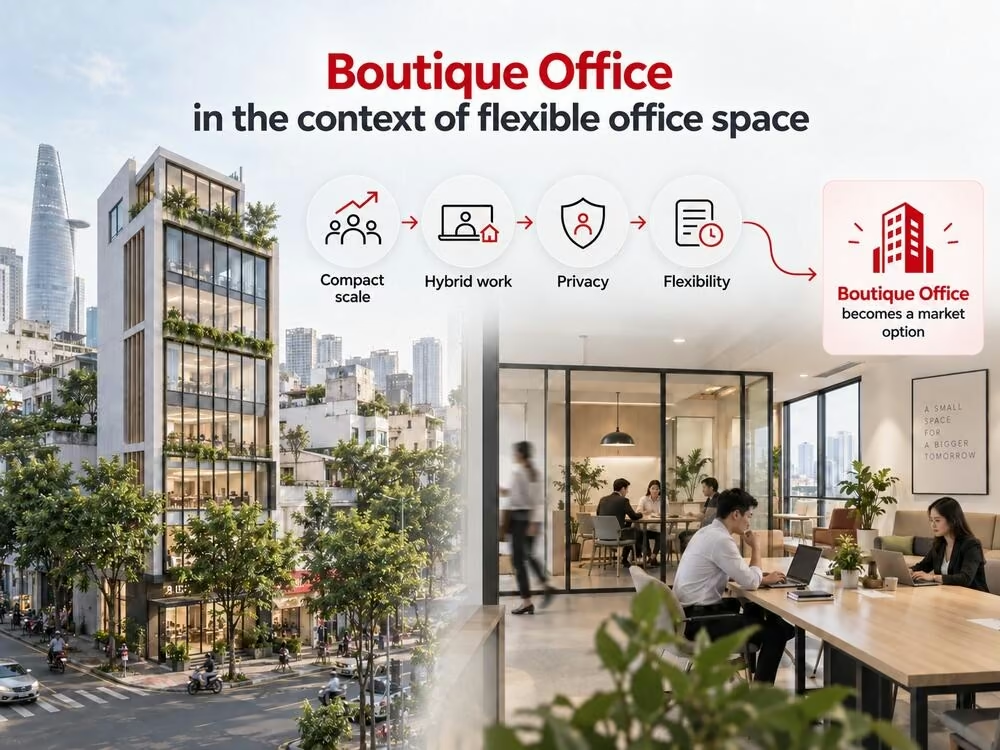
The growing number of small businesses in Vietnam, together with the popularity of the hybrid work model, is increasing demand for private and flexible working spaces. Boutique Office is the market’s response to this demand – a model that precisely meets what small businesses are looking for: suitable scale, optimized cost and contract flexibility.
This trend is clearly visible in central and upscale urban areas such as District 1, Thu Thiem, Thao Dien and Phu My Hung, where limited land funds naturally create conditions for renovated buildings or small floor areas to be converted into the Boutique Office model. As businesses increasingly prioritize working experience and distinctive brand image, Boutique Office is expected to continue expanding in these areas in the coming period.
Frequently asked questions about Boutique Office
Is Boutique Office suitable as a main headquarters?
Yes, Boutique Office is suitable as a main headquarters, but with conditions. This model suits SMEs, agencies, representative offices, startups and family offices, but is not suited to large-scale businesses or those planning rapid headcount expansion due to limited floor area and number of seats.
Is the cost of leasing a Boutique Office higher than a traditional office?
Yes, the cost of leasing a Boutique Office is usually higher per square meter than a traditional office, due to its small scale, prime location and high level of personalization. However, total operating costs can be more optimized thanks to all-inclusive service – combining items into a single invoice, avoiding unexpected miscellaneous costs.
What is the minimum lease term for a Boutique Office?
Boutique Office typically offers short-term or medium-term lease contracts, more flexible than the 2-5 year contracts of traditional offices. The specific term depends on each operator and the agreement with the tenant.
Boutique Office is a small-scale office model that limits the number of tenants and offers a high level of personalization – clearly distinct from traditional Grade A/B/C offices, coworking spaces and serviced offices in terms of usage scale and level of service customization. This model suits SMEs, agencies, representative offices, startups and family offices, thanks to optimized costs, flexible contracts and private space that prioritizes user experience.
When choosing a Boutique Office, businesses need to consider their current team size and future development plans, since this model limits floor area and number of seats. With the hybrid work trend and growing demand for private space in Vietnam, Boutique Office is forecast to continue expanding in central and upscale urban areas in the coming period.