Regulations on Foreign-Invested Enterprises (FIEs) Owning Real Estate in Vietnam
Hello, this is RSQUARE, a company specializing in commercial real estate data.
Following our previous post on May 29, 2022, titled “5 Things You Must Know When Establishing a Factory in Vietnam [Part 1] – Two Ways to Secure a Factory in Vietnam”, in this Part 2 we would like to provide guidance on “Regulations on Foreign-Invested Enterprises Owning Real Estate in Vietnam.”
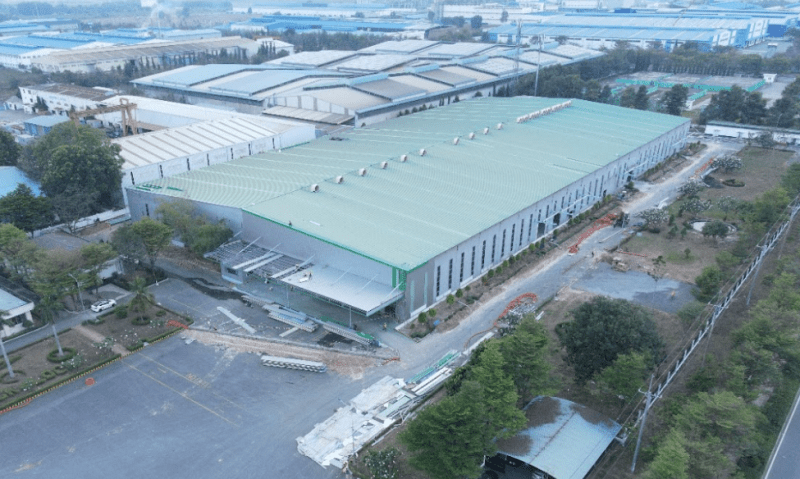
While Part 1 covered leasing ready-built factories and purchasing land in industrial parks to build factories, this Part 2 focuses on cases where existing buildings are purchased.
There are many differing opinions on whether factories or buildings can be purchased in Vietnam. This is because Vietnam’s regulations regarding real estate ownership and restrictions on foreign-invested enterprises are significantly different from those in Korea.
In Korea, foreign individuals or foreign-invested companies can purchase buildings or factories without major difficulty. Aside from certain procedures such as foreign currency declaration, issuance of a registration number, and acquisition reporting, the process and applicable laws are essentially the same as for Korean nationals.
However, in Vietnam, the laws applied to foreigners and local citizens differ. As a result, after purchasing a building, there is a risk that the buyer may not be able to use it for the intended purpose or may face difficulties in reselling it in the future.
Accordingly, the relevant Vietnamese regulations are summarized as follows:
1. Under Article 17 of the Constitution and Article 4 of the Land Law, all land in Vietnam is owned by the State.
This regulation applies to both Vietnamese and foreigners; all individuals and entities may only obtain land use rights for a period approved by the State.
2. Foreign individuals cannot obtain land use rights, but foreign-invested enterprises can legally obtain them.
Under the amended Housing Law (2015), the types of real estate that foreigners can purchase are limited. Typical examples include apartments, villas, and resorts within projects open to foreign investors.
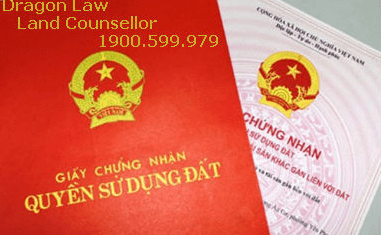
Even in such cases, only off-plan or developer-sold properties can be purchased, and properties that already have a Pink Book (ownership certificate) cannot be acquired.
3. Foreign-invested enterprises may purchase residential properties for employee housing purposes. However, they are not allowed to lease them to third parties.
If the enterprise is not established for real estate business purposes, it is not permitted to generate rental income from real estate.
4. Foreign-invested enterprises engaged in real estate business may obtain land use rights, construct buildings, lease them to third parties, and sell (distribute) the properties.
To conduct real estate leasing business in Vietnam, it is mandatory to establish an FIE registered for real estate business. Only then can activities such as development, management, leasing, distribution, and sales be carried out.
5. However, even if an FIE is engaged in real estate business, if it purchases an existing building, it is not allowed to lease, distribute, or sell it to third parties.
Although this may seem contradictory to point (4), Vietnamese law only allows profit generation from real estate when the FIE directly develops and constructs projects. Otherwise, such income is considered unearned income, and regulations prohibit generating profit from it.
6. FIEs may obtain land use rights only for projects approved by the State (e.g., construction of production facilities, infrastructure, or housing for lease or sale).
In practice, acquiring land use rights in urban areas is complex and difficult, whereas in industrial zones it is relatively easier.
7. The land use term generally depends on the nature of the project but is typically 50 years and may be extended up to 70 years under special conditions.
Most projects that FIEs can develop – such as industrial parks, apartments, and office buildings – have a 50-year term. This term may be extended only once.
8. The land use period is counted from the date the project is approved, not from the date the property is purchased.
For example, if an industrial park developer obtained approval for Project A in 2000 with a 50-year land use term and later sold units, and a buyer acquired a unit in 2010, then that buyer’s land use right would still expire in 2050 – meaning only 40 years of remaining term.
An important point to note is that, regardless of whether the FIE is engaged in real estate business or not, purchasing existing buildings does not allow leasing to third parties or resale/distribution.
However, in the case of factories within industrial parks, limited forms of transfer may be possible: with approval from the industrial park management authority, the land use rights may be returned, and the value of the building can be transferred to a third party under certain conditions.
As mentioned earlier, the procedures and legal regulations for acquiring real estate in Vietnam are different from those in Korea. Therefore, we strongly recommend that you carefully review and consider any purchase of existing buildings.
If you contact Rsquare, we will be happy to provide you with more detailed guidance.
In addition, RSQUARE provides brokerage services for offices, leased factories, and industrial parks completely free of charge.
This is a unique policy of RSQUARE aimed at supporting all Korean companies entering Vietnam.
Thank you.
About RSQUARE VN
RSQUARE Vietnam operates a nationwide commercial real estate data platform, staffed entirely by in-house professionals. In addition to Korean companies, RSQUARE also serves local Vietnamese businesses and various global clients from Japan, China, Europe, and beyond. Its services include real estate brokerage, corporate housing leasing, visa support, and settlement services for businesses entering Vietnam.

![5 Must-Know Things When Setting Up a Factory in Vietnam [Part 5]](https://rsquare.vn/wp-content/uploads/2026/06/5-must-know-things-when-setting-up-a-factory-in-vietnam-part-5-3.png)
![5 Must-Know Things When Setting Up a Factory in Vietnam [Part 4]](https://rsquare.vn/wp-content/uploads/2026/06/5-must-know-things-when-setting-up-a-factory-in-vietnam-part-4-8.png)
![5 Must-Know Things When Setting Up A Factory In Vietnam [Part 3]](https://rsquare.vn/wp-content/uploads/2026/06/5-must-know-things-when-setting-up-a-factory-in-vietnam-part-1-10.png)