Hello, this is RSQUARE, a company specializing in commercial real estate data.
First of all, we would like to express our sincere appreciation to all business leaders who have successfully overcome the challenges of the past two years. In particular, we believe that those who have been operating businesses in Vietnam must have faced even greater difficulties. As we are now rapidly returning to normal life, we wish that all of your goals for this year will be successfully achieved.
Since April, when quarantine requirements were lifted for travel between Korea and Vietnam, a significant number of business professionals have been traveling between the two countries. In particular, there has been a sharp increase in visits to Vietnam by businesspeople who had been unable to travel over the past two years.
In fact, it has now become difficult to secure flight tickets, with most flights operating at full capacity. Moreover, when visiting airports, one can see large crowds waiting outside to greet arrivals, as well as long lines inside at check-in counters – scenes that closely resemble those before the COVID-19 pandemic.
Since May, as we have met many business professionals entering Vietnam from Korea, we have received numerous inquiries regarding factory establishment in Vietnam. As Vietnam’s real estate and investment laws differ significantly from those of Korea, we felt the need to explain these differences and share practical cases. This led us to document the information so that more people can better understand the process.
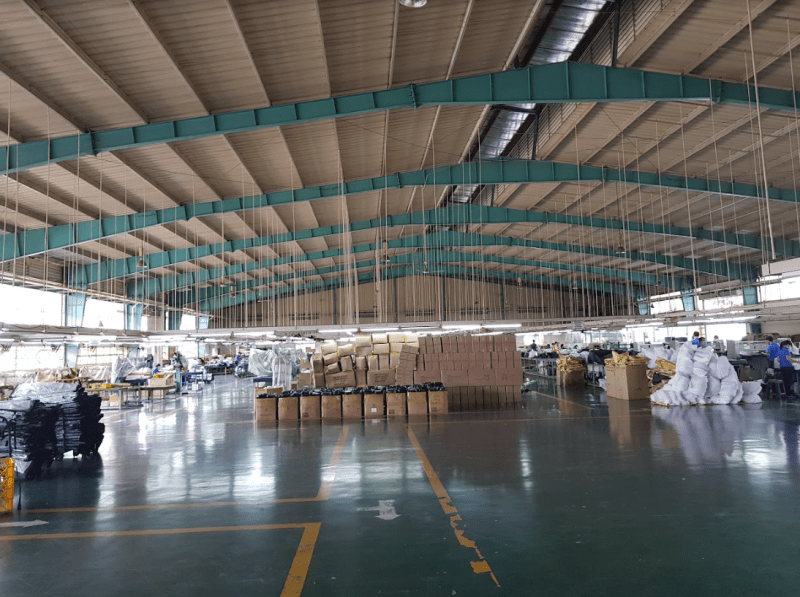
Therefore, we will introduce five key topics frequently discussed during consultations related to factory establishment in Vietnam, presented across a total of five parts.
Two Ways to Secure a Factory in Vietnam
1. Leasing a Ready-Built Factory
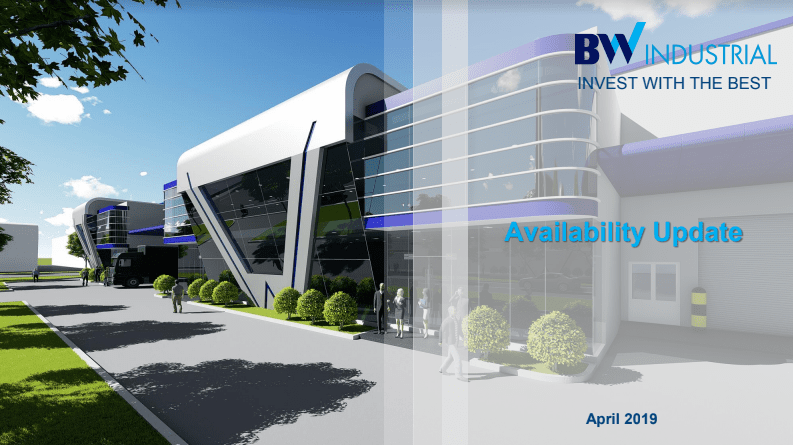
If you search “Vietnam factory for lease” online, you will find a wide range of information. There are several major companies that provide rental factories in Vietnam. Among them, representative developers officially partnered with RSQUARE include KCN, BW, KTG, KIZUNA, and SONADEZI.
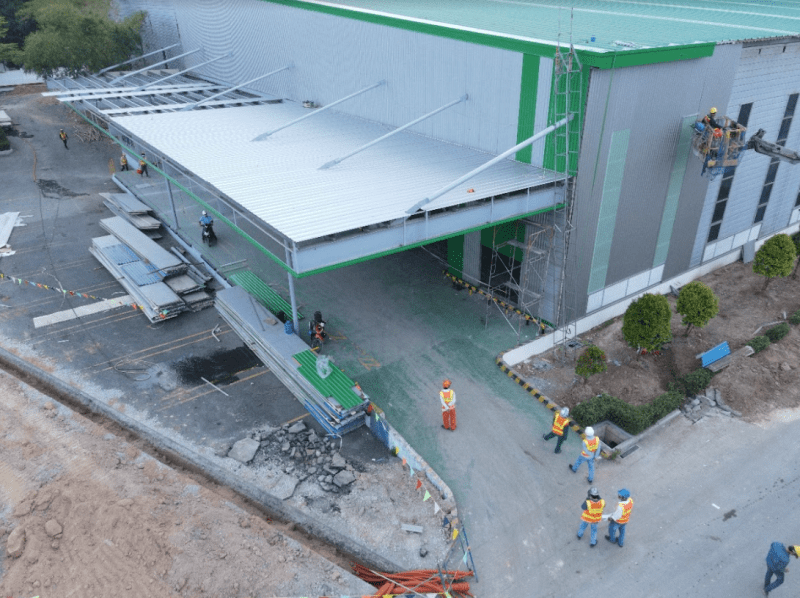
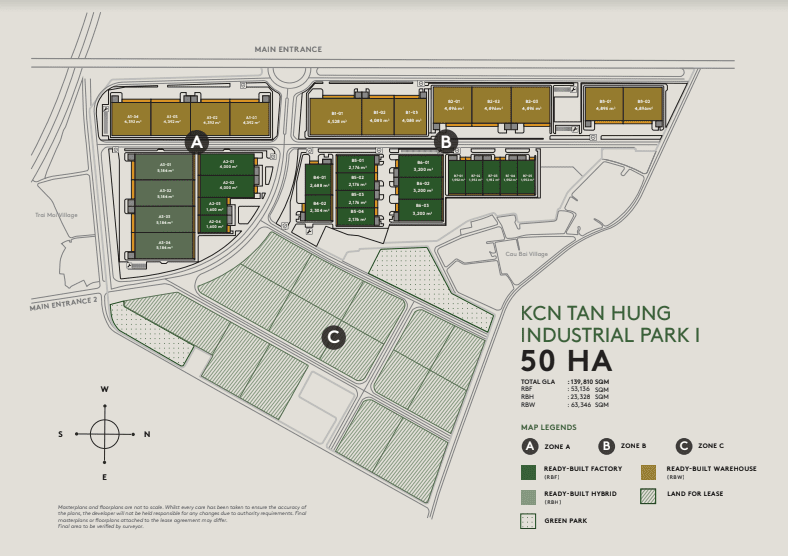
A leased factory is a ready-built facility developed by industrial park operators, equipped to the extent that production can begin immediately after installing internal equipment (as shown in typical examples). Companies can use these factories for a required period by paying monthly rent.
Typically, a deposit equivalent to about six months’ rent is required, and lease contracts usually range from 3 to 5 years.
Leased factories are commonly chosen by businesses that meet the following conditions:
- Companies with automated production systems, relatively small workforce, and no need for large space
- Businesses producing high value-added products rather than labor-intensive goods
- Companies that need to manage risks when entering Vietnam for the first time
- Cases where production volume is expected to increase soon, requiring short-term use before building a large-scale factory
- Companies aiming to minimize initial investment costs when entering Vietnam

In addition, industrial park developers such as KCN, BW, KTG, KIZUNA, and SONADEZI typically provide free support for obtaining licenses (IRC, ERC) for tenants. However, additional costs may arise for special or complex licenses.

Finally, rental prices for factories in major industrial regions in Vietnam are generally formed at around USD 4–6 per sqm (based on building area).
2. Securing Industrial Land and Constructing a Factory
Before leased factories became widespread, most companies used to lease land-use rights from industrial park developers and then build their own factories for production.
As many of you may know, Vietnam does not allow private land ownership. Instead, companies are granted land-use rights by the government for a certain period and are only permitted to build and use the land in accordance with the approved purpose.
Typically, after signing a land-use agreement, it takes at least 8 months or more to complete factory construction (excluding special-purpose facilities). In reality, not only construction time but also the licensing process and approvals required to start construction take a significant amount of time.
Therefore, companies should expect factory operations to begin approximately one year after signing the industrial park contract.
In particular, starting this year, Vietnam’s environmental impact assessment (EIA) regulations have changed, which may result in increased time and costs compared to the past.
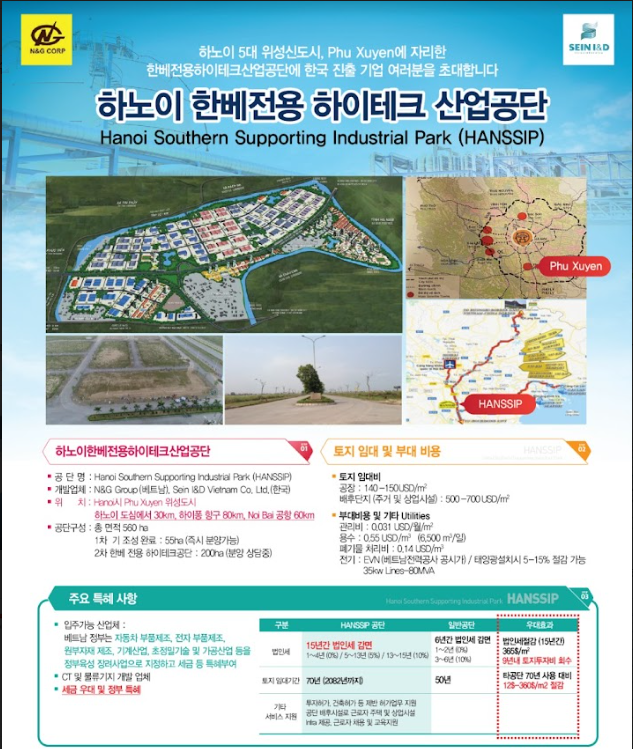
Industrial land prices in Vietnam vary significantly by region, making it difficult to provide a general benchmark. Below are reference price ranges for selected areas:
[Northern Region]
- Hanoi: 170 – 220 USD/sqm
- Bac Ninh: 100 – 130 USD/sqm
- Hai Phong: 90 – 120 USD/sqm
[Central Region]
- Quang Nam: 30 – 45 USD/sqm
[Southern Region]
- Dong Nai: 160 – 200 USD/sqm
- Binh Duong: 150 – 180 USD/sqm
- Long An: 180 – 250 USD/sqm
* Prices are based on industrial land per sqm and exclude less preferred or remote industrial parks.
In this part, we introduced “two ways to secure a factory in Vietnam.”
In the next part, we will cover “regulations regarding real estate ownership by foreign-invested companies in Vietnam.”
In addition, RSQUARE provides brokerage services for offices, leased factories, and industrial parks completely free of charge.
This is a unique policy of RSQUARE aimed at supporting all Korean companies entering Vietnam.
Thank you.

About RSQUARE VN
RSQUARE Vietnam operates a nationwide commercial real estate data platform, staffed entirely by in-house professionals. In addition to Korean companies, RSQUARE also serves local Vietnamese businesses and various global clients from Japan, China, Europe, and beyond. Its services include real estate brokerage, corporate housing leasing, visa support, and settlement services for businesses entering Vietnam.

![5 Must-Know Things When Setting Up a Factory in Vietnam [Part 5]](https://rsquare.vn/wp-content/uploads/2026/06/5-must-know-things-when-setting-up-a-factory-in-vietnam-part-5-3.png)
![5 Must-Know Things When Setting Up a Factory in Vietnam [Part 4]](https://rsquare.vn/wp-content/uploads/2026/06/5-must-know-things-when-setting-up-a-factory-in-vietnam-part-4-8.png)