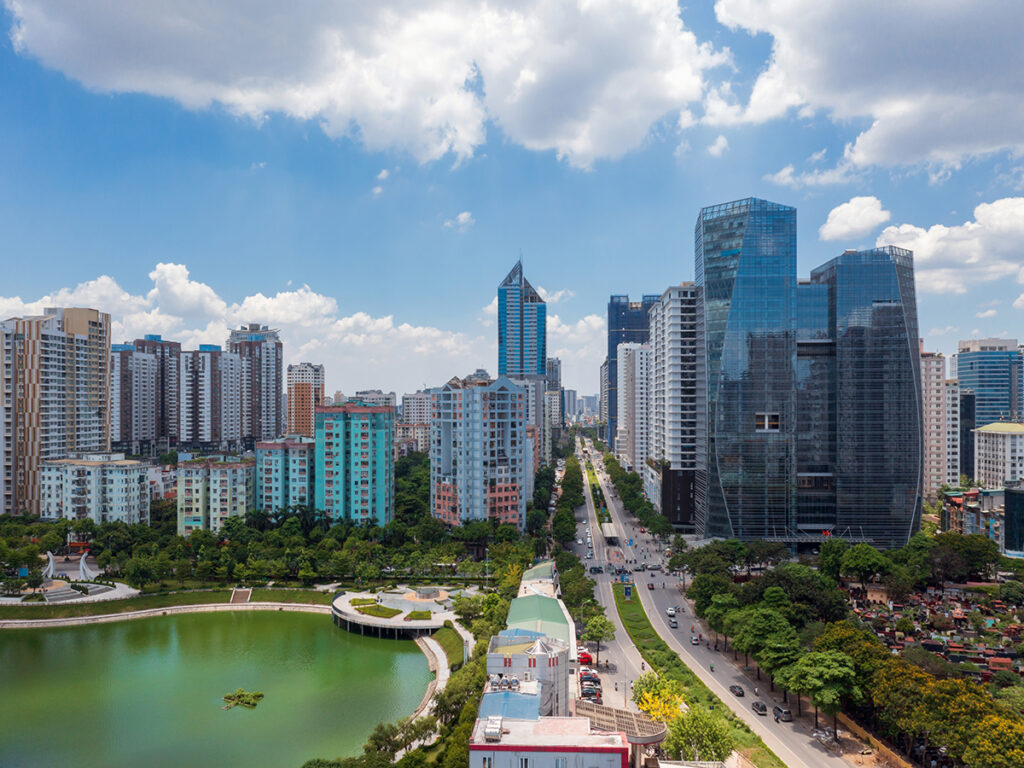
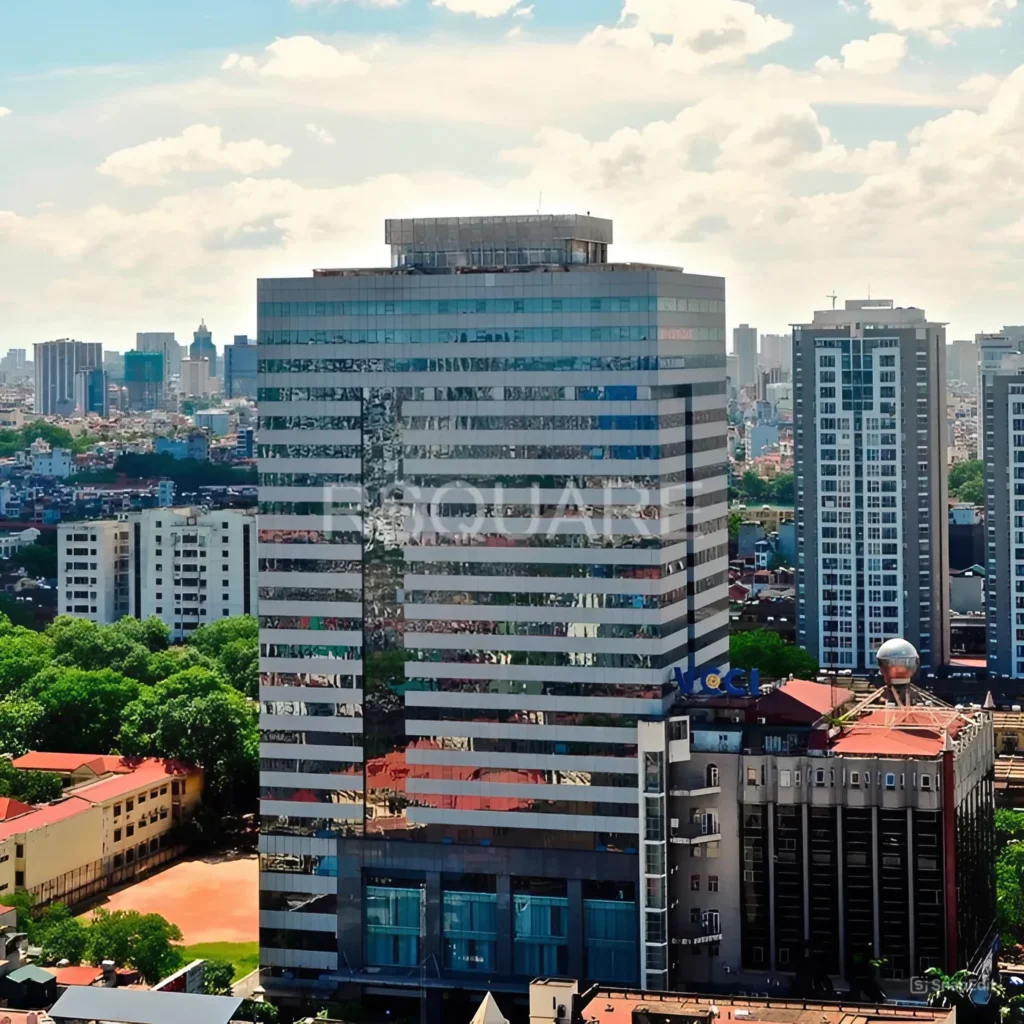
The first half of 2026 closed with an increasingly clear divergence in the office leasing markets of Ho Chi Minh City and Hanoi. While Ho Chi Minh City continues to affirm its position as a mature market with stable supply and high occupancy in the central area, Hanoi is entering a new phase of supply growth, particularly in the Grade A segment in the western area.
This contrast not only affects rental levels and the supply-demand balance, but also poses a strategic question for businesses when choosing office space in the two major cities.

Q2/2026 Rental Price Landscape: Clear Stratification
The divergence in supply between the two cities has directly affected asking rents in Q2/2026. Ho Chi Minh City leads in peak prices and price range, while Hanoi shows a clear stratification between the central Hoan Kiem area and the western area, where prices are softer.
In Ho Chi Minh City:
| District | Average Price | Price Range |
| District 1 | $45.6 | $19.8 – $72 |
| District 2 | $43.0 | $28.5 – $57.5 |
| District 3 | $33.2 | $22 – $46.5 |
| Binh Thanh | $30.0 | $22 – $34.5 |
| Tan Binh | $22.6 | $14.7 – $36 |
In Hanoi:
| District | Average Price | Price Range |
| Hoan Kiem | $35.4 | $10.4 – $49 |
| Bac Tu Liem | $27.8 | $20.3 – $33.8 |
| Ba Dinh | $26.0 | $12.5 – $45 |
| Dong Da | $22.4 | $11.8 – $43 |
| Cau Giay | $19.5 | $10 – $29 |
| Nam Tu Liem | $17.6 | $13.2 – $30 |
The data shows that District 1 has the widest rental range in the market, spanning from USD 19.8 to USD 72/m². This large gap draws a clear line between two groups of products: Grade B buildings that have been in operation for many years and premium Grade A towers located in prime positions.
Overall, the average rent in central Ho Chi Minh City currently stands at USD 45.6, 29% higher than in the equivalent area of Hanoi (USD 35.4). This gap has been consistently maintained over many quarters, demonstrating the extremely strong underlying demand in the southern office market.
The cost barrier in the central area, combined with the emergence of many quality supply options in neighboring districts, has triggered a wave of office relocation. Instead of staying in traditional locations, many businesses are proactively moving farther from the center. This is a practical strategy that helps them optimize their budgets while still upgrading to a modern working environment.
Decoding Key Segments & Relocation Hotspots by Area
The office landscape in the two major cities reflects not merely the supply-demand relationship, but also clearly shows how businesses are shifting their workspace strategies. This is seen across six key areas: District 1, District 3, and Binh Thanh in Ho Chi Minh City, and Cau Giay, Ba Dinh, and Dong Da in Hanoi.
Ho Chi Minh City: Choosing Between Prime Location and Reasonable Cost
1. District 1 – The Financial Center and the Challenge of Limited Supply
District 1 continues to serve as the core commercial and financial center of the entire market. The defining characteristic of this area is that land available for new office projects is almost exhausted. Scarce Grade A supply, combined with consistently high occupancy rates, gives landlords strong negotiating leverage. As a result, rents in the central area have remained stable despite general downward pricing pressure.
However, the District 1 market itself is seeing clear stratification. With a wide price range (from USD 19.8 to USD 72/m²), tenants can see a very large competitive divide. While older Grade B and C buildings are starting to face pressure to renovate in order to retain tenants, high-quality properties in prime frontage locations continue to see very strong real demand.
The presence of landmark buildings such as Deutsches Haus, Lim Tower 3 and Riverbank Place are typical examples. This area remains the preferred choice of financial institutions, banks and multinational corporations.

2. District 3 – The Near-Central Belt and a Bright Spot Attracting Businesses
District 3 records an impressive occupancy rate. Beyond being just a neighboring area, it is in fact a strategically valuable near-central belt of the market. Located adjacent to the center, District 3 allows businesses to establish a reputable, professional business address while significantly optimizing their operating budget. This area is an excellent answer for those who want quality workspace without paying the expensive “location premium” of District 1.
The area’s appeal is demonstrated by notable projects such as Pearl 5, Centec Tower, and especially Halo Building Signature, which quickly reached near-maximum occupancy, helping to sharply reduce the district’s overall vacancy rate.
This is a clear signal confirming the trend of “shifting to find real value”: tenants are proactively widening their search to near-central areas to control costs, while still retaining full access to transport networks and commercial amenities.

3. Binh Thanh – The Eastern Gateway and a Destination for Expanding Businesses
Binh Thanh is directly benefiting from its gateway location and the completion of East–West transport infrastructure (notably the Metro line). Its position adjacent to the core of District 1 and direct connection to Thu Duc City enables the area to meet businesses’ commuting and transaction needs well.
Besides its location advantage, a distinctive feature of office space in Binh Thanh is its open-plan design with airy river views. This practically meets the need to improve the working environment and employee wellbeing – a criterion that many companies are incorporating into their HR policies.
Notable projects such as Pearl Plaza, CII Tower and Opal Tower offer quality supply approaching Grade A standards with large floor plates. This is a suitable choice for the Technology (IT), Logistics and Fast-Moving Consumer Goods (FMCG) sectors that need to expand their workforce. Here, they can upgrade to a modern, professional workspace while keeping operating costs reasonable.

Hanoi: Supply Divergence and the Advantages of Each Area
1. Ba Dinh – Leading Grade A Standards in the West
Ba Dinh maintains its position as the Grade A office cluster leading Hanoi’s western area. The district’s distinctive advantage is its location at the intersection of the central government agencies and major commercial arteries. Unlike the scarcity in the core of Hoan Kiem, supply in Ba Dinh saw steady expansion during the period, giving tenants more options and greater leverage when negotiating contracts.
Large-scale projects such as Capital Place Lieu Giai, Lotte Center Hanoi and Daeha Business Centre continue to be familiar locations for specific tenant groups such as embassies, non-governmental organizations, financial institutions and foreign investment funds. For these clients, Ba Dinh meets stringent requirements for security, building management quality, and convenient access to state agencies.

2. Cau Giay – Abundant Supply, a Destination for the Technology Sector
Standing out with the most abundant space in the market, Cau Giay offers many flexible options in terms of area and rental cost. A characteristic of many buildings here is their large floor plates, which are very convenient for setting up continuous workspaces on a single floor.
The area, home to professionally operated projects such as CMC Tower, 789 Office Building and the highlight Keangnam Landmark 72 (located on Pham Hung axis), has gradually formed a distinct business community. It is now a concentrated destination for technology (IT), telecommunications and software companies. These sectors typically have very large workforces, so the abundant supply in Cau Giay makes it easy for them to find large areas with a tightly controlled average cost per employee.

3. Dong Da – The Mid-Range Segment, an Optimal Choice for Operations Teams
Located at the pivotal point connecting the old center (Hoan Kiem) and the new development area in the west, Dong Da offers a major advantage in terms of its inner-city transport network. This advantage allows employees to commute easily from many surrounding residential areas, a practical factor supporting recruitment and retention of internal staff.
Projects such as ROX Tower Hanoi (54A Nguyen Chi Thanh), Eurowindow Building and IDMC Lang Ha provide space with good construction quality and a mid-range rental structure. Thanks to these characteristics, space in Dong Da is often chosen by trading companies, back-office operations teams, or companies that need a stable, conveniently accessible office without requiring a very high-end building image.

Market Trends & Perspectives for the First Half of 2026: Tenant Demand Is Shaping the Market
Behind the changes in rents and supply, the biggest factor affecting the market right now is the shift in tenants’ mindset. Market reality shows that businesses – especially large corporations – are reshaping their office selection criteria around 4 main trends:
1. Putting Employee Experience First
- Employee satisfaction and the working environment are now the biggest factor in deciding on a space (84%), surpassing even building image (24%) or developer reputation (4%).
- Most companies (92%) believe that designing collaboration spaces is the best way to bond culture and increase productivity.
- Tenants now see the office as a practical tool for attracting and retaining talent, not merely an address for conducting business.
2. Prioritizing Green Space and Real Operational Quality
- Although as many as 74% of businesses prioritize green buildings, the criteria they value most are very basic and practical: air quality (72%), 24/7 security systems (72%) and backup power (68%). This shows that instead of investing in overly elaborate amenities, landlords only need to manage basic infrastructure well and maintain a stable working environment to create a major competitive advantage.
3. Demanding Flexible Space and Convenient Commuting
- The adoption of AI is changing the way 47% of businesses work (mainly in data analysis), driving demand for workspaces that can be easily rearranged, downsized or expanded.
- In addition, 42% of companies say employee commuting directly influences their choice of location.
- With 75% of tenants prioritizing the convenience of public transport, buildings near major roads or Metro lines hold a significant advantage in attracting tenants.
4. The Trend of Upgrading Space Quality (Flight-to-Quality)
- The three factors above are driving a clear common trend: businesses are gradually leaving older Grade B and C buildings to upgrade to more modern Grade A and A+ spaces.
- Although abundant new supply in the market makes it easier for tenants to negotiate prices, the final decision to sign a contract will always favor buildings with a good working environment, a focus on greenery and professional operation.
Looking back at the overall picture of the Q2/2026 office market, it is clear that the landscape has fundamentally changed: this is no longer an exclusive playground for landlords. The clear divergence in supply between Hanoi and Ho Chi Minh City, together with growing pressure from stringent ESG standards and ever-higher expectations for employee experience, has officially handed the initiative to tenants.
Rental cost remains a significant budget item. However, the reality of the “Flight-to-Quality” wave points to an important lesson: real value does not come from finding the cheapest rent, but from choosing the right workspace – one that can raise productivity and retain talent.
Whether your company’s strategy is to stay in financial center districts such as District 1 or Ba Dinh, or to move toward near-central areas such as Cau Giay and District 3 to optimize costs, now is the “golden opportunity” to act.
Do not rush to renew your contract at the old rate. It is time to review your entire operating budget and proactively put your requirements on the negotiating table!
So, does your business have enough data and grounds to negotiate for the upcoming lease cycle? Contact the RSQUARE expert team now to receive a detailed space cost assessment and an updated list of buildings with the most attractive incentive policies this quarter!