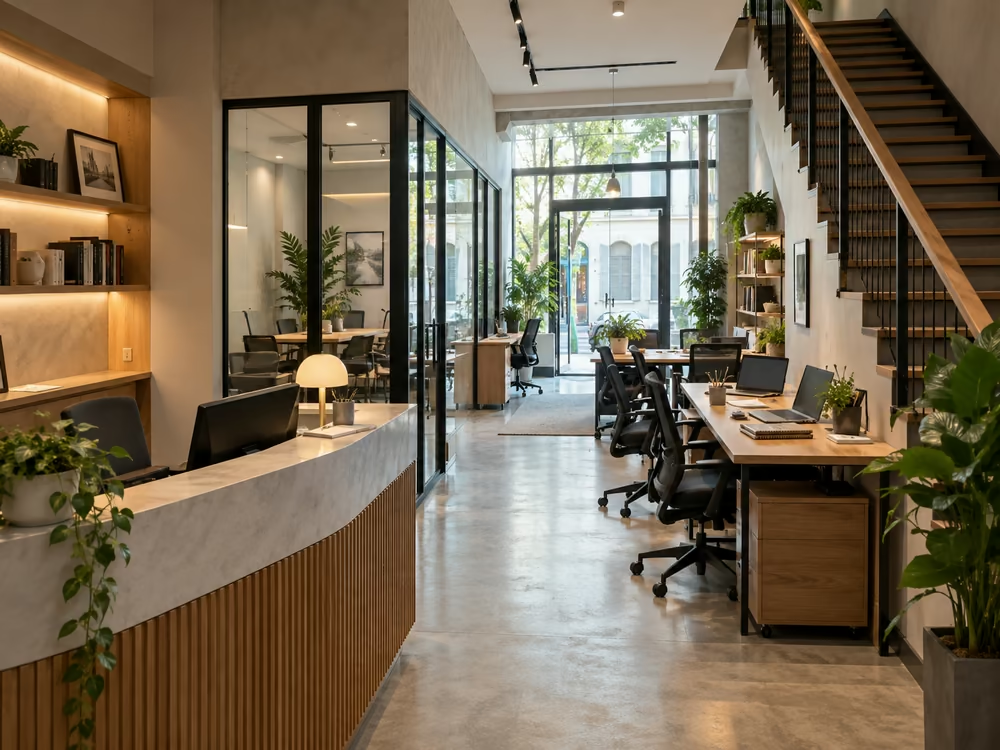
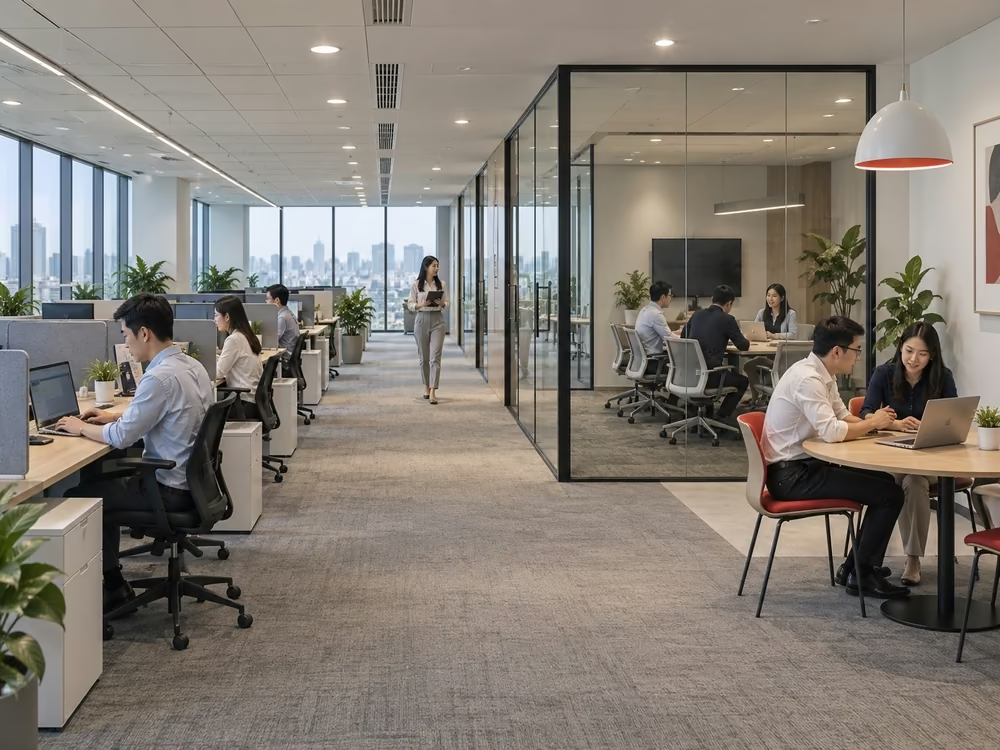
Wall color occupies a large visual area in an office and directly affects how bright, spacious, and cohesive the overall workspace feels. Even with the same floor area, different color choices can make an office appear more open, warmer, or visually heavier if they do not match the lighting and interior design.
For this reason, office paint colors should not be selected based on personal preference alone. Businesses should consider floor area, lighting conditions, work functions, brand identity, and practical usage requirements at the same time.
This article outlines the key factors businesses should review when selecting wall colors for an office.
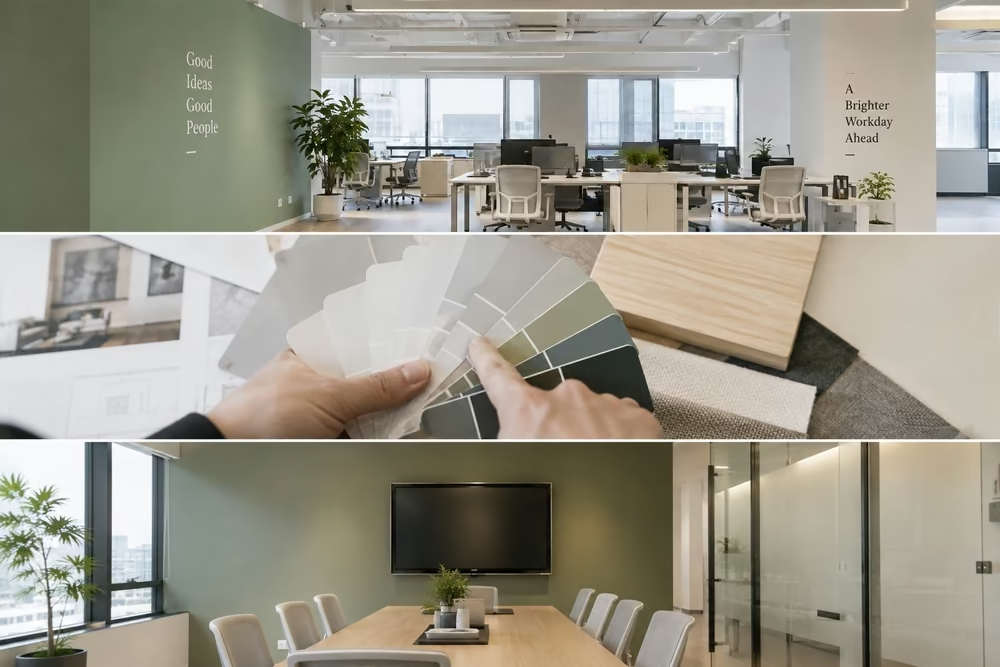
Why should office paint colors be selected carefully?
Wall paint is one of the interior elements that has a significant impact on the appearance of an office, yet it can be relatively difficult to change once the workspace is already in operation.
If the selected colors do not work well with the space, businesses may need to repaint certain areas or adjust lighting and interior elements to restore visual balance. Paint colors should therefore be considered from the design and fit-out stage rather than treated as a final decorative decision.
1. Impact on the perception of space
Light tones such as white, cream, light gray, or beige generally reflect more light and can make a workspace feel more open.
By contrast, dark or highly saturated colors create stronger visual accents. When used across large surfaces, however, they may make an office feel smaller or visually heavier.
This is particularly important for offices with limited floor area, low ceilings, or insufficient natural light.
2. Creating a foundation for the overall interior design
Wall color often serves as the visual background connecting furniture, flooring, ceilings, lighting, and decorative elements.
A suitable wall color can allow furniture and materials to stand out without making the space feel cluttered. If walls, flooring, and furniture all compete visually, the overall office may lose balance.
The color palette should therefore be assessed as part of the entire workspace rather than selected separately for individual walls.
3. Maintaining a professional office appearance
Peeling paint, stains, uneven color, or deteriorated wall surfaces are particularly noticeable in reception areas, meeting rooms, and client-facing spaces.
For businesses that regularly welcome clients or partners to the office, wall condition is also part of the overall workplace experience.
Inspecting and repainting walls when necessary helps maintain a consistent appearance and preserves the original design intent.
Factors to consider when choosing office paint
In addition to color, businesses should select a paint type that matches the conditions and usage level of each area.
Several factors should be reviewed:
- Ease of cleaning and surface maintenance
- Color durability under regular lighting conditions
- Moisture resistance in areas with higher humidity
- Paint coverage
- Compatibility with the existing wall surface
- Volatile organic compound standards where required by the project
- Drying time and the period required before the office can be occupied
Corridors, pantries, and other high-traffic areas may require more washable and durable paint than meeting rooms or private offices.
For this reason, the entire office does not necessarily need to use the same paint product.
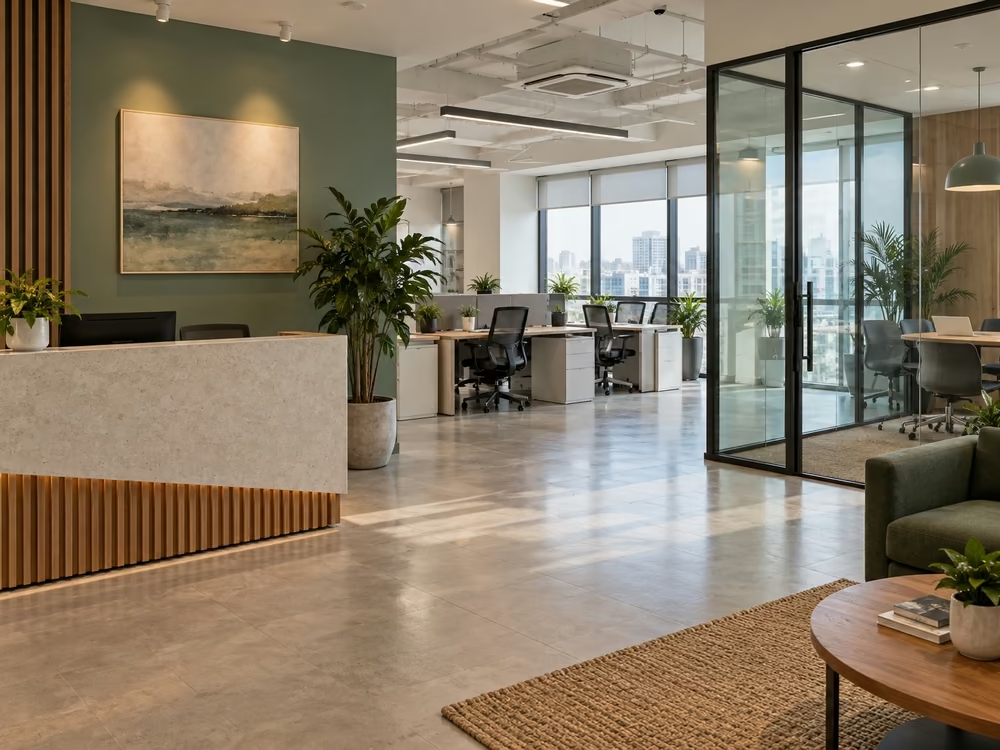
5 ways to choose suitable office wall colors
1. Select colors based on office size and spatial proportions
Office size is one of the first factors to review before determining the color palette.
For smaller offices, light and neutral tones such as white, off-white, light gray, or beige are generally easier to work with. These colors create a lighter visual background and can reduce the sense of confinement when combined with appropriate lighting.
Larger offices allow greater use of dark tones or accent colors. Instead of applying a strong color across an entire space, businesses can use it selectively in areas such as:
- The wall behind the reception desk
- Meeting rooms
- Lounge areas
- Brand feature walls
- Collaboration spaces
This approach creates visual accents while maintaining balance across the office.
2. Test paint colors under actual lighting conditions
The same paint color can appear different depending on the light source.
Natural daylight, warm lighting, and cool white lighting can all change how a wall color is perceived. A color selected from a catalogue or computer screen may therefore look different once applied to the actual office.
Before painting the entire workspace, businesses should test the color on a small section of wall and review it at different times of day.
In areas with limited natural light, very dark colors may make the space feel heavier. Areas with large windows and strong daylight typically provide more flexibility in color selection.
3. Build the color palette around the brand identity
Brand colors can be incorporated into the office, but they do not need to become the main background color across the entire workspace.
If the brand identity uses highly saturated colors such as red, orange, dark blue, or purple, applying them to large wall areas may create excessive visual intensity.
A more controlled approach is to use brand colors in specific locations, such as:
- Logo areas
- Reception counters
- Main meeting rooms
- Decorative walls
- Collaboration areas
- Signage systems
Neutral colors can then be used for the remaining surfaces to provide visual balance.
This allows the brand identity to remain visible without making the entire workspace feel overly branded.
4. Choose colors based on the function of each area
An office typically consists of multiple spaces with different functions, so every area does not need to use the same color.
Focused work areas generally work better with stable palettes and limited visual contrast.
Meeting rooms can use neutral tones or a darker accent wall to create a stronger visual focal point.
Pantries and breakout areas may use warmer or more dynamic colors to distinguish them from work areas.
Reception spaces often benefit from stronger alignment with the company’s brand identity because they are usually the first point of contact for clients and business partners.
Using different color palettes by function can also support wayfinding in larger offices.
5. Review paint colors together with materials and furniture
Wall color should not be evaluated in isolation. It will always be viewed together with flooring, ceilings, furniture, curtains, glass partitions, and other finishing materials.
For example, an office that uses warm-toned timber may require a different wall palette from a workspace dominated by glass, metal, and cool gray furniture.
Before finalizing the paint color, businesses should compare samples alongside the main materials used in the project.
A basic material board may include:
- Paint samples
- Flooring samples
- Timber or laminate
- Upholstery fabric
- Metal finishes
- Stone
- Ceiling colors
- Planned lighting conditions
Reviewing these materials together reduces the risk of individual finishes looking attractive separately but appearing inconsistent once installed in the same space.
What colors are suitable for an office?
There is no single wall color that works for every office. The appropriate choice depends on the design concept, floor area, lighting conditions, and how the workspace will be used.
However, several color groups are commonly used in office environments.
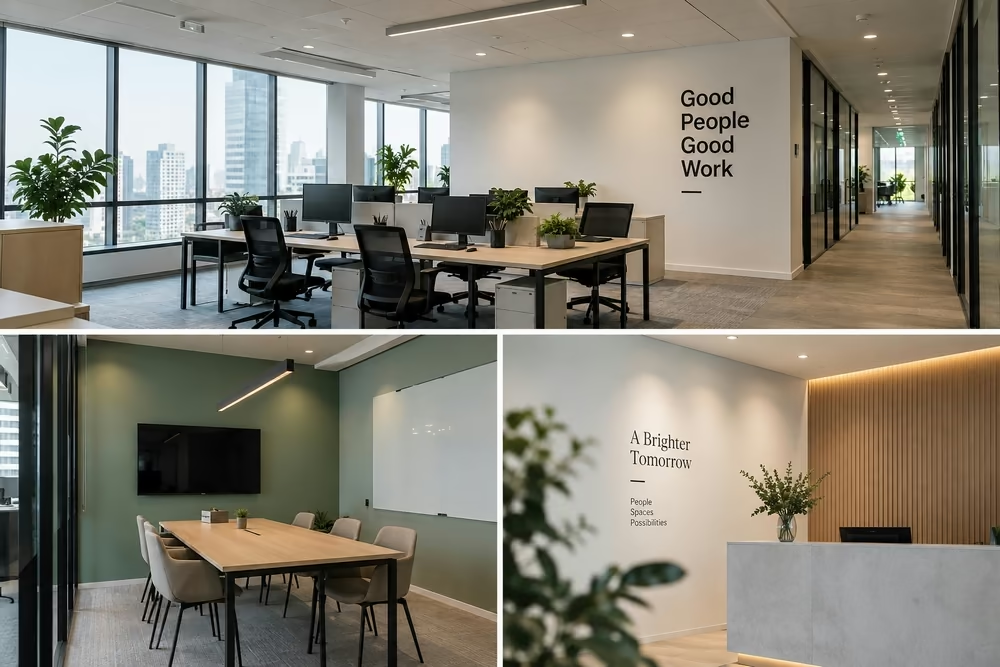
White and off-white
These colors are easy to combine with a wide range of interior styles and furniture.
White works well in spaces that aim to feel bright, clean, and simple. However, if an office uses only white without additional materials or accent colors, the result may feel visually flat.
Gray
Light gray is commonly used in modern offices because it works well with timber, glass, metal, and a wide range of brand colors.
Dark gray should be used more selectively to avoid making the space feel underlit.
Beige and cream
These colors provide a warmer appearance than white or gray.
Beige is often suitable for offices using timber finishes or for businesses seeking a neutral atmosphere that does not feel too cold.
Green and blue
These colors are often used as accents rather than across the entire office.
Depending on the shade, they can be combined with neutral palettes to define zones or create focal points in meeting rooms, collaboration spaces, and breakout areas.
Red, orange, and yellow
These colors have high visual intensity and therefore require careful control.
In an office environment, they are usually more suitable for branding elements, small accent walls, or areas where a stronger visual focal point is required.
Common mistakes when choosing office paint colors
Selecting colors only from small samples
A color shown on a small sample card may look very different once applied across a large wall.
Businesses should test paint directly on-site before making the final decision.
Ignoring lighting conditions
A color that works well near a large window may not work equally well in a corridor or meeting room with limited daylight.
Lighting should therefore be evaluated together with paint color from the beginning.
Overusing brand colors
Applying brand colors to every wall can make the office visually unbalanced.
Businesses should determine where strong brand visibility is needed and where neutral tones are more appropriate.
Selecting paint colors before confirming interior materials
If paint colors are finalized too early, they may be difficult to coordinate with flooring, furniture, or other finishing materials later in the project.
The color palette should be developed alongside the overall material palette.
Ignoring maintenance requirements
High-traffic areas are more likely to become dirty or suffer from surface damage.
Paint colors and products for these areas should therefore be selected based on both appearance and ease of maintenance or touch-up after the office begins operating.
When should an office be repainted?
There is no fixed repainting cycle that applies to every office. The timing depends on paint quality, operating conditions, and the level of use in each area.
Businesses may consider repainting when they notice signs such as:
- Peeling or cracked wall surfaces
- Uneven or faded paint color
- Stains that are difficult to clean
- Moisture or mold that requires treatment
- An office renovation project
- A change in brand identity
- Changes to the layout or function of the workspace
If the issue is caused by water leakage, humidity, or another technical problem, the underlying cause should be resolved before repainting. Applying a new coat directly over an untreated surface usually addresses only the visible symptom for a limited period.
What should businesses prepare before painting or renovating an office?
In an office building, painting and fit-out work may be subject to specific building regulations covering working hours, material delivery, protection of common areas, and post-construction cleaning.
Before starting work, businesses should review:
- Building fit-out regulations
- Permitted construction hours
- Material delivery requirements
- Elevator and corridor protection requirements
- Regulations relating to odor, dust, and noise
- Handover or reinstatement requirements
- Work scopes requiring approval from building management
If the office remains operational during construction, zoning and scheduling should be planned carefully to reduce disruption to daily business activities.
How RSQUARE supports businesses during office selection and fit-out planning
Wall color is only one part of creating a functional workplace. Before reaching this stage, businesses need to evaluate the office floor plan, handover condition, layout potential, fit-out requirements, and building regulations.
RSQUARE advises businesses during the office search and evaluation process based on criteria such as floor area, location, budget, existing conditions, and operational requirements.
When reviewing an office space, businesses should assess renovation and fit-out requirements from the site inspection stage. This makes it easier to identify potential work items before signing the lease and preparing the office relocation plan.