A green office is a workspace designed and operated in a more environmentally friendly way, helping businesses save costs while keeping employees more comfortable and healthier. If your business is exploring green offices, this article explains what the model is, which standards it is assessed against in Vietnam such as LOTUS and EDGE, and what benefits it brings to the environment, businesses and employees. You will also learn how to operate one, popular design trends, notable green buildings in Ho Chi Minh City and Hanoi, and answers to common questions, including rental costs.
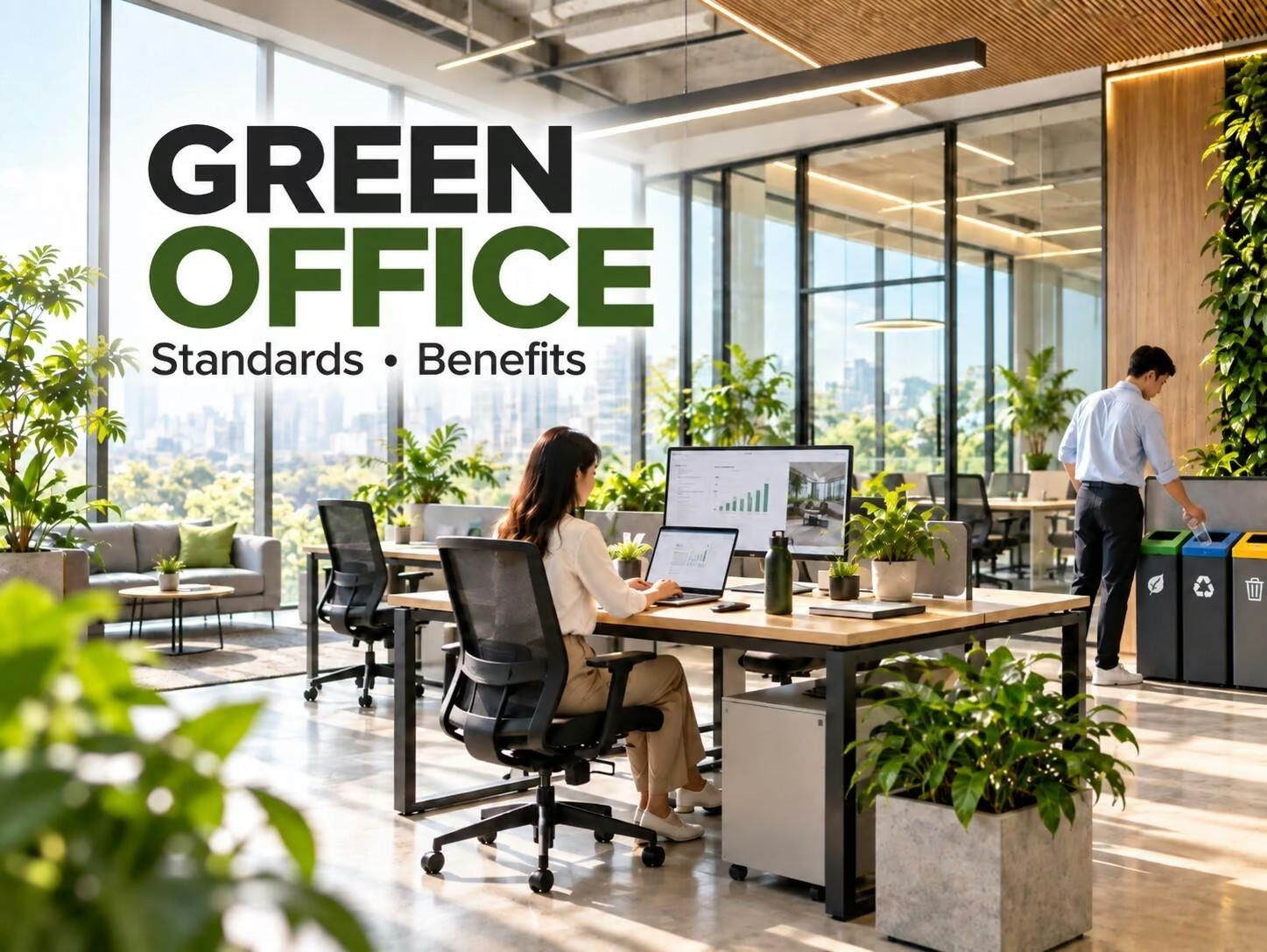
What is a green office?
A green office is a model of office design and operation that aims to reduce negative environmental impact, optimize operating costs and improve employee health. The model combines the building’s infrastructure with how the business organizes its space and how its people behave.
One of the best-known systems for this model is WWF Green Office, developed by WWF Finland and officially launched in 2002. The program helps offices cut CO2 emissions and use resources sustainably, through a process of self-assessment, auditing and certification. In Vietnam, AIT-VN’s Green Office initiative focuses on three areas: electricity, water and waste.
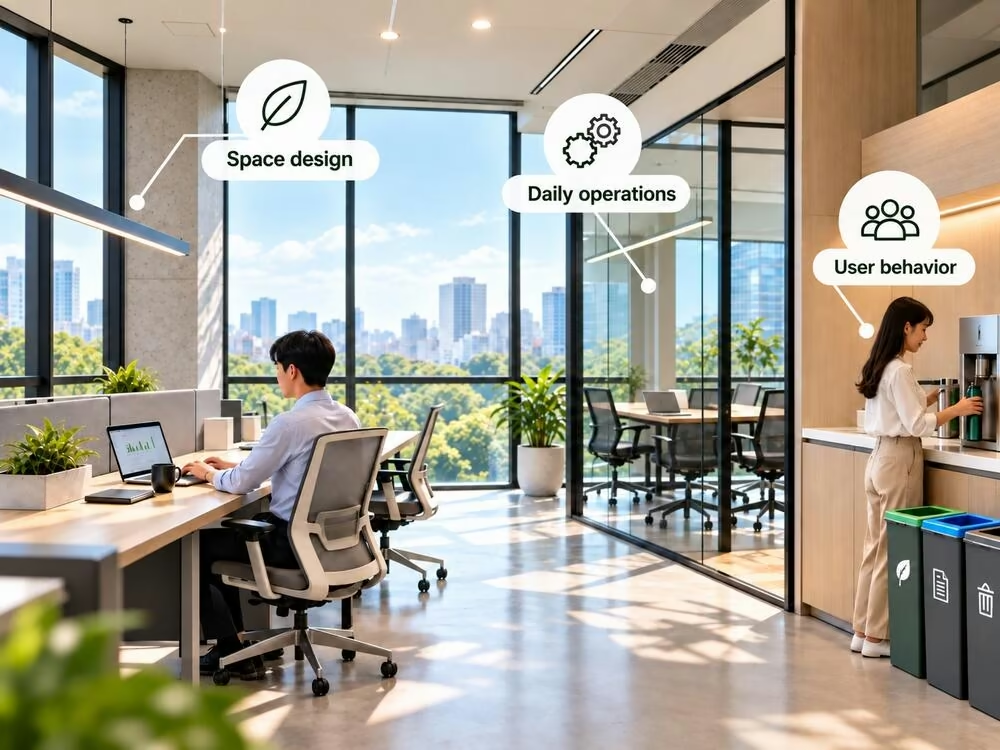
A green office model consists of three layers:
- Space design: natural light and ventilation, plants, and eco-friendly materials such as recycled wood, low-VOC paint and recycled-fiber carpet. The building determines the air-conditioning system, facade and windows. The business, as the tenant, decides the furniture layout, finishing materials and plants during fit-out.
- Daily operations: controlling electricity, water, paper and waste, for example by using LED lights and energy-efficient equipment, printing double-sided and sorting waste at source.
- User behavior: changing work habits toward sustainable consumption, for example bringing personal water bottles, turning off equipment when not in use and limiting single-use plastics.
A green office is different from a green building. A green building is a project certified green at the building level, for example under LEED, LOTUS or EDGE. A green office is how a business organizes the space and activities inside its office, whether or not the building is certified. The business controls the operations and behavior layers, while the design layer depends partly on the building.
Green offices suit businesses of every size and type, from small companies to large corporations, from private enterprises to state organizations. There is currently no mandatory standard specifically for green offices. Businesses refer to systems such as WWF Green Office, LEED and LOTUS to build criteria suited to their size and industry.
Benefits of a green office
A green office creates value for three groups: the environment, businesses and employees, and each group benefits in its own way.
For the environment
A green office reduces environmental impact by cutting emissions, saving resources and limiting waste.
- Lower CO2 emissions: saving electricity on lighting, air-conditioning and office equipment reduces greenhouse gas emissions. From 2007 to 2015, offices participating in WWF Green Office in Finland cut a total of 57,500 tonnes of greenhouse gases.
- Saving electricity, water and materials: LED lights, lighting sensors, water-saving faucets and recycled materials reduce consumption and waste.
- Less waste: sorting waste at source, double-sided printing and limiting single-use plastics reduce the amount of office waste released into the environment.
For businesses
A green office brings businesses three values: lower long-term operating costs, a stronger brand image and better talent attraction.
- Lower long-term operating costs: electricity and water bills fall thanks to efficient equipment and systems. The FPT office building in Da Nang, designed to IFC’s EDGE standard, is expected to cut electricity use by up to about 21% and water use by 32%.
- Stronger brand image: a green office demonstrates environmental commitment to customers, partners and investors, while contributing to the environmental (E) criteria in ESG reports. The WWF Green Office label is only granted after the environmental management system has been assessed and audited, making it independent evidence of this commitment.
- Talent attraction: in the Human Spaces report’s survey of 7,600 office workers across 16 countries, one third said office design would definitely affect their decision on whether to work there.
For employees
A green office improves employees’ physical health, mental well-being and engagement.
- Physical health: good ventilation and natural light make the workspace more pleasant. Harvard University’s COGfx study found that employees in green-certified buildings reported 30% fewer sick building symptoms than those in non-certified buildings.
- Mood and creativity: according to the Human Spaces report, employees working in spaces with natural elements rated their well-being 15% higher, their productivity 6% higher and their creativity 15% higher.
- Green habits and engagement: employees take part together in sorting waste, saving electricity and reusing items, which builds sustainable habits. WWF Finland notes that managing an organization around environmental values gives employees more motivation and pride in their workplace.
How to operate a green office
Operating a green office involves four groups of daily tasks: reducing emissions and non-renewable fuels, reducing paper use, reducing water use, and handling waste.
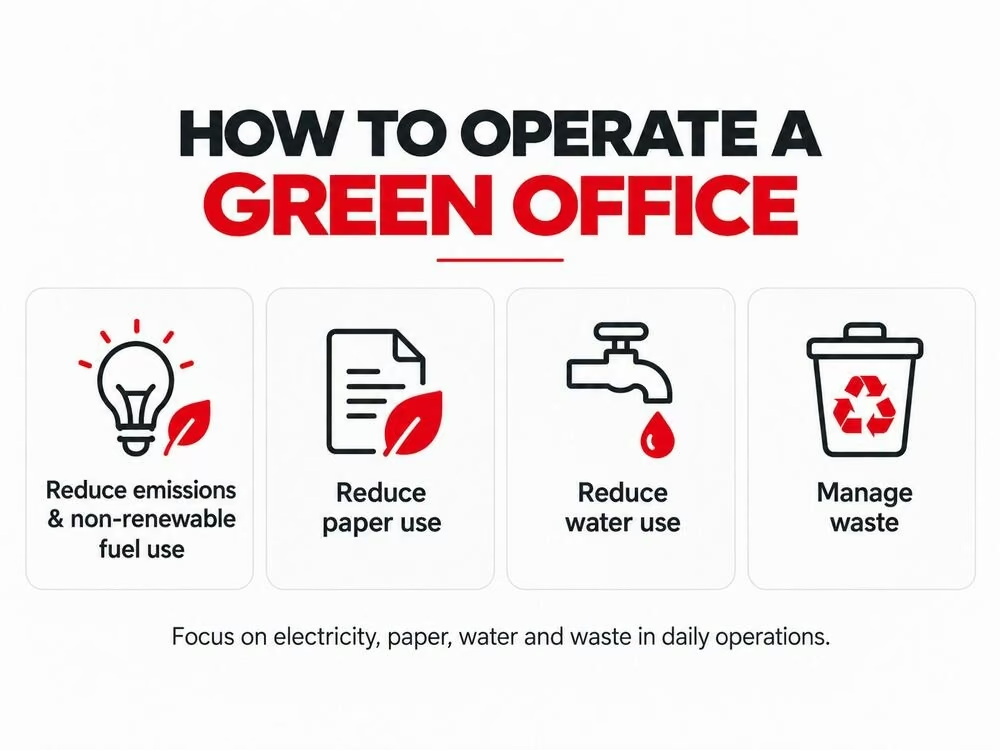
Reducing emissions and non-renewable fuels
Reducing emissions and non-renewable fuels in the office starts with using less electricity, since Vietnam’s power grid still relies partly on coal-fired power. Offices can apply the following measures:
- Make use of natural light: place desks near windows and use glass or low partitions so light reaches deeper into the office, reducing the need for lights during the day.
- Use energy-efficient lighting: LED lights combined with automatic on/off sensors in corridors, restrooms and meeting rooms.
- Turn off equipment when not in use: air-conditioners, computers, printers and monitors are switched off when leaving the office.
- Prioritize low-power equipment: choose equipment with energy-saving labels.
Reducing paper use
Reducing paper use in a green office means printing only when truly necessary, through three actions:
- Switch to digital documents: use digital signatures, email, cloud storage and internal management software such as Google Workspace, Microsoft 365 or Notion instead of paper, moving toward a paperless office.
- Print sensibly: set double-sided printing as the default, reuse scrap paper, and use recycled paper or paper certified by the Forest Stewardship Council (FSC).
- Choose energy-efficient printing equipment: prioritize printers and photocopiers with energy-saving labels and eco-friendly ink.
Reducing water use
Reducing water use in the office focuses on restrooms and the pantry, through water-saving fixtures and employee habits. If the office has its own restrooms and pantry, businesses can apply:
- Sensor faucets: open and close automatically, so no one forgets to turn off the tap.
- Dual-flush toilets: use just the right amount of water for each need.
- Regular inspections: check faucets, toilets and pipes to detect leaks early.
- Internal communication: remind employees to save water with notices and signs in restrooms and the pantry.
The shared water supply and drainage system varies by building and is usually operated by the building management. Businesses should coordinate with the building management rather than decide everything on their own.
Handling waste
Waste handling in a green office starts at the source, meaning waste is sorted right where it is generated and single-use items are limited.
- Sort waste into three groups: organic waste (leftover food, fruit peels, coffee grounds), recyclable waste (paper, plastic, metal), and residual waste (used tissues, plastic bags, food-soiled packaging).
- Place sorting bins: in the pantry and work areas.
- Limit single-use items: single-use cups, straws and water bottles are replaced with personal cups and water bottles.
Sorting waste in the office is only effective when the building’s collection also keeps each group separate. Businesses should ask the building management about its waste collection process before setting up sorting bins.
Green office assessment standards in Vietnam
Green offices in Vietnam are assessed through several parallel systems, including three common standards: LOTUS certification, the EDGE standard and the recommendations of the Vietnam Association of Architects.
LOTUS certification
LOTUS is a green building rating system developed by the Vietnam Green Building Council (VGBC), assessing projects across three main criteria groups: environmental impact, resource efficiency and occupant comfort. The certification is voluntary and has four levels: Certified, Silver, Gold and Platinum.
- Assesses the entire building life cycle: LOTUS considers a project through its design, construction and operation stages, so the score reflects both how the building was built and how it performs.
- Built for Vietnamese conditions: developed for Vietnam’s climate and building regulations, unlike international certifications such as LEED from the US or Green Mark from Singapore.
- Separate criteria sets for each project type: LOTUS BIO is for new construction, while LOTUS Interiors is for interior fit-outs, including office interiors. This distinguishes whole-building certification from certification for the leased space of a green office alone.
EDGE standard
The EDGE standard was developed by the International Finance Corporation (IFC), part of the World Bank Group, for emerging markets, and focuses on assessing a project’s resource efficiency. An office building achieves EDGE certification when the developer demonstrates a potential reduction of at least 20% in energy, water and the energy used to produce building materials, compared with a typical building. The calculation is done with EDGE’s assessment tool from the design stage.
This approach leans toward quantitative measurement, unlike LOTUS, which combines multiple technical criteria groups with occupant comfort. One example is the FPT office building, designed to cut energy by 20.97%, water by 31.8% and the energy used to produce materials by 20.2%. For tenants, these savings mean the building uses electricity and water more efficiently in daily operations.
Recommendations of the Vietnam Association of Architects
Alongside certifications, the Vietnam Association of Architects sets out five qualitative green architecture criteria, helping assess a green office not only through technical figures but also through its design and the value it brings to users:
- Sustainable site: the building’s location and layout suit the natural conditions and surrounding infrastructure.
- Efficient use of resources and energy: the building saves electricity, water and materials in both construction and operation.
- Indoor environment strategy: lighting, ventilation and indoor air quality are prioritized so occupants work comfortably.
- Advanced architecture with identity: modern design that still carries the distinct character of Vietnamese architecture.
- Sustainable social and humanistic value: the building delivers long-term value to its users and the surrounding community.
This set of criteria is a design guideline, not a certification granted to buildings. Businesses can use it as a reference framework when evaluating an office, even if the building has no LOTUS or EDGE certification yet.
Popular green office design trends
Green offices today are usually designed around three popular trends: making use of natural light, placing plants in the workspace, and using eco-friendly materials and furniture.
Making use of natural light
A green office makes use of natural light through large windows, glass walls or skylights to reduce reliance on electric lighting. How much sunlight enters the office is also one of the factors commonly used to judge whether an office is “green”.
Businesses can make use of natural light in two ways:
- Choose a building with plenty of light: glass facades, large windows or skylights are determined by the building, so businesses need to consider this factor when choosing an office to rent.
- Arrange an open interior: limit enclosed partitions and place the main work areas near windows so light reaches deeper. Enclosed meeting rooms or storage should be placed toward the interior.
As a result, the office uses less electricity for daytime lighting while feeling airy, helping employees feel less confined and stay in good spirits.
Placing plants in the workspace
Plants are widely used in modern offices because they enhance aesthetics and bring the workspace closer to nature. Plants also give the eyes a rest after hours of looking at screens.
Businesses can place plants in three main locations:
- Reception area: plants at the reception desk create a friendly, professional first impression for partners.
- Desks: a small potted plant on the desk gives each employee their own green corner.
- Corridors and corners: large plants or a green wall (a wall section covered with pre-planted vegetation) serve as accents for shared spaces.
For indoor environments, businesses should choose easy-care plants such as snake plants, pothos and ivy.
Eco-friendly materials and furniture
A green office prioritizes materials and furniture that are recyclable, sustainably sourced and limit chemicals in the workspace. Businesses renting an office can apply these choices during fit-out.
- Finishing materials: FSC-certified wood (Forest Stewardship Council), recycled materials and natural materials such as bamboo reduce environmental impact. Businesses should limit hard-to-recycle plastics.
- Paint, adhesives and furniture: choose products with low emissions of volatile organic compounds (VOCs), a group of chemicals that affects indoor air quality in the office.
- Durable, reusable furniture: sturdy desks and chairs that can be disassembled or rearranged as the office grows or shrinks, so businesses don’t need to replace them often.
Green-certified office buildings in Ho Chi Minh City and Hanoi
Green offices with international certifications such as LEED, Green Mark or EDGE are increasingly common in Ho Chi Minh City and Hanoi, reflecting the sustainability trend in Vietnam’s commercial real estate. Below are some notable buildings in the two cities.
Ho Chi Minh City
In Ho Chi Minh City, notable certified green offices include:
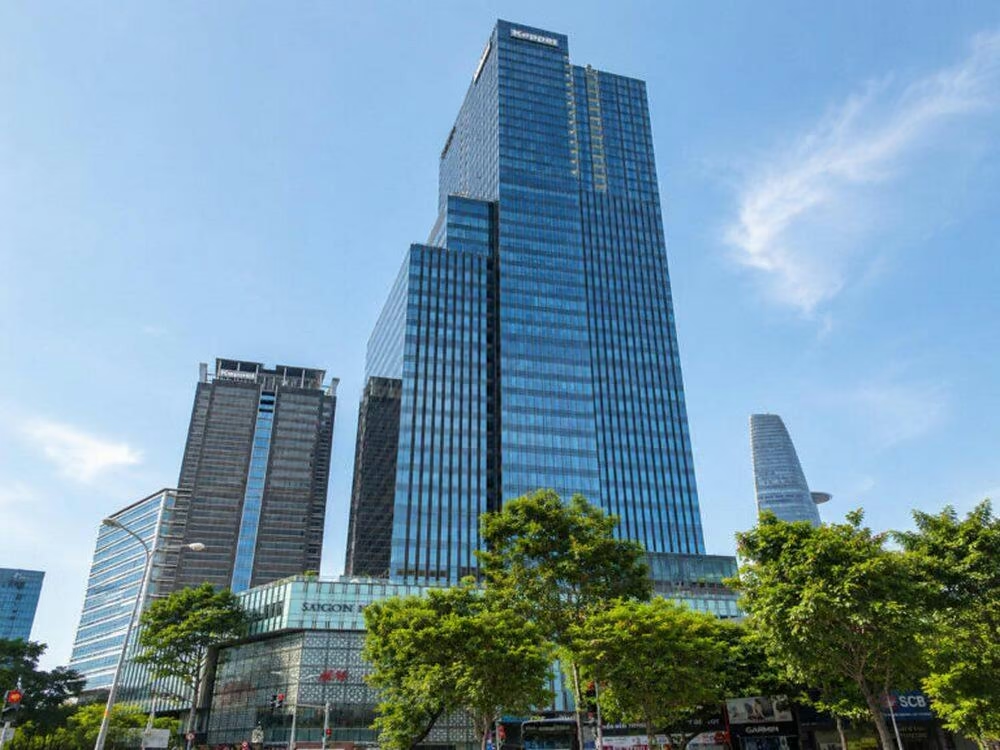
The Nexus (LEED Gold)
The Nexus is a Grade A green office on Ton Duc Thang Street, District 1, developed by Refico, holding three certifications: LEED Gold, EDGE and WELL Silver. Each certification looks at the building from a different angle: LEED assesses environmental performance, EDGE measures energy, water and material savings, and WELL focuses on occupant health.
- The glass facade blocks 83% of heat and 93% of UV rays while still making use of natural light.
- LEED (environment) combined with WELL (occupant health) aligns this green office with ESG goals.
- Suitable for businesses that need ESG reporting and care about employee health.
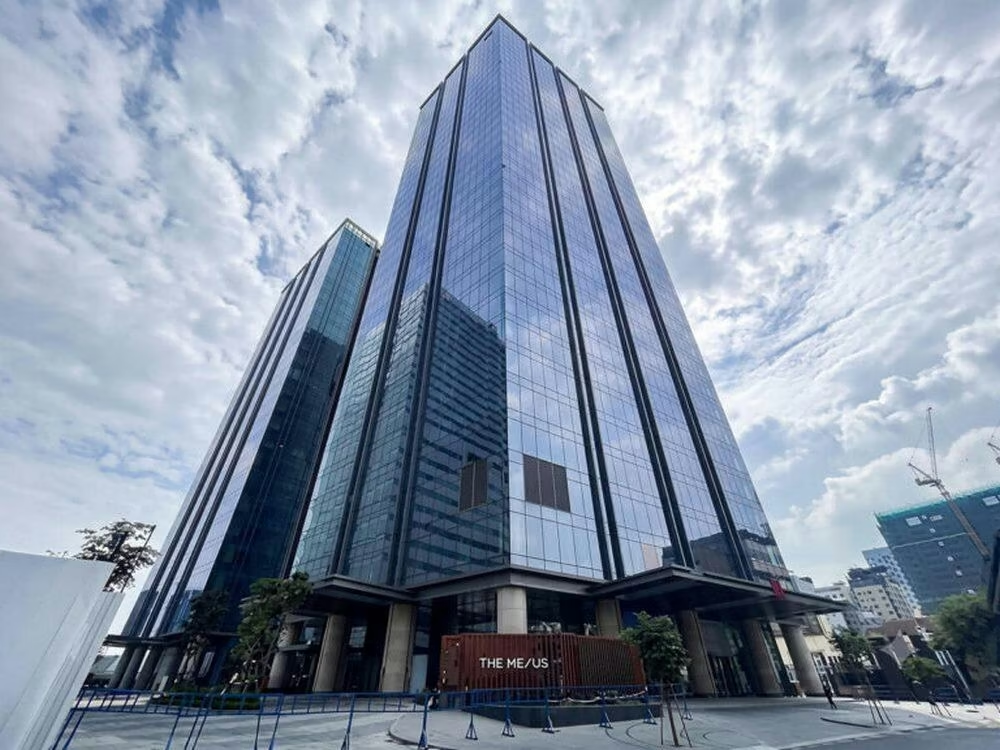
Saigon Centre Tower 2 (Green Mark Gold)
Saigon Centre Tower 2 is a green office on Le Loi Street, District 1, developed by Keppel Land, certified BCA Green Mark Gold by Singapore’s Building and Construction Authority.
- Green Mark is Singapore’s certification system, in line with developer Keppel also being from Singapore.
- Keppel applies solutions such as bicycle parking, recycling bins on every floor and a green-living information display area for tenants.
- Suitable for businesses that want a green office connected to retail and commercial space.
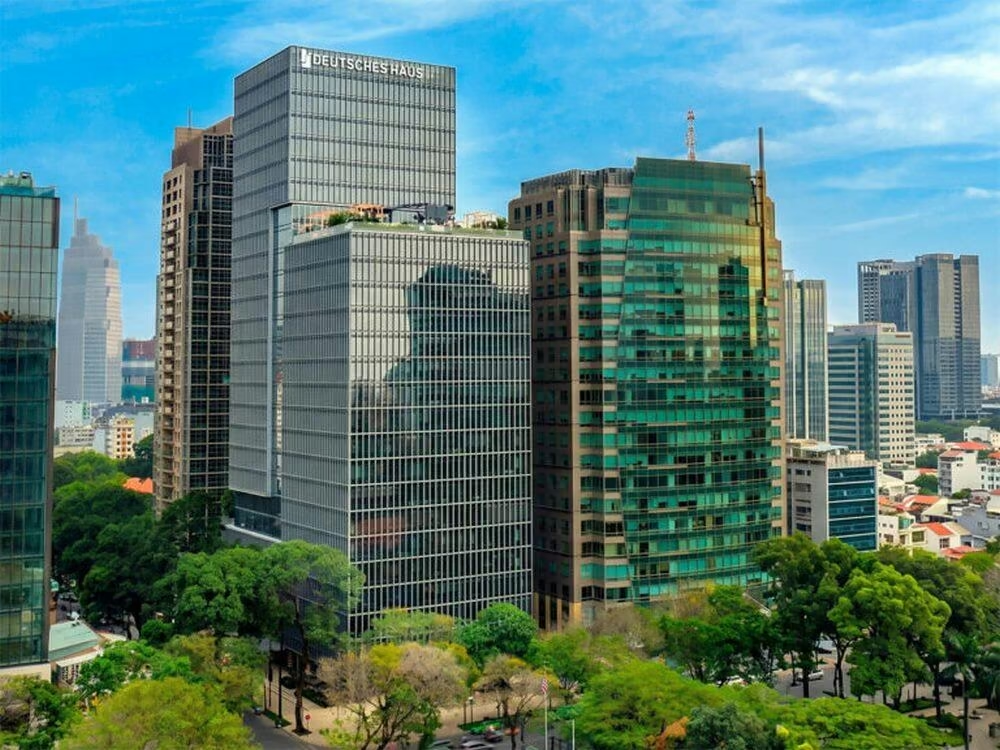
Deutsches Haus (LEED Platinum)
Deutsches Haus is a green office at 33 Le Duan, District 1, and the first building in Vietnam and Southeast Asia to earn two LEED Platinum certifications, one for design and construction (BD+C) and one for operations and maintenance (O+M). The building also holds Germany’s DGNB Gold certification.
- Its double-skin facade with integrated sun-shading louvers, the first of its kind in Vietnam, makes use of natural light while providing heat and sound insulation.
- LEED O+M demonstrates efficiency in actual operation, not only at the design stage.
- Suitable for European businesses and businesses that set green standards at the highest level.
Hanoi
In Hanoi, notable certified green offices include:
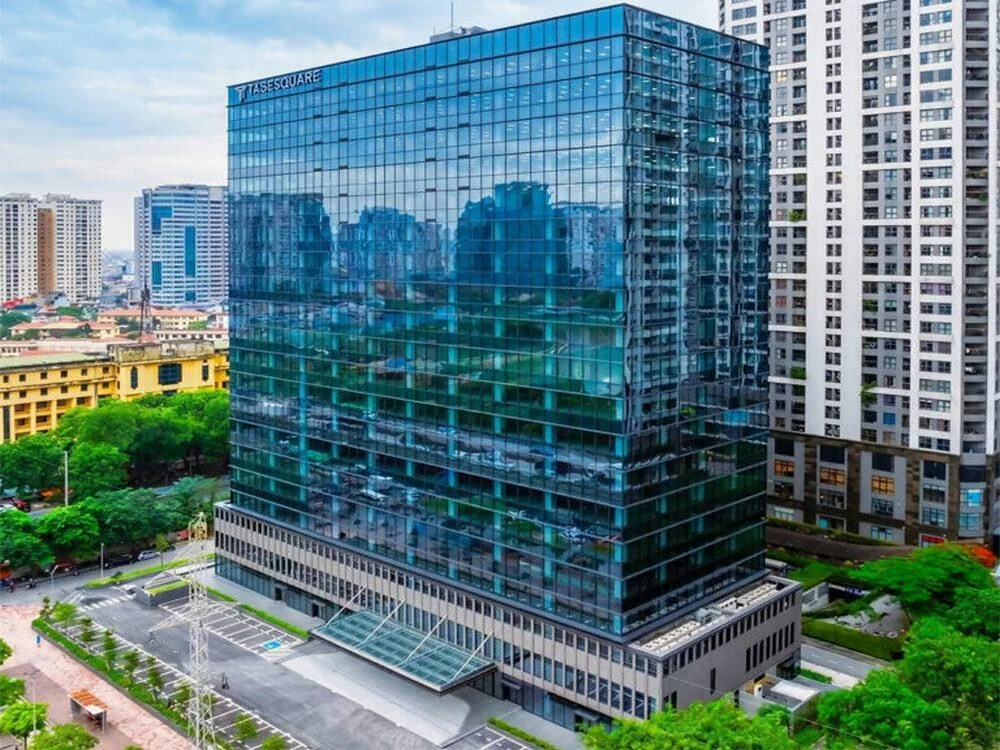
Taisei Square Hanoi (LEED Silver)
Taisei Square Hanoi is a green office at 289 Khuat Duy Tien, Cau Giay, developed by Taisei Corporation (Japan) through its subsidiary Taisei Development Hanoi, certified LEED Silver.
- It is the first office building for lease in western Hanoi to receive LEED certification.
- This green office was designed and built to LEED standards; the Grade A building was completed in 2024, with 20 floors above ground and 4 basements.
- Suitable for Japanese businesses and businesses wanting a green office in western Hanoi.
Lotte Center Hanoi (LEED Gold)
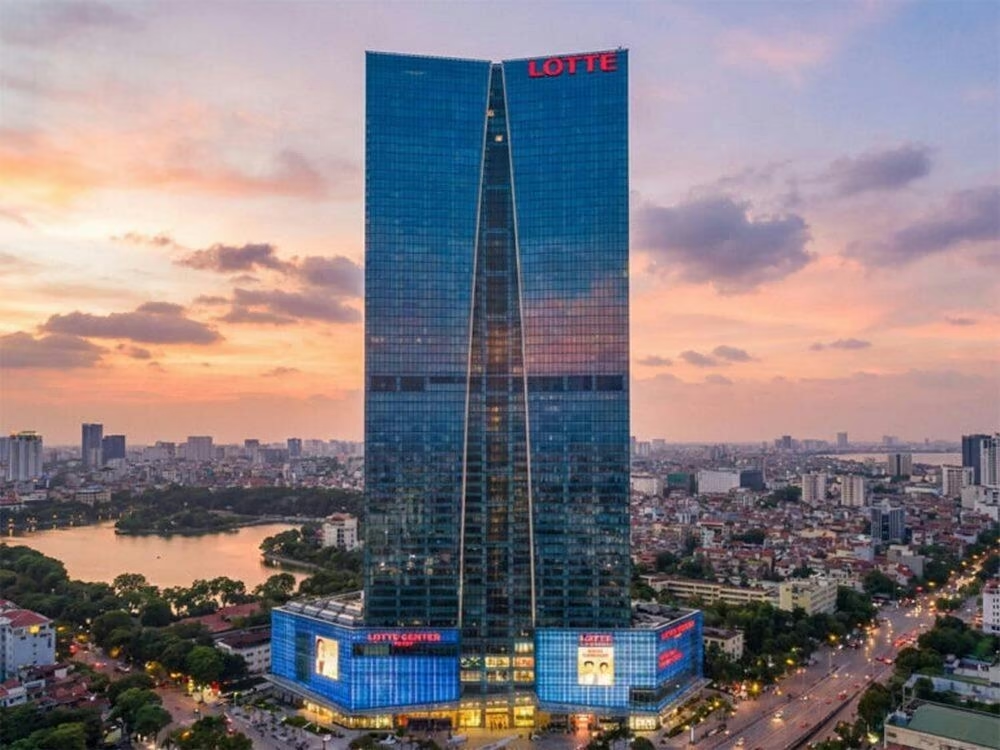
Lotte Center Hanoi is a green office at 54 Lieu Giai, Ba Dinh, developed by Lotte Group (Korea), awarded LEED Gold in the Operations and Maintenance (O&M) category in June 2025.
- Double-glazed Low-E glass helps this green office reduce power consumption; the LEED O&M certification assesses the efficiency and management of energy, water and indoor environmental quality.
- The building is a mixed-use complex of offices, retail and a hotel; the Grade A office block runs from the 8th to the 31st floor.
- Suitable for Korean businesses and corporations that need an iconic headquarters.
BRG Tower (EDGE Certified)
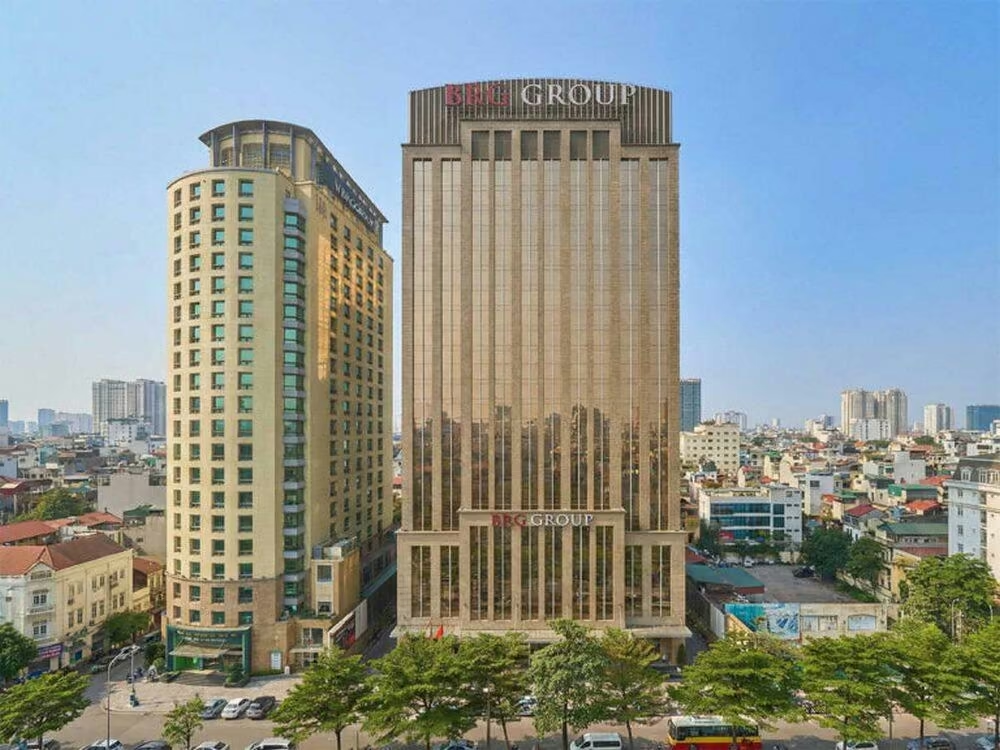
BRG Tower is a green office at 198 Tran Quang Khai, Hoan Kiem, developed by BRG Group, certified EDGE by IFC (International Finance Corporation, part of the World Bank Group).
- EDGE focuses on savings of at least 20% in energy, water and the embodied energy in materials compared with the baseline.
- The building has 21 floors above ground and 4 basements; this green office adjusts air-conditioning by season through its building management system (BMS).
- Suitable for businesses that need a green office near Hoan Kiem Lake and the financial and administrative district.
Frequently asked questions about green offices
The four questions businesses most often ask when considering a green office cover how it differs from a traditional office, LOTUS and EDGE certifications, whether small businesses can rent one, and cost.
How is a green office different from a traditional office?
A green office differs from a traditional office in three ways: it is designed and operated to reduce energy, water and material consumption; it prioritizes air quality and lighting for occupants; and its performance is measured and verified by independent certifications such as LEED, LOTUS, EDGE and Green Mark.
| Criteria | Traditional office | Green office |
|---|---|---|
| Energy | No specific saving targets | Solutions and targets to reduce power consumption (LED lights, sensors, efficient air-conditioning) |
| Water | Few water-saving fixtures | Sensor faucets, dual-flush toilets, leak inspections |
| Work environment | No specific criteria for air and lighting | Focus on natural light, ventilation, low-emission materials |
| Verification | No certification | Can be verified by independent certification |
| ESG reporting support | Lacks consumption data | Consumption data available to support ESG reporting |
How do LOTUS and EDGE certifications differ?
LOTUS and EDGE are two certification systems with different approaches. LOTUS was developed by the Vietnam Green Building Council (VGBC) specifically for Vietnamese conditions and scores projects comprehensively across many criteria groups. EDGE was developed by IFC, part of the World Bank Group, and only measures savings in energy, water and embodied energy in materials compared with a standard local building.
| Criteria | LOTUS | EDGE |
|---|---|---|
| Developer | VGBC | IFC |
| Assessment method | Comprehensive scoring: energy, water, materials, comfort and other groups | Quantitative measurement of 3 indicators: energy, water, embodied energy in materials |
| Levels | Silver, Gold, Platinum, Zero Carbon Ready (under LOTUS v4) | EDGE Certified, EDGE Advanced, EDGE Zero Carbon |
| Minimum requirement | Silver: performance at least 20% better than the national standard | At least 20% savings in all 3 indicators compared with the local baseline |
| Toolkit | Separate tools for new construction, buildings in operation (LOTUS BIO) and interiors (Interiors) | EDGE App software for modeling and assessment |
Businesses renting a green office don’t need to choose a certification for the building; they only need to know which certification the building holds, at what level and in which category (design or operation).
Can small businesses rent a green office?
Yes. Small businesses can rent a green office in three ways: leasing a small space in a certified building, renting a serviced office or coworking space located in a green building, or fitting out their own office to a green interior standard.
- Lease a small space in a certified building: according to Avison Young, 73% of Grade A supply in Ho Chi Minh City had achieved green certification as of Q2 2025.
- Serviced office or coworking space: located in a green building.
- Interior certification: LEED ID+C or LOTUS Interiors allows the leased office space to be certified separately, independent of the building’s certification.
Is renting a green office more expensive than a regular office?
Yes, rents for green offices are usually higher than for uncertified offices in the same segment. The premium varies by market and survey source: JLL found that most businesses leasing green buildings in Asia Pacific pay around 7–10% more. Businesses should compare the total monthly cost (rent + maintenance fee + electricity) rather than just the listed rent.
- Compare like for like in grade and location: part of the difference comes from newer building quality and better design, not only from green certification.
- Total monthly cost: green offices usually consume less energy and water, so operating, electricity and water costs may be lower, depending on how each building charges fees.
- Ask the landlord: the certification type, level and category, along with the building’s actual electricity and water consumption data.
A green office is a model for designing and operating an office to reduce environmental impact, optimize costs, and improve employee health. This model benefits the environment, businesses, and employees, and its results can be measured through certifications such as LOTUS, EDGE, LEED, and Green Mark.
Businesses should start with the operations and behavior layer, since this is the part a tenant controls directly: managing daily use of electricity, paper, water, and waste. When choosing a building, businesses need to confirm three things: which certification the building holds, at what level, and under which category (design or operation).
RSQUARE Vietnam owns a database of more than 55,000 commercial properties and provides free advisory services for tenants. Businesses looking for an office for lease in HCM or an office for lease in Hanoi can contact us at +84-28-3636-9641 or support@rsquare.vn.