Agile Workspace (flexible workspace) is an office model with no assigned seats, allowing employees to choose the area that suits each task during the day. The model typically includes five types of space: collaborative, quiet, breakout, resource and touchdown. The trend toward hybrid work, rising office rental costs and a young workforce are driving the spread of Agile Workspace in Vietnam. This article explains the benefits of the model for businesses, the types of businesses it suits and the steps to prepare for the transition.
What is Agile Workspace?
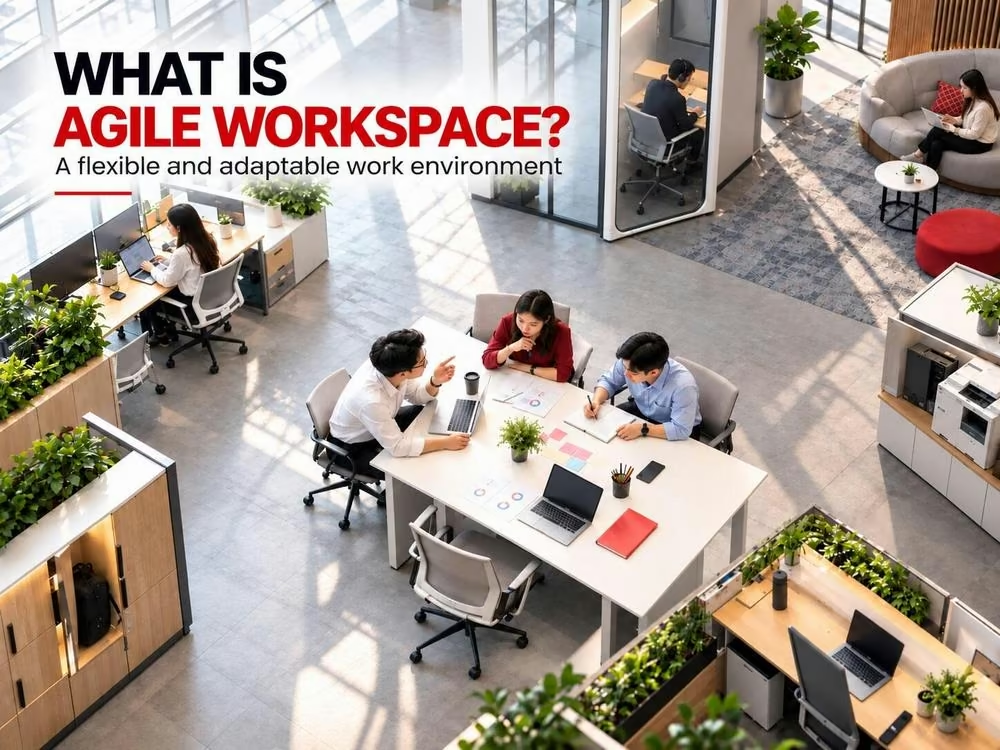
Agile workspace (flexible workspace) is an office model that does not assign fixed seats to employees. Instead, the floor plate is divided into multiple functional areas so that employees can choose the place that suits each task during the day.
Unlike a traditional office, where each employee is tied to a fixed desk, an agile workspace arranges space by activity. Employees work with focus in a quiet room, hold team meetings in a collaboration area and make calls in a phone booth, instead of doing everything at the same spot.
The model originates from Agile working, an approach that gives employees the right to choose where and when they work most effectively. Agile Workspace differs from a hybrid workplace: hybrid allocates working time between the office and other locations, while Agile Workspace optimizes the layout inside the office, and the two models are often applied together. Agile Workspace is usually accompanied by a hot desking policy, meaning employees share desks instead of having their own seats.
Types of space in Agile Workspace
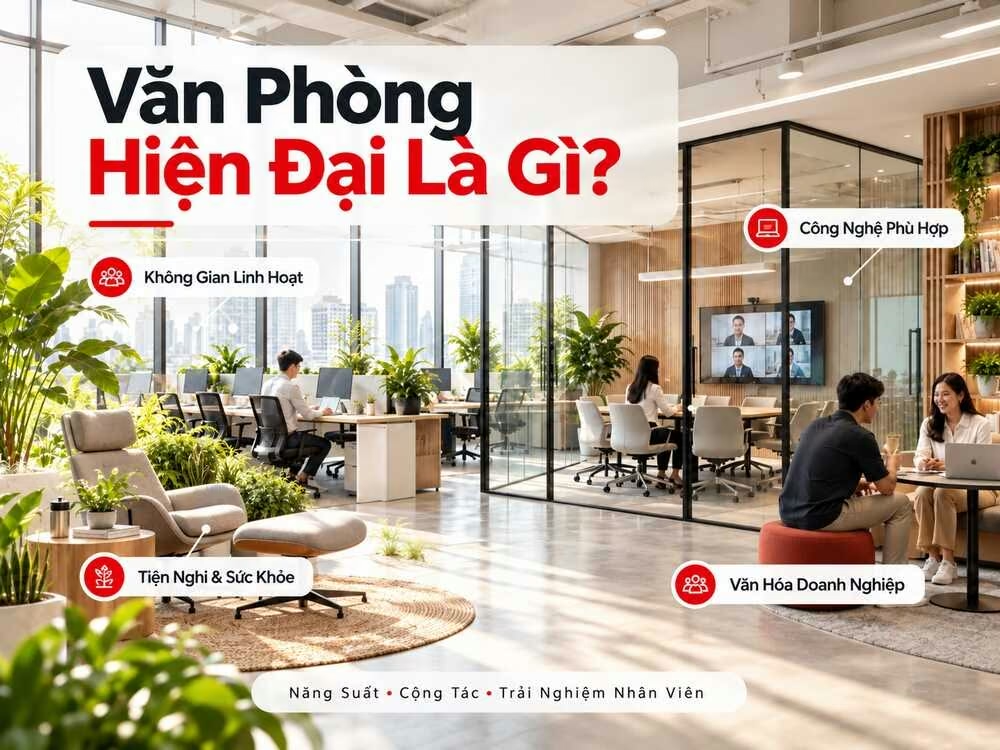
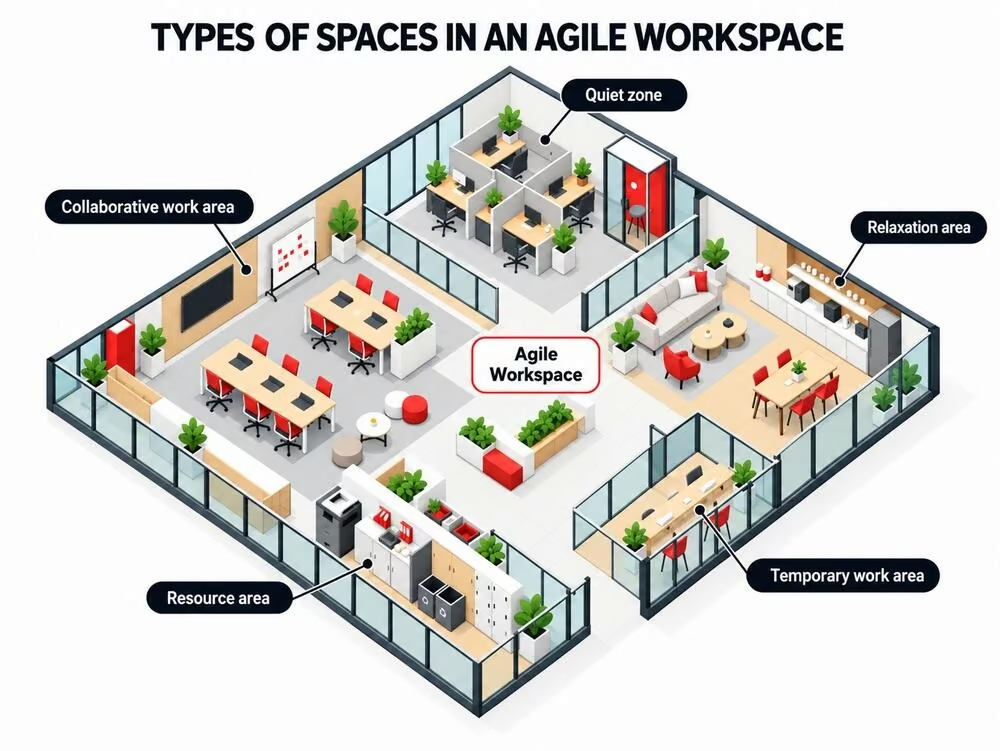
Agile Workspace typically includes five types of space: collaborative, quiet, breakout, resource and touchdown. The model has no mandatory standard design, and the proportion of area for each zone depends on the nature of the business’s work. The zones combine to support both team collaboration and individual work.
Collaborative space
Collaborative space (open plan space) is an open area, usually placed at the center of the office, that supports team discussions and idea exchange. This area suits project teams and creative teams that need constant communication. Common equipment includes large tables, whiteboards and shared screens.
Quiet space
Quiet space (quiet zone) is an area with limited noise, intended for work that requires deep concentration or privacy. This area can be a partitioned work corner or a small work room. The general rule in the quiet zone is no phone calls and no conversations. Employees use this area to analyze data, write reports or plan their work.
Breakout space
Breakout space is the relaxation area of an Agile Workspace, where employees eat, rest and chat with colleagues. Common equipment includes a pantry, sofas and coffee machines. Besides its resting function, this area is also used for short meetings or for receiving guests in a relaxed atmosphere.
Resource space
Resource space (resource area) is an area that concentrates shared equipment and supplies such as printers, scanners, stationery and recycling bins. This area can include document cabinets and personal lockers. Printers and scanners make noise when operating, so the resource area should be located where it is easy to access but separated from the collaborative zone and the quiet zone.
Touchdown space
Touchdown space is an informal work area for short tasks that require little deep concentration, such as replying to emails or handling small tasks between two meetings. This area is usually made up of simple desks, standing desks placed in the lobby or high counters along corridors. Touchdown space suits sales staff, consultants who travel often and partners who come for short-term work.
Why is Agile Workspace becoming more popular in Vietnam?
Agile Workspace is becoming more popular in Vietnam thanks to four drivers: the prevalence of hybrid work after the pandemic, rising office rental costs in Ho Chi Minh City and Hanoi, a young workforce with new expectations of the office, and capital flows from technology companies and FDI enterprises.
- Post-pandemic hybrid work: the office is no longer where employees sit five days a week but becomes a place for meetings, team sessions and coordination. As a result, many fixed desks are often left empty.
- Rising office rental costs: rents for Grade A and B offices in Ho Chi Minh City and Hanoi have increased, leading businesses to find ways to use each square meter more efficiently instead of leasing additional space.
- A young workforce: Gen Z and Millennials make up a large share of the workforce and prioritize the freedom to choose where to work within the office.
- Technology companies and FDI enterprises: technology companies, R&D centers and startups work on a project basis and their headcount changes quickly, so they need offices that are easy to rearrange.
Benefits of Agile Workspace for businesses
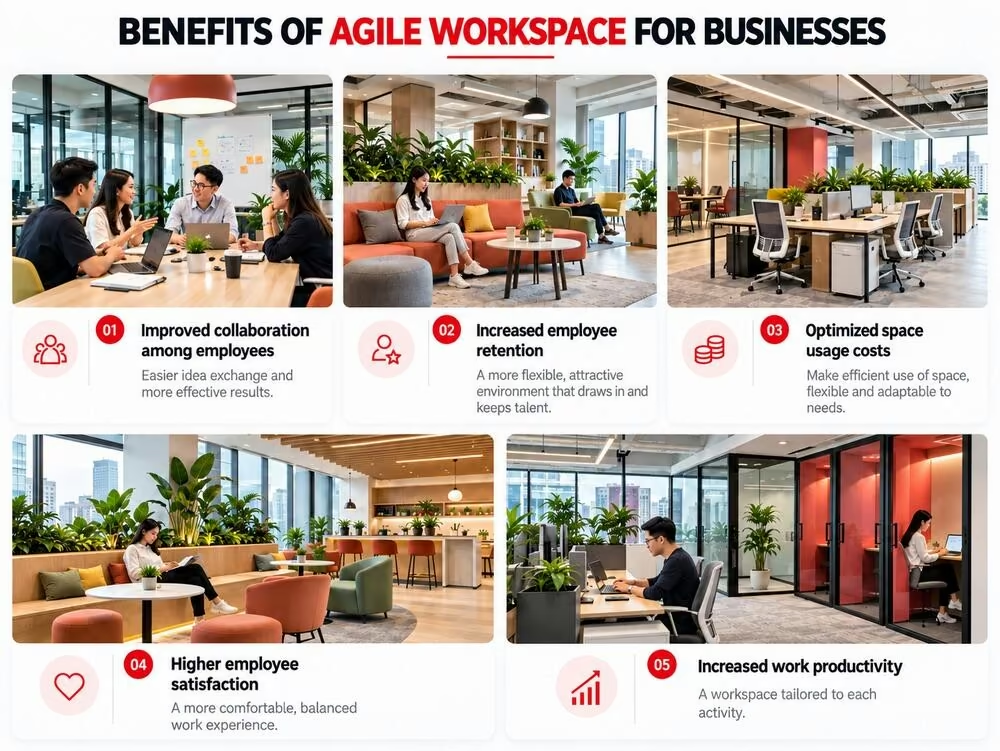
Agile Workspace brings businesses five main benefits: improved collaboration, better employee retention, optimized space costs, higher satisfaction and increased productivity.
Improved collaboration among employees
Agile Workspace improves collaboration because employees are not fixed at one row of desks, so they can more easily meet and exchange with colleagues in other departments. Collaborative areas and breakout areas create natural conversations between departments that rarely interact. As a result, ideas are shared faster and project teams come together faster without needing to book meeting rooms.
Better employee retention
Agile Workspace improves employee retention because it meets the need to choose where and how to work, a factor younger employees increasingly care about when evaluating a workplace. Once accustomed to this flexibility, employees have fewer reasons to move to a business that still maintains fixed seats and rigid working hours.
Optimized space costs
Agile Workspace optimizes space costs because businesses plan floor area according to the number of people actually present in the office, not the total headcount. The model is especially effective for businesses with hybrid work or with employees who frequently travel for work. Businesses can convert rarely used meeting rooms into other functional areas or reduce their leased area. When restructuring departments, businesses also do not need to rebuild fixed partitions.
Higher employee satisfaction
Agile Workspace raises satisfaction because employees are given autonomy in how they arrange their working day. This autonomy shows the business’s trust in employees’ ability to manage their own time and workload. Breakout areas help employees take a proper rest, away from their screens during the working day.
Increased productivity
Agile Workspace increases productivity because each task is done in the most suitable space: tasks that need focus are done in the quiet zone, and tasks that need discussion are done in the collaborative zone. The model addresses the drawbacks of fully open-plan offices, where noise and distractions often interrupt work.
Which businesses are suited to Agile Workspace?
Agile Workspace suits businesses best when their work requires a lot of interaction, is project-based, and their employees are not always fully present in the office. The level of suitability depends on the nature of the work and how the business operates, not on the size of the business. The following five groups of businesses apply Agile Workspace most effectively:
- Technology and software: project-based work, employees use laptops and cloud data, and need quick team formation and a quiet zone for focus.
- Creative, media and design: advertising agencies, marketing firms and design studios that need to brainstorm frequently.
- Businesses with teams that are often out of the office: sales, consulting and real estate, where the number of employees present at the same time is lower than total headcount.
- Businesses with hybrid work: the office becomes a place for meetings and coordination on the days employees come in, so they need team meeting space more than individual seats.
- Startups and fast-growing businesses: team structures change constantly and seating needs to be rearranged without rebuilding.
Agile Workspace is less suitable for departments whose staff sit at fixed positions throughout working hours, such as call centers, departments that handle a lot of paper documents, or departments that require on-site information security. Businesses with these departments can still apply Agile Workspace by keeping a separate fixed desk area for them and arranging the rest of the office flexibly.
What should businesses prepare when switching to Agile Workspace?
Businesses need to prepare three things when switching to Agile Workspace: build working procedures, guide employees on using each area, and plan a phased implementation roadmap. Agile Workspace changes how a business operates, not just how the office is laid out.
Build clear working procedures
Businesses need to issue a set of rules for using shared space before the transition, because without fixed seats, each area needs clear conventions to avoid seat conflicts and waste. Businesses should gather employee feedback from the start so that the procedures reflect the real needs and concerns of users. The basic set of rules covers four groups:
- Clean desk: clear documents and personal belongings from the desk at the end of the working day and store them in a personal locker.
- Noise rules: keep quiet in the quiet zone and go into a phone booth when taking calls or joining online meetings.
- Booking rules: book desks and meeting rooms through a shared system and cancel immediately when not in use to avoid empty bookings.
- Communication rules: agree on an internal messaging channel or booking software to find colleagues when no one sits at a fixed place.
Guide employees on the function of each area
Businesses need to guide employees on the purpose of each area and how to use the accompanying tools, because changing the office layout can easily cause confusion in the early period. The guidance covers the reason for the transition, the function of the open work area, focus area, team meeting area and phone booths, as well as how to book spaces and access shared equipment. Office maps and signage at each area help employees get used to the space faster.
Each employee needs to be equipped with sufficient mobile working tools such as a laptop, headphones and booking software. Businesses should hold an orientation and Q&A session before the rollout date to answer questions and prevent employees from reverting to the habit of sitting at one fixed spot.
Implement step by step, not all at once
Businesses should move to Agile Workspace in phases, piloting in a few departments before applying it company-wide. Suitable departments for the pilot are those with high flexibility such as marketing, IT or sales, with a recommended pilot period of one to three months.
During the pilot, businesses measure employee satisfaction, the frequency of use of each area and the effectiveness of coordination between teams, then compare the results against the original goals. The measurement results are the basis for adjusting area, layout and rules before scaling up, so that the transition does not disrupt business operations.
Frequently asked questions about Agile Workspace
This section answers two common questions from businesses: whether Agile Workspace suits every type of business, and how the model saves office costs.
Does Agile Workspace suit every type of business?
No. Agile Workspace suits businesses best when their work requires a lot of interaction, is project-based or hybrid. Departments that need to sit at fixed positions throughout working hours will find it hard to apply, for example call centers, departments that handle a lot of paper documents or departments with on-site security requirements.
How does Agile Workspace help save office costs?
Agile Workspace saves office costs because businesses lease and equip space according to the number of people actually present, not the total headcount. Costs fall in three categories:
- Leased area: the number of seats is calculated by attendance ratio, so businesses need less area.
- Furniture and equipment: the number of fixed desks, chairs, monitors and network points that must be purchased decreases.
- Renovation when scale changes: businesses rearrange mobile furniture instead of rebuilding partitions.
Agile Workspace is an office model with no assigned seats that divides the floor plate into five types of space by activity: collaborative, quiet, breakout, resource and touchdown. It helps businesses improve collaboration, retain employees, optimize space costs and increase productivity. The model suits technology, creative, sales and hybrid-working businesses and startups best, while departments that need fixed seating, such as call centers, can still keep a separate desk area. For an effective transition, businesses need to issue rules for using shared space, guide employees on the function of each area and run a pilot for one to three months before scaling up.
To get started, the most important step is to define how your team works, then choose a building and floor area that fit that way of working. RSQUARE Vietnam is a commercial real estate brokerage with Korean roots, helping businesses find Grade A, B, and C offices in Vietnam’s two major markets. If you are considering office for lease in Hanoi or office for lease in HCM for an agile workspace model, the RSQUARE team can advise on available inventory, rental rates, and layouts suited to your team size.