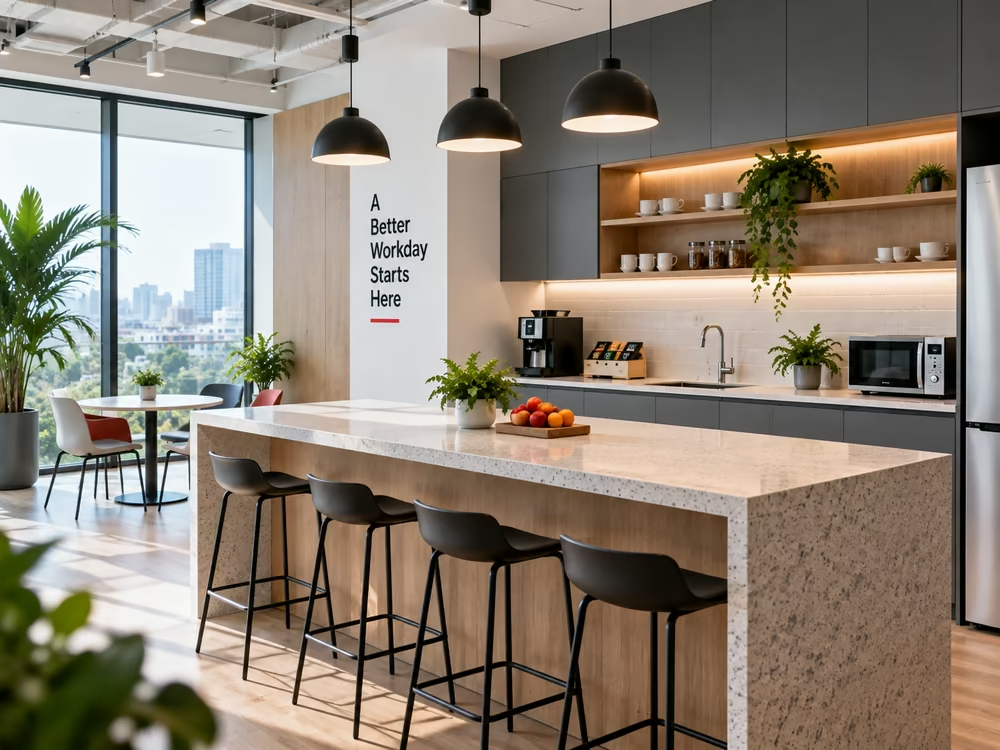
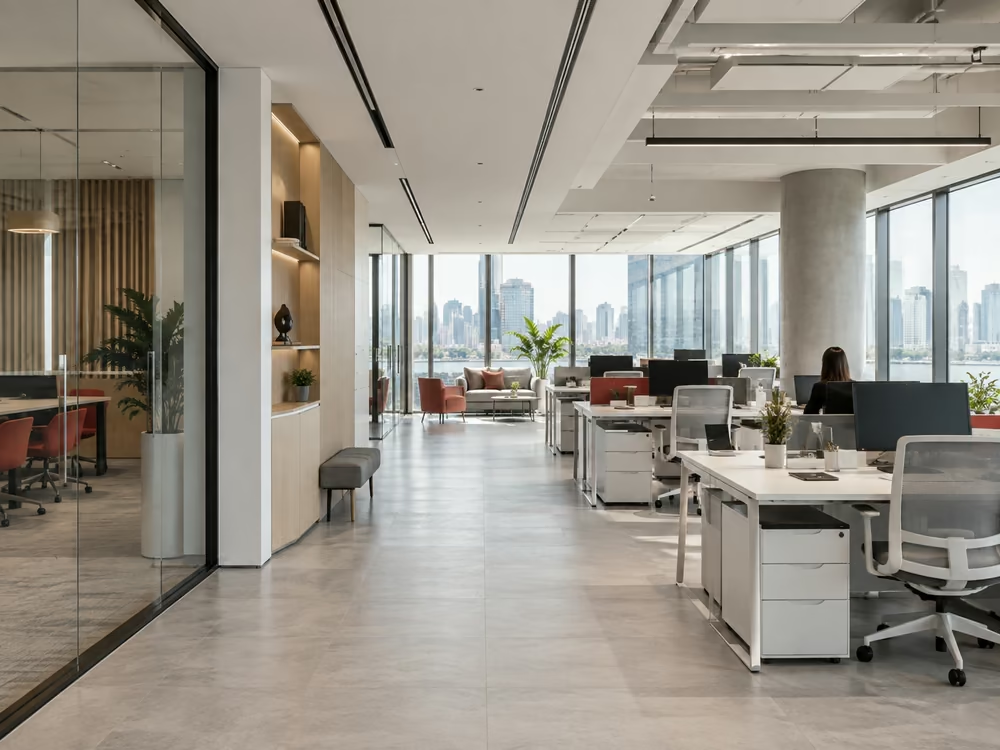
Desks, chairs, filing cabinets, and storage shelves are used continuously throughout daily office operations. Without regular cleaning and inspection, furniture may develop scratches, peeling surfaces, mould, or damage to hinges, handles, and connecting components.
Office furniture maintenance should begin as soon as the premises are put into operation rather than only when visible deterioration occurs. Identifying minor defects early also reduces replacement costs and limits the amount of repair work required before the office is handed back.
Common Causes of Premature Office Furniture Deterioration
Furniture durability depends on more than material quality. Usage habits, placement, temperature, humidity, and cleaning frequency all directly affect the condition of each item.
Using Furniture for the Wrong Purpose
Desks, chairs, and filing cabinets are designed for specific functions and weight capacities. Standing on chairs, sitting on desks, placing excessively heavy equipment on surfaces, or overloading shelves with documents may deform the frames and damage connecting components.
For cabinets with doors or drawers, forceful opening and closing may misalign hinges, drawer slides, locks, and handles. Signs such as sagging cabinet doors, drawers that no longer close properly, or unstable desks should be addressed before the damage spreads to other components.
Failing to Inspect and Maintain Furniture Regularly
A loose screw, jammed caster, or slightly peeling surface coating may not immediately affect usability. However, continued use under pressure may turn a minor defect into more serious damage and require the business to replace the entire item.
Periodic inspections should cover the stability of desks and chairs, as well as the condition of hinges, drawer slides, cabinet locks, casters, and finished surfaces. This process allows the facilities team to identify items requiring repair before they become unusable.
Exposure to Temperature, Humidity, and Sunlight
Wooden furniture may shrink, crack, or fade when regularly exposed to direct sunlight. Areas close to glazed façades, heat-generating equipment, or strong air-conditioning vents may also experience repeated temperature changes across furniture surfaces.
High humidity increases the risk of mould, unpleasant odours, and deformation of wooden panels. According to the reference content, humidity in air-conditioned rooms should be maintained at approximately 45–60%.
Materials Unsuitable for the Operating Environment
Wood, metal, leather, fabric, and plastic react differently to water, cleaning chemicals, humidity, and physical impact. Each material therefore requires a suitable cleaning and maintenance method.
Furniture in reception areas, pantries, meeting rooms, and shared workspaces is generally used more frequently than furniture assigned to fixed workstations. When the material or surface finish does not match the operating conditions, scratches, peeling, and discolouration may appear earlier than expected.
How to Maintain Office Furniture During Daily Operations
Maintenance schedules should be arranged according to furniture type and the usage level of each area. Locations used by many employees and visitors require more frequent inspection than workspaces assigned to individuals or fixed departments.

Keep Furniture Away from Heat and Direct Sunlight
Wooden desks, cabinets, and shelves should not remain directly beside sun-facing windows for extended periods. Direct sunlight may fade the surface, while repeated temperature changes may cause the material to shrink or crack.
Where relocation is impractical, the business should install blinds or another form of solar shading. The distance between furniture, air-conditioning vents, electrical equipment, and other heat sources should also be considered when planning the office layout.
Remove Dust Every Week
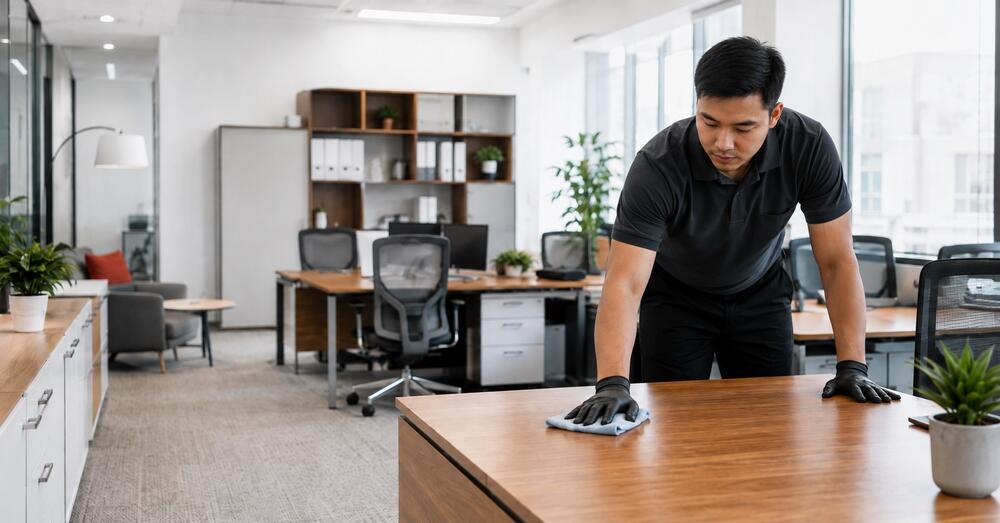
Dust left on furniture for extended periods may reduce surface gloss and cause scratches during cleaning. Soft cloths, clean fabric, or soft-bristled brushes are suitable for routine maintenance.
Water or cleaning solutions should not be poured directly onto wooden surfaces. Strong cleaning chemicals may damage the protective coating, reduce its gloss, or alter the colour of the material.
Treat Stains as Soon as They Appear
Water, coffee, and food spills should be cleaned promptly, particularly on workstations, meeting tables, and pantry surfaces. Stains left untreated may penetrate the coating and leave permanent marks.
For scratches or peeling areas, the facilities team should first identify the material and surface finish. Using unsuitable polishing products or chemicals may enlarge the damaged area rather than restore it.
Reduce Impact and Surface Scratches
Monitors, printers, document boxes, and other heavy equipment should not be placed directly on wooden surfaces without protective pads. When moving desks, cabinets, or shelves, staff should lift the furniture rather than drag it across the floor or hold it by components that are not designed to bear weight.
In meeting rooms and reception areas, coasters and protective table covers reduce water marks, heat marks, and scratches. These areas are used by different people throughout the day, making usage habits more difficult to control than at fixed workstations.
Inspect Hardware and Connecting Components
Hinges, handles, cabinet locks, drawer slides, and casters should be checked periodically. Loose screws, misaligned slides, or jammed casters should be repaired before the furniture is used again.
For modular desks and chairs, weight-bearing connections should be tightened when the furniture becomes unstable or uneven. Continued use in this condition may damage the frame and adjacent components.
Developing an Office Furniture Maintenance Schedule
Businesses may divide furniture maintenance into three groups based on frequency.
Every week, the facilities team should remove dust, treat stains, and conduct quick checks in meeting rooms, pantries, reception areas, and other shared spaces.
Every month, the business should inspect hinges, handles, cabinet locks, drawer slides, casters, and the overall stability of desks and chairs. Items showing cracks, peeling coatings, or deformation should be recorded and repaired.
Every quarter or six months, the furniture inventory should be compared with the original handover records. This review identifies normal wear, items requiring replacement, and the maintenance budget needed for the next operating period.

Considerations When Maintaining Furniture in a Leased Office
Before repairing, repainting, or altering fixed furniture, the business should distinguish between self-funded assets and items provided with the leased premises. Certain components may remain under the management of the landlord or building operator.
Handover records, condition photographs, and furniture inventories provide the basis for monitoring wear and tear. These documents also clarify repair responsibilities when damage occurs or when the business prepares to terminate the lease.
For furniture fixed to floors, walls, or ceilings, the business should review the building’s fit-out regulations before removal or modification. Repairs performed without following the required procedures may affect technical systems and lead to additional reinstatement costs.
How Does Furniture Maintenance Affect Office Reinstatement?
The condition of furniture and interior finishes is often inspected when the tenant returns the premises. Damage beyond normal wear and tear may result in requests for repair, replacement, or reinstatement to the original condition.
Maintenance records should therefore document when defects were identified, the repair method used, and the condition after completion. This information provides a basis for managing operating costs during the lease term and preparing the premises for handover.
RSQUARE Vietnam advises businesses on office premises, reviews handover conditions, and assesses requirements related to fit-out, operations, and reinstatement. Businesses may contact RSQUARE Vietnam for updates on available office space, leasing options, and the conditions that should be reviewed before signing a lease agreement.