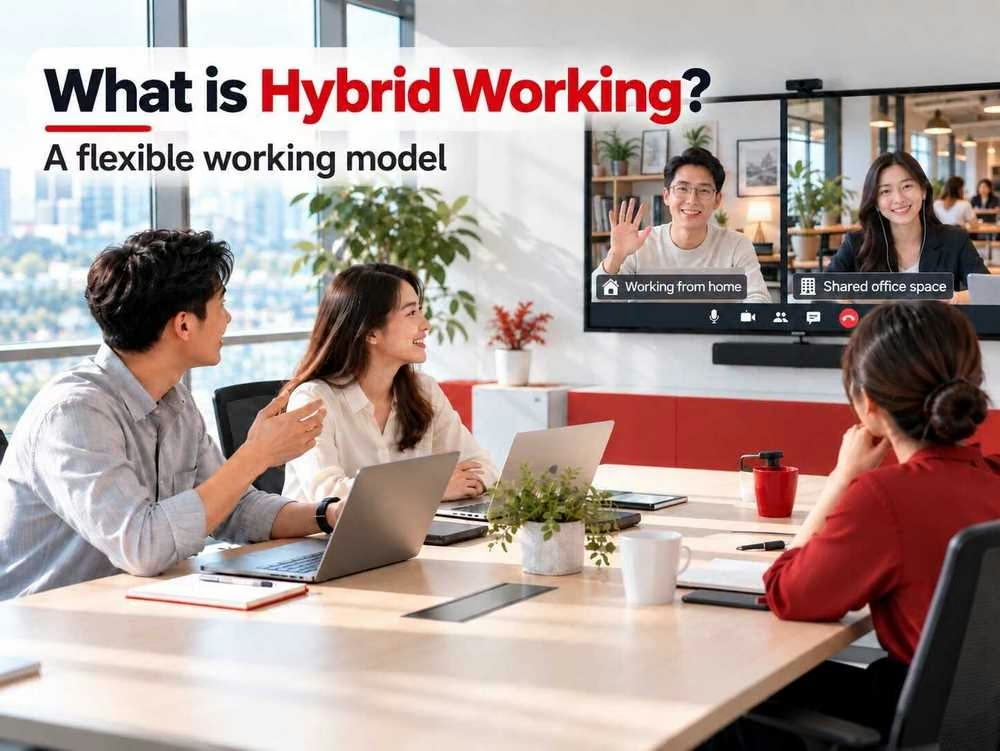
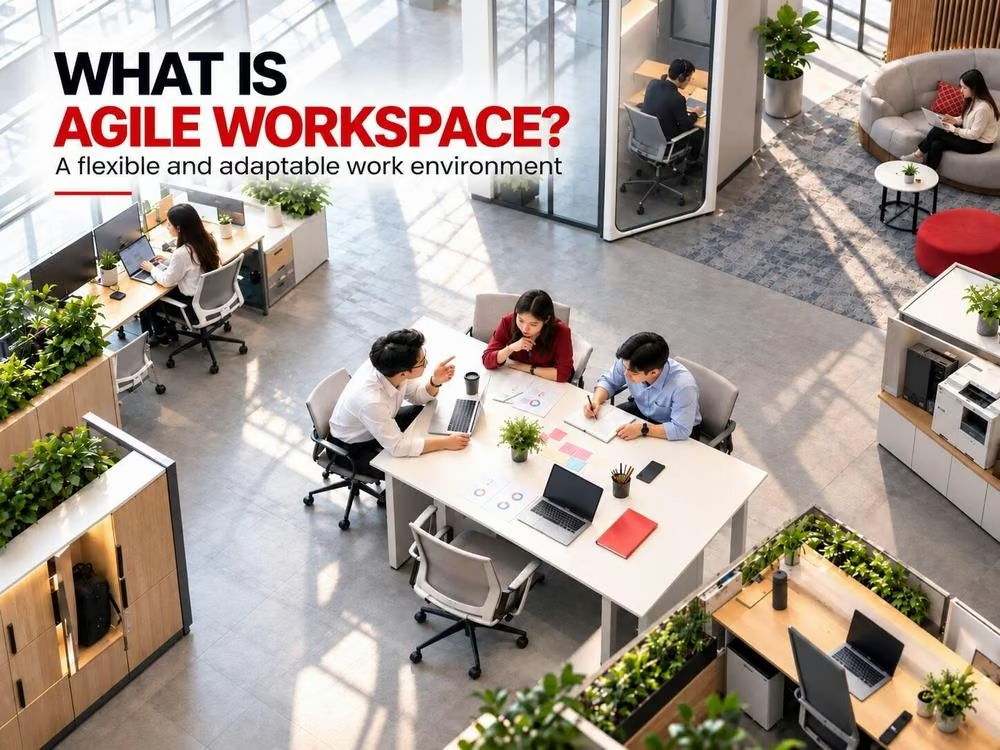
Flexible office space is a leasing model that lets businesses choose the area, lease term and service package based on their actual needs. The space comes furnished, with internet and shared amenities, so businesses can move in and start working right away without any upfront investment. This article explains the 4 popular models (serviced office, managed office, coworking space and shared office), how rent is calculated, contract terms, pros and cons, and which types of businesses suit each model.
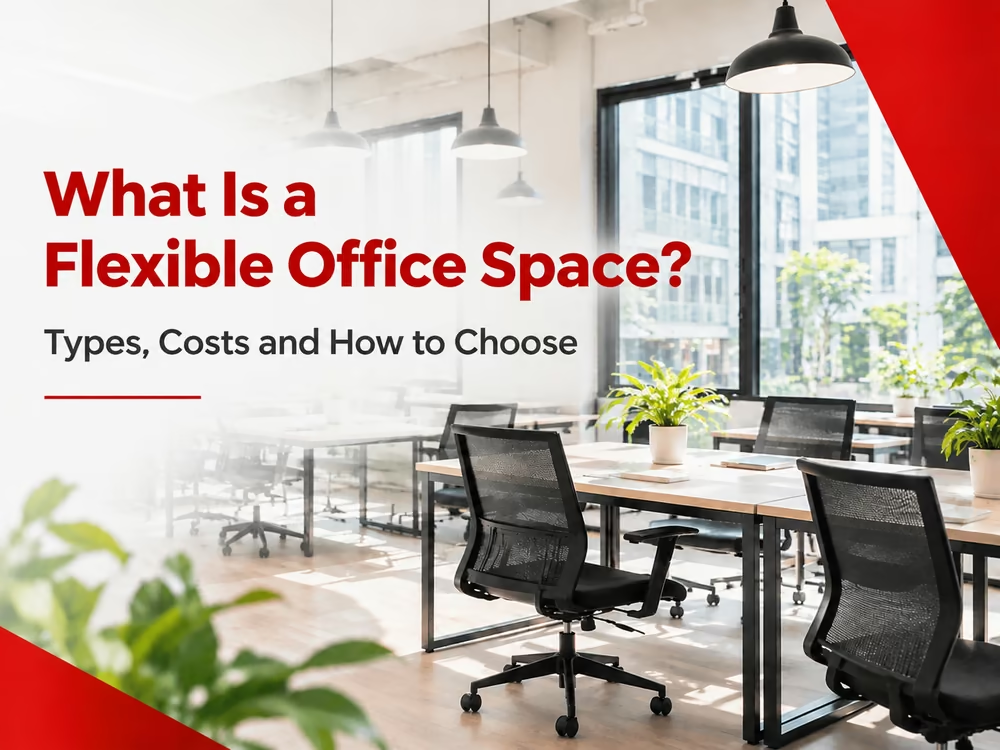
What is flexible office space?
Flexible office space is a leasing model that lets businesses choose the area, lease term and service package based on their needs, instead of signing a long-term contract and investing in furniture themselves as with a traditional office. The space comes furnished, with internet and shared amenities, so businesses can move in and start working right away. The model has four main groups: serviced office, managed office, coworking space and shared office.
Comparison table of traditional office and flexible office:
| Criteria | Traditional office | Flexible office |
| Lease term | Long-term | Short-term, flexible by model |
| Area | Fixed by the contract | Adjusts with headcount |
| Furniture and infrastructure investment | Paid by the business | Provided by the operator |
| Operating services | Managed by the business | Provided by the operator |
Popular flexible office space models
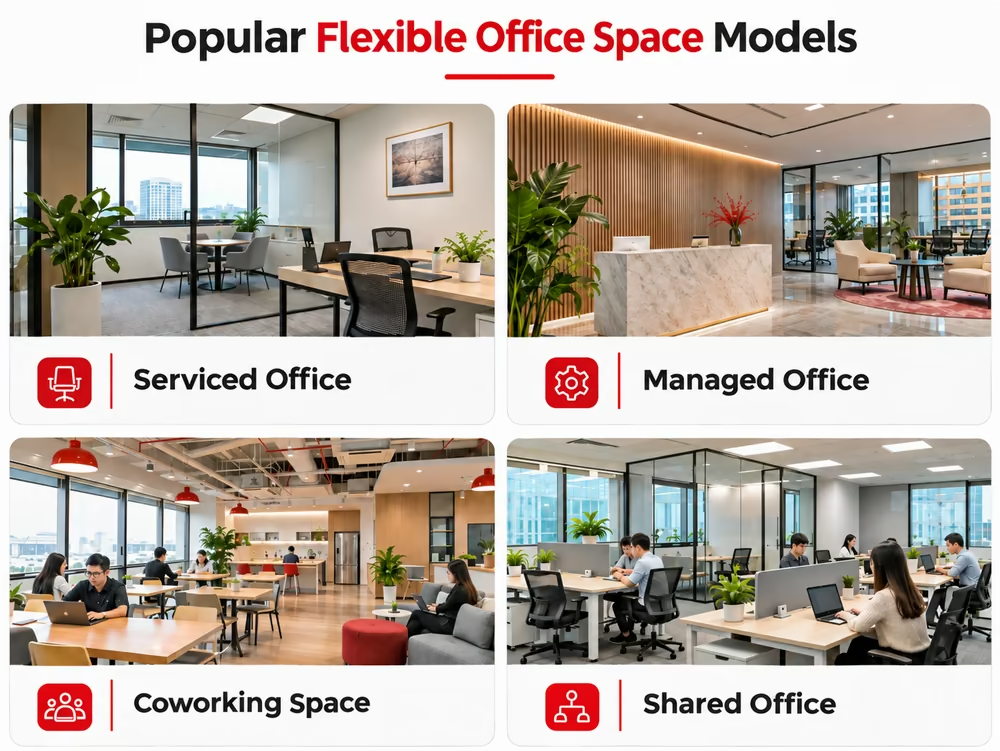
Flexible office space has 4 popular models: serviced office, managed office, coworking space and shared office. The four models differ in level of privacy, ability to customize the space, and who is responsible for operations.
Serviced office
A serviced office is a private workroom fully equipped with furniture, internet, reception and shared amenities, managed by an operator. Businesses rent by the room or by the number of seats, pay a monthly fee and move in right away without any construction or equipment purchases. The operator handles cleaning, maintenance, security and technical support, so the business can focus on its operations. This model suits businesses that need a private space, a professional address and a shorter lease term than a traditional office.
Managed office
A managed office is a space designed and managed by an operator exclusively for one business, according to that business’s needs and brand identity. The business gets a floor plan, furniture and functional areas arranged around how its team works, while the operator handles construction, maintenance, cleaning and daily operating services. Businesses lease on request with a longer term than other models. This model suits businesses that need a private, branded space without managing operations themselves.
Coworking space
A coworking space is an office shared by many individuals and businesses, usually an open space with shared amenities such as meeting rooms, a pantry, printers and reception. Users choose a flexible or dedicated seat and pay by the hour, day or month depending on the package. The operator manages the space, internet and support services, so users only need to bring their personal devices to work. This model suits freelancers, startups and small teams that need low costs, flexible lease terms and opportunities to connect with the surrounding community.
Shared office
A shared office is an office floor used by several units, in which a lead tenant subleases part of the area or some seats to other units. The lead tenant signs the contract with the building owner and manages how the space is used, while the subtenants pay fees under separate agreements. Terms on price, lease term and shared amenities are agreed upon by the parties themselves. This model suits small businesses that need a workspace in a good location at a low cost.
Comparison table of the 4 flexible office space models:
| Model | Space | Privacy level | Who operates |
| Serviced office | Private furnished room | High | Operator |
| Managed office | Custom-designed for the business | High | Operator, based on lease request |
| Coworking space | Open, shared space | Low to medium | Operator |
| Shared office | Floor shared by several units | Low to medium | Lead tenant |
What amenities does flexible office space offer?
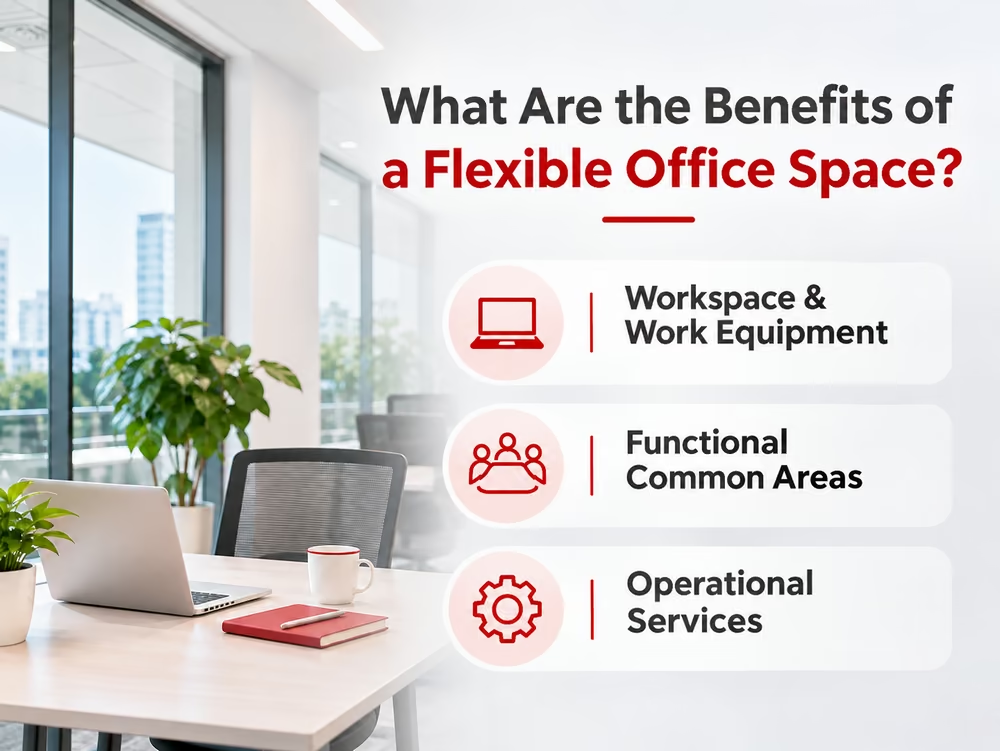
Flexible office space typically provides 3 groups of amenities: infrastructure and work equipment, functional spaces, and operating services. Businesses can use these amenities as soon as they move in, without investing in them or hiring separate providers.
Group 1: Infrastructure and work equipment
- Furnished desks, chairs and furniture
- High-speed internet (Wi-Fi, LAN)
- Shared printer, photocopier and scanner
- Electricity, water, air conditioning
Group 2: Functional spaces
- Meeting rooms (screens, projectors, whiteboards)
- Pantry and lounge area
- Event or workshop area
Group 3: Operating services
- Reception and guest greeting
- Mail and parcel receiving and sending
- Security guards, surveillance cameras, access control
- Cleaning and technical support
How much does flexible office space cost?
The rent for flexible office space depends on the type of office the business chooses, and varies with the leasing conditions and the area of each type. Each model charges in its own way, and businesses receive a specific quote from the operator based on their needs for seats, area and service package. The monthly fee usually already includes furniture, internet, electricity, water and reception services, so businesses do not have to pay separately for each item. Some costs may be charged on top of the rent, such as meeting room hours beyond the quota, printing and after-hours air conditioning. Businesses should ask the operator about these costs before signing the contract in order to compare costs between providers.
Table of pricing methods by model:
| Model | Pricing method | Main factors affecting price |
| Serviced office | By seat or by room, charged monthly | Room area, number of seats, building grade |
| Managed office | Quoted on request | Area, level of custom design, lease term |
| Coworking space | By the hour, day or month per person | Seat type (flexible or dedicated), location |
| Shared office | Agreed between the parties | Subleased area or number of seats |
Lease terms and contract conditions for flexible office
A flexible office space contract has a shorter lease term and simpler conditions than a traditional office contract, but it still has obligations on lease term, deposit, termination notice and additional fees. The specific term varies by office model and each operator’s policy.
Table of lease terms by model:
| Model | Lease term | Level of commitment |
| Serviced office | 1 to 12 months | Low to medium |
| Managed office | 1 to 3 years, possibly longer | Higher, due to custom design for the business |
| Coworking space | By the hour, day or month, depending on the package | Low |
| Shared office | Agreed between the parties | Depends on the agreement |
Conditions to note:
- Deposit: a payment guarantee, refunded when the contract is liquidated under the agreed conditions
- Payment period: monthly, quarterly or longer, depending on the agreement with the operator
- Termination or renewal notice: the contract specifies the advance notice period in writing
- Automatic renewal: some contracts renew automatically if the tenant does not give notice before expiry
- Additional fees: meeting room hours beyond the quota, printing, after-hours air conditioning
- Expansion and downsizing clause: allows the area to be changed as needed, possibly with an addendum adjusting the price
Advantages of flexible office space
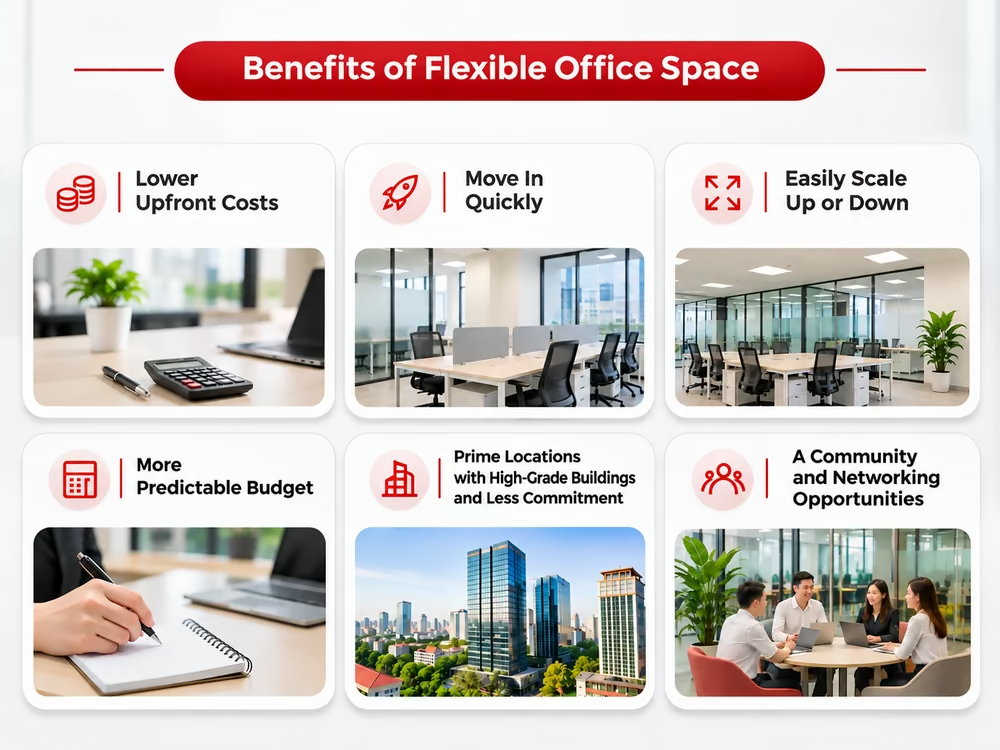
Flexible office space offers 6 main advantages: lower upfront investment, fast move-in, easy to expand or downsize, easier budget control, a prime location in a high-grade building with little commitment, and a community with networking opportunities. These advantages come from the operator investing in and managing the space on behalf of the business.
Lower upfront investment
Businesses do not have to spend on design, interior construction and equipment purchases, because the operator has already furnished the space. Desks, chairs, internet, printers, meeting rooms and the pantry are all available when the business moves in. Capital that would have gone to fit-out and a long-term deposit is kept for investing in people, products and business operations. This advantage is clearest for startups and newly established businesses, whose initial capital is limited.
Fast move-in
Businesses can start working right after signing the contract, because furniture, internet and office amenities are ready. They do not lose time on design, applying for construction permits, installing the network or waiting for furniture delivery. The operator hands over the seats or workroom together with services such as reception, security and cleaning, so the team only needs to bring personal devices. This advantage suits new branches, short-term projects and businesses that need a quick presence in a target area.
Easy to expand or downsize
Businesses can increase or reduce the number of seats and the leased area according to headcount without relocating. When the team grows, the business rents more seats or switches to a larger room in the same building. When the team shrinks, the business gives back some area so it does not pay for space it does not use. The degree of flexibility depends on available room inventory and the expansion and downsizing clause in the contract. This advantage suits fast-growing startups and businesses whose headcount changes with projects.
Easier budget control
Most of the rental cost is bundled into the monthly fee, which helps businesses forecast cash flow more accurately. The fee usually already includes furniture, internet, electricity, water and reception services, so businesses do not have to budget separately for each operating item. They only need to track additional costs such as meeting room hours beyond the quota, printing and after-hours air conditioning. This advantage suits small businesses and startups that need to manage cash flow tightly.
A prime location in a high-grade building with little commitment
Businesses can locate their office in a high-grade building in a central area without signing a long-term lease as with a traditional office. Operators lease whole floors or several floors in Grade A and Grade B buildings and then divide them among many businesses, so even small businesses get access to the location and infrastructure of a large building. A central address helps businesses make a professional impression on customers, partners and candidates. This advantage suits small and medium-sized businesses that need a good address while keeping their budget and lease term flexible.
Community and networking opportunities
Businesses work alongside many other units in one space, which widens their network and opens up opportunities for collaboration. Shared areas such as the lounge, pantry and event area give users the chance to meet, exchange ideas and introduce services to one another. Many operators regularly organize workshops and networking events for their member community. This advantage is clearest in coworking spaces, and suits freelancers, startups and small teams looking for new partners, customers and talent.
What are the disadvantages of flexible office space?
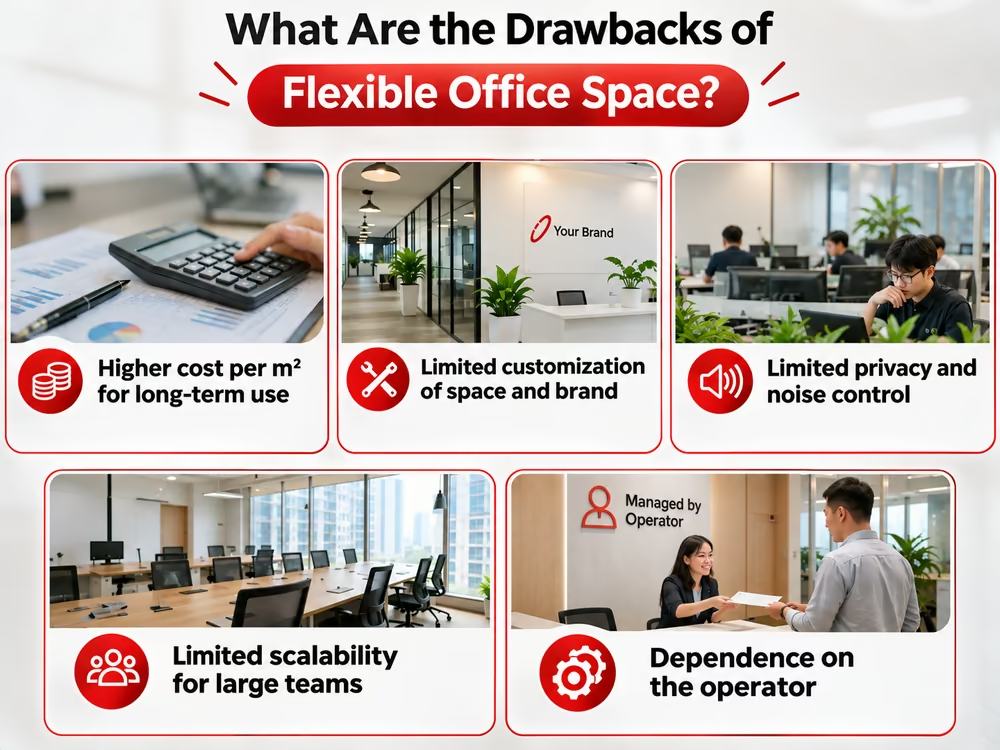
Flexible office space has 5 main disadvantages: a higher price per square meter on long-term leases, limited customization of the space and brand, privacy and noise that are hard to control, limited scalability for large teams, and dependence on the operator. The degree of impact varies by office model, business size and lease duration.
Higher price per m² on long-term leases
When a business leases steadily for a long period, the cost per square meter of a flexible office can be higher than that of a traditional office, depending on the conditions. The flexible office fee includes furniture, amenities and operating services, so the price reflects what the operator has invested in and manages. For a business whose size has stabilized and which does not need to change its area, this difference may no longer be offset by the benefit of flexibility. Businesses should compare the total cost over the whole lease period of both options before deciding.
Limited customization of space and brand
Businesses are restricted in interior design, floor plan layout and expressing their brand identity, because the space is under the operator’s management. They usually cannot change the structure, paint the walls or install signage as they wish, and must follow the operator’s general rules. In coworking spaces and shared offices this limitation is more pronounced, because many units share one space. Businesses that need a strongly branded space should consider a managed office, where the operator designs the space around the business’s identity.
Privacy and noise that are hard to control
Privacy and noise are harder to control in shared spaces, especially coworking spaces and shared offices. Many people work in an open space, so conversations, calls and movement easily affect the people around them. Sensitive meetings and internal information exchanges are also harder to keep confidential than in a private room. Businesses that need a high level of privacy should choose a serviced office or managed office, or book a private meeting room when they need to discuss important matters.
Limited scalability for large teams
A business with a large team may find it hard to get enough adjacent seats in one flexible office, because the supply at each location is limited. Available rooms and seats change over time, so when many more seats are needed at once, the business may have to split the team across several areas or floors. Splitting the team reduces coordination and makes management harder. Businesses expecting rapid headcount growth should discuss available room inventory and the possibility of reserving space for the expansion period with the operator in advance.
Dependence on the operator
Businesses depend on the operator for service quality, usage policies and decisions to change prices or terms. When the operator changes its rules, adjusts fees or lowers service quality, the business has less control than when it leases and manages its own office. Businesses should read the terms on price adjustment, termination notice and automatic renewal carefully before signing the contract, and check reviews from current tenants about the quality of operations.
Which businesses suit flexible office space?
Flexible office space suits startups, small and medium-sized businesses, freelancers and independent teams, branches or short-term projects, and hybrid-working businesses best. These groups need to save upfront capital, change headcount easily and limit long-term lease commitments.
Table of suitable business groups:
| Business group | Main needs | Usually suitable model |
| Startups and newly established businesses | Save upfront capital, add or remove seats as growth requires | Coworking space, serviced office |
| Small and medium-sized businesses | A professional address in a central area, easy budget control | Serviced office |
| Freelancers and independent teams | A professional space with meeting rooms for guests and networking | Coworking space |
| Branches, representative offices, short-term projects | A quick presence in the target area, few constraints | Serviced office, managed office |
| Hybrid-working businesses | Rotating workspaces, periodic meeting rooms | Coworking space, serviced office |
Flexible office space FAQ
The four questions below are those businesses commonly ask when considering flexible office space: business address, VAT invoices, daily rental and area expansion.
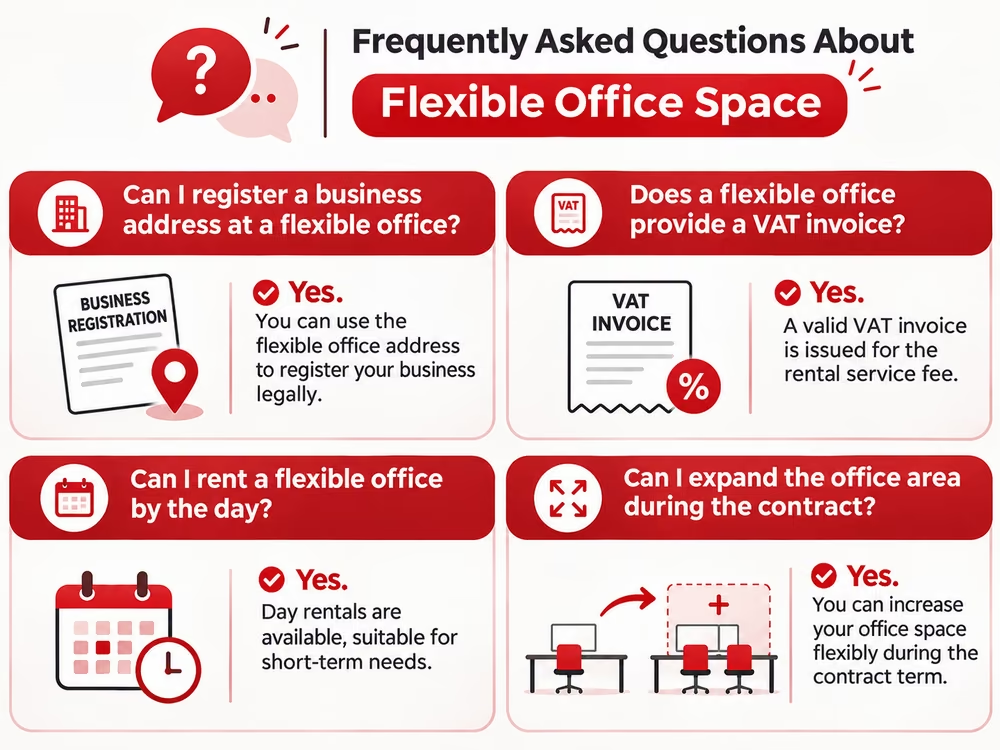
Can I register a business address at a flexible office?
Yes, depending on the service package and the operator’s policy. Some operators allow businesses to use the office address to register their business and receive mail, while some packages only provide seats and do not support address registration. Businesses should get written confirmation from the operator that address registration is allowed, and check this condition before signing the contract.
Does a flexible office issue VAT invoices?
Yes, depending on the operator and the service package. The operator is the party that issues invoices for rent and service fees, so businesses need to provide complete invoicing information (company name, tax code, address) when registering. Before signing the contract, businesses should confirm whether VAT invoices are issued, when they are issued, and whether the listed price includes or excludes VAT.
Can I rent a flexible office by the day?
Yes in some models, mainly coworking spaces and meeting rooms. Users choose an hourly or daily package, get a flexible seat or book a meeting room for the hours they need, without signing a monthly contract. The other models, such as serviced office, managed office and shared office, are usually rented by the month. Businesses should ask the operator about the price, opening hours and booking policy of the daily package.
Can I expand the area in the middle of the contract?
Yes in many cases, depending on available room inventory and the operator’s policy. Businesses usually rent additional seats or move to a larger room in the same building, and both parties sign a contract addendum to adjust the area and price. When rooms are full, the business may have to wait for a vacancy or rent in another area. Businesses expecting headcount growth should ask the operator about the area expansion clause before signing the contract.
Flexible office space is a leasing model with furniture, internet and amenities already provided, which lets businesses choose the area, lease term and service package based on their needs. The model has 4 groups: serviced office, managed office, coworking space and shared office, which differ in privacy level, customization rights and operator. Businesses save upfront capital, move in quickly and control their budget more easily, in exchange for a higher price per square meter on long-term leases, limited customization and dependence on the operator. Businesses should choose a model based on headcount, privacy needs and expected lease duration, and then compare quotes and contract terms from at least 2-3 operators before deciding.
To receive free consultation and compare suitable office for rent in Hanoi and office for rent in HCM options, you can contact RSQUARE Vietnam via hotline +84-28-3636-9641 or email support@rsquare.vn.