Tran Anh Tan Phu Industrial Park (legal name: DNN – Tan Phu Industrial Park) is a 262-hectare industrial park fronting Provincial Road 830. It now belongs to Hiep Hoa Commune, Tay Ninh Province (formerly Tan Phu Commune, Duc Hoa District, Long An Province). The legal investor is DNN – Tan Phu Investment Joint Stock Company. The project is developed by Tran Anh Group, which broke ground in 2020.
This article helps you evaluate the industrial park in the order in which land-leasing decisions are made: scale and legal status, infrastructure, regional location, accepted industries, costs, incentives, and finally whether the park suits your business. The 262 ha is divided into two phases (about 105 ha and 157 ha), of which factory and warehouse land accounts for about 176 ha. Technical infrastructure includes a 25 MVA (22 kV) power supply, water supply of 3,000 m³/day, and wastewater treatment of 2,900 m³/day.
Overview of Tran Anh Tan Phu industrial park
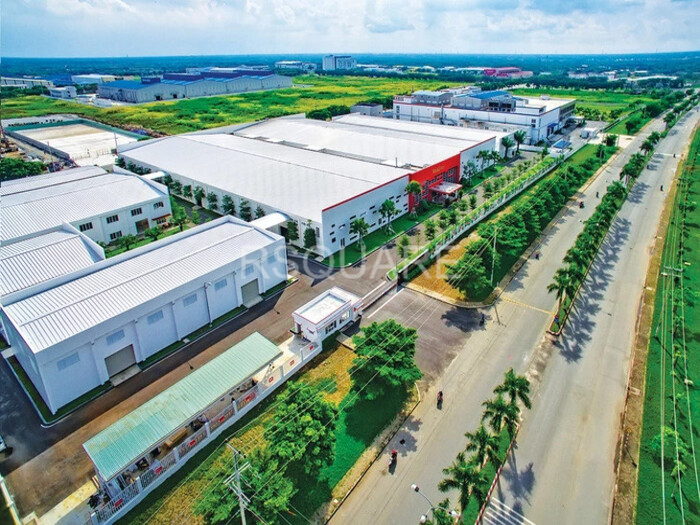
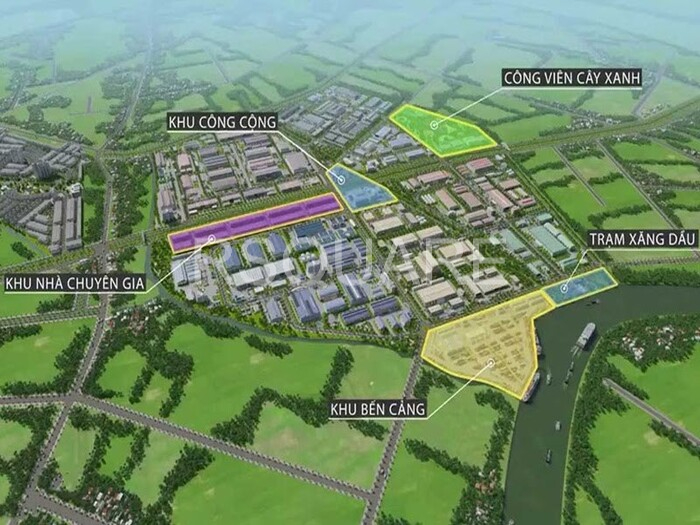
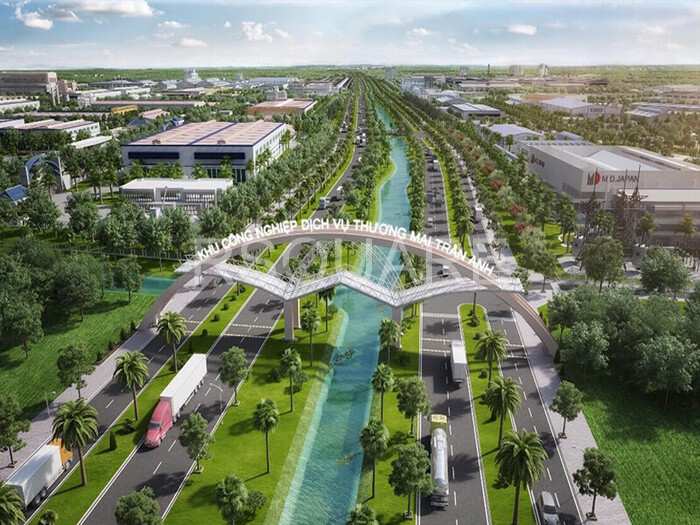
Tran Anh Tan Phu Industrial Park is a multi-industry park in the northwest of Ho Chi Minh City, fronting Provincial Road 830. The legal investor is DNN – Tan Phu Investment Joint Stock Company, and Tran Anh Group is the project developer. The project has been under development since 2020. Phase 1 is in operation, and Phase 2 has received investment policy approval from the Tay Ninh Provincial People’s Committee. The investor is pursuing a green industrial park model, with parks, an expert housing area, and public amenities.
When fully occupied, the industrial park is expected to create jobs for about 40,000 workers. The project site was formerly in Tan Phu Commune, Duc Hoa District, Long An Province, and now belongs to Hiep Hoa Commune, Tay Ninh Province following the administrative restructuring.
Industrial park scale
Tran Anh Tan Phu Industrial Park covers a total of 262 ha, divided into Phase 1 (about 105 ha) and Phase 2 (about 157 ha). Factory and warehouse land accounts for about 176 ha, roughly 67% of the total area. The table below summarizes the main figures.
| Item |
Phase 1 |
Phase 2 |
Entire Project |
| Total area |
approx. 105 ha |
approx. 157 ha |
262 ha |
| Factory and warehouse land |
approx. 73 ha |
approx. 103 ha |
approx. 176 ha |
| Administrative and service land |
approx. 1.7 ha |
approx. 3.5 ha |
approx. 5.2 ha |
| Technical infrastructure land |
approx. 1.8 ha |
approx. 0.8 ha |
approx. 2.6 ha |
| Transportation land |
approx. 19 ha |
approx. 28 ha |
approx. 47 ha |
| Greenery and water surface |
approx. 10 ha |
approx. 21 ha |
approx. 31 ha |
| Building density |
50-60% |
|
|
| Expected workforce |
|
|
approx. 40,000 people |
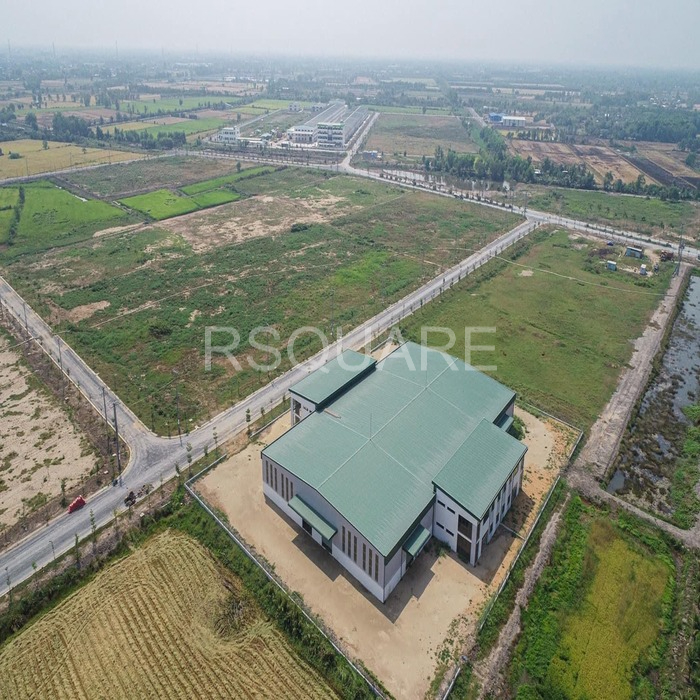
Phase 1 offers land plots and factories for businesses. Phase 2 has received investment policy approval from the Tay Ninh Provincial People’s Committee, and the investor has been offering land plots for factory construction in this phase since June 2026. According to the project’s promotional materials, land plots range from 0.5 ha to 10 ha, and ready-built factories start from 1 ha. Plot sizes can be subdivided or combined according to each business’s needs.
Legal status and land use period
The industrial park has a full set of legal documents, including the 1/5,000 master plan, the 1/2,000 detailed plan, the investment registration certificate, the decision approving the Phase 1 environmental impact assessment (EIA) report, and the construction permit. The project’s operating term is up to 50 years.
Key legal points to note:
- The 1/5,000 master plan and the 1/2,000 detailed plan have been approved.
- The investor discloses the investment registration certificate, the construction permit, the separate land use right certificates (“pink books”), and the related official documents on site agreement, planning supplements, and land use purpose conversion.
- The Phase 1 EIA report has been approved.
- The project’s operating term is up to 50 years. The land lease or land use period for each plot is stated in the contract with the investor.
Infrastructure
The industrial park’s infrastructure consists of four main systems: transportation, power, water supply, and wastewater treatment. Each system is described below according to the published technical specifications.
Transportation system
The industrial park fronts Provincial Road 830 and connects to Provincial Road 823, National Highway 22, the Ho Chi Minh City – Trung Luong Expressway, and, per planning, Ring Road 3 and Ring Road 4. According to the project’s promotional materials, the internal roads form a loop, with a right-of-way of 20-70 m and a load capacity of over 50 tons.
Main distances from the industrial park:
- Ho Chi Minh City center: approx. 40 km
- Tan Son Nhat Airport: approx. 35 km
- Long Thanh Airport: approx. 60 km
- Trans-Asia Road: approx. 15 km
- Ho Chi Minh City – Trung Luong Expressway: approx. 30 km
- Hiep Phuoc Port: approx. 50 km
- Ben Luc – Long Thanh Port: approx. 35 km
- Long An International Port: approx. 60 km
The industrial park has an internal port on the Vam Co Dong River. The investor also lists the nearby Soai Rap and Bourbon ports. The Ho Chi Minh City – Can Tho railway is part of the planned regional connectivity.
Power system
The industrial park has a 25 MVA power supply at 22 kV. The investor plans to build an additional 110/22 kV – 2 x 20 MVA substation in the south of the park to expand the supply. Electricity prices follow the utility provider’s tariff at the time of use.
Water supply system
The water supply system has a capacity of 3,000 m³/day, using on-site groundwater, and ensures stable pressure for the production activities of businesses in the industrial park.
Wastewater treatment system
The industrial park’s wastewater treatment plant has a capacity of 2,900 m³/day. The stormwater drainage system is built separately from the wastewater system. Businesses should confirm the discharge standards and service fees in the contract before investing.
Telecommunications infrastructure includes fiber-optic cable and a local exchange, with Viettel providing services.
Location and connectivity to key economic regions
Tran Anh Tan Phu Industrial Park lies at the northwest gateway of Ho Chi Minh City, with convenient connections to Ho Chi Minh City, the Moc Bai border gate area, and ports in the southern region. This location gives businesses access to consumer markets, labor sources, and the region’s logistics hubs.
- Connection to Ho Chi Minh City: approx. 40 km from the city center via Provincial Road 830, National Highway 22, and the expressway.
- Border gate connection: National Highway 22 and the Ho Chi Minh City – Moc Bai Expressway lead to the Moc Bai International Border Gate Economic Zone.
- Regional connection: planned links via Ring Road 3 and Ring Road 4.
- Seaport connection: Hiep Phuoc Port approx. 50 km; Ben Luc – Long Thanh Port approx. 35 km; internal port on the Vam Co Dong River.
- Airport connection: Tan Son Nhat approx. 35 km, Long Thanh approx. 60 km.
- Future connection: the Ho Chi Minh City – Can Tho railway is part of the planned regional connectivity.
Allowed industries
The industrial park accepts manufacturing, processing, mechanical engineering, electrical-electronics, supporting industries, and some biotechnology industries. According to the project’s promotional materials, investors from Malaysia, Singapore, and Japan have shown interest, and some have already set up offices at the project.
Industry groups targeted for investment attraction:
- Mechanical engineering and manufacturing: machinery and equipment, molds, automobile and motorcycle parts.
- Electrical-electronics and telecommunications: electronic components, telecommunications cables.
- Textiles and garments: weaving, knitting, garment manufacturing, footwear.
- Wood processing, glass, ceramics, and handicrafts.
- Energy equipment: power cables, generators.
- Construction materials, packaging, industrial and household plastics.
- Agricultural processing, chemicals and cosmetics, pharmaceuticals, fertilizers, plant varieties, aquaculture.
- Supporting industries and logistics.
Some industries with a high pollution risk, or with impregnation or chemical processes, may be restricted or not accepted, depending on environmental regulations and the park’s current list of permitted industries. Please confirm with the investor before calculating your land leasing costs.
Tax incentives and investment policies
Businesses investing in the industrial park may enjoy incentives on corporate income tax and import duty, as well as procedural support, under current policies. The specific incentive level depends on each business’s industry, project type, location, and legal conditions.
- Corporate income tax: new investment projects in industrial parks may receive a tax exemption for up to 2 years and a 50% reduction in payable tax for up to the next 4 years, provided they meet the statutory conditions. This incentive does not apply by default to every project.
- Import duty: imported goods that form fixed assets may be exempt from duty, subject to project conditions and the incentive list. Raw materials, supplies, and components that cannot yet be produced domestically may be exempt for up to 5 years from the start of production, for eligible projects.
- Value-added tax (VAT): exported goods and services are subject to a 0% rate. Services supplied to export processing enterprises may be subject to 0% under prescribed conditions, which do not apply to every enterprise in the industrial park.
- Land rent, labor support, and procedures: businesses should confirm directly with the investor, the Industrial Park Management Board, and the competent authorities. Land rent exemptions or reductions are determined by the land lease decision or the policy applicable to each project.
Should you lease land at Tran Anh Tan Phu industrial park?
Tran Anh Tan Phu Industrial Park suits businesses in mechanical engineering, electrical-electronics, textiles and garments, processing, and construction materials that need a location close to Ho Chi Minh City with lower land costs than the inner city. Businesses should decide based on their industry, plot size, infrastructure progress, and actual contract terms.
Strengths:
- Located at the northwest gateway of Ho Chi Minh City, approx. 40 km from the city center, with multi-route connectivity.
- Flexible plot sizes, from 0.5 ha, which can be subdivided or combined.
- Dedicated technical infrastructure: 25 MVA (22 kV) power, 3,000 m³/day water supply, 2,900 m³/day wastewater treatment, plus an internal port.
- Phase 2 adds about 157 ha and has received investment policy approval.
Points to consider:
- The infrastructure completion schedule for Phase 2 needs to be confirmed plot by plot.
- Some regional connections (Ring Road 4, the Ho Chi Minh City – Can Tho railway) need to be monitored for progress.
- Some industries are restricted under environmental regulations.
- Prices, the legal form of each plot, and incentives need to be confirmed in writing with the investor.
Checklist before making a decision:
- Confirm that your industry is on the list of accepted industries and meets environmental and fire prevention requirements.
- Determine the plot size, building density, floor load, and technical infrastructure you need.
- Calculate total costs: land price or rent, infrastructure fees, electricity, water, wastewater treatment, and incidental expenses.
- Confirm the land lease or land use period, the right to transfer or sublease, the handover schedule, and the infrastructure status of your chosen phase.
- Obtain written confirmation of tax incentives, land rent, and procedural support from the investor and the competent authorities.
- Contact RSQUARE for consultation and a comparison with neighboring industrial parks.
Investor support services at RSQUARE
RSQUARE provides a comprehensive consulting package for domestic and foreign investors at industrial parks nationwide, including:
- Industrial real estate consulting
- Site survey and on-site visit services before contract signing
- Support in introducing legal services for business licenses and investment registration certificates
- Support in negotiating and signing land lease contracts
- Support in connecting with law firms and banks
With hands-on experience working directly with industrial park management boards and foreign investors, RSQUARE accompanies businesses from the site survey stage through to completing legal procedures and handing over the site.