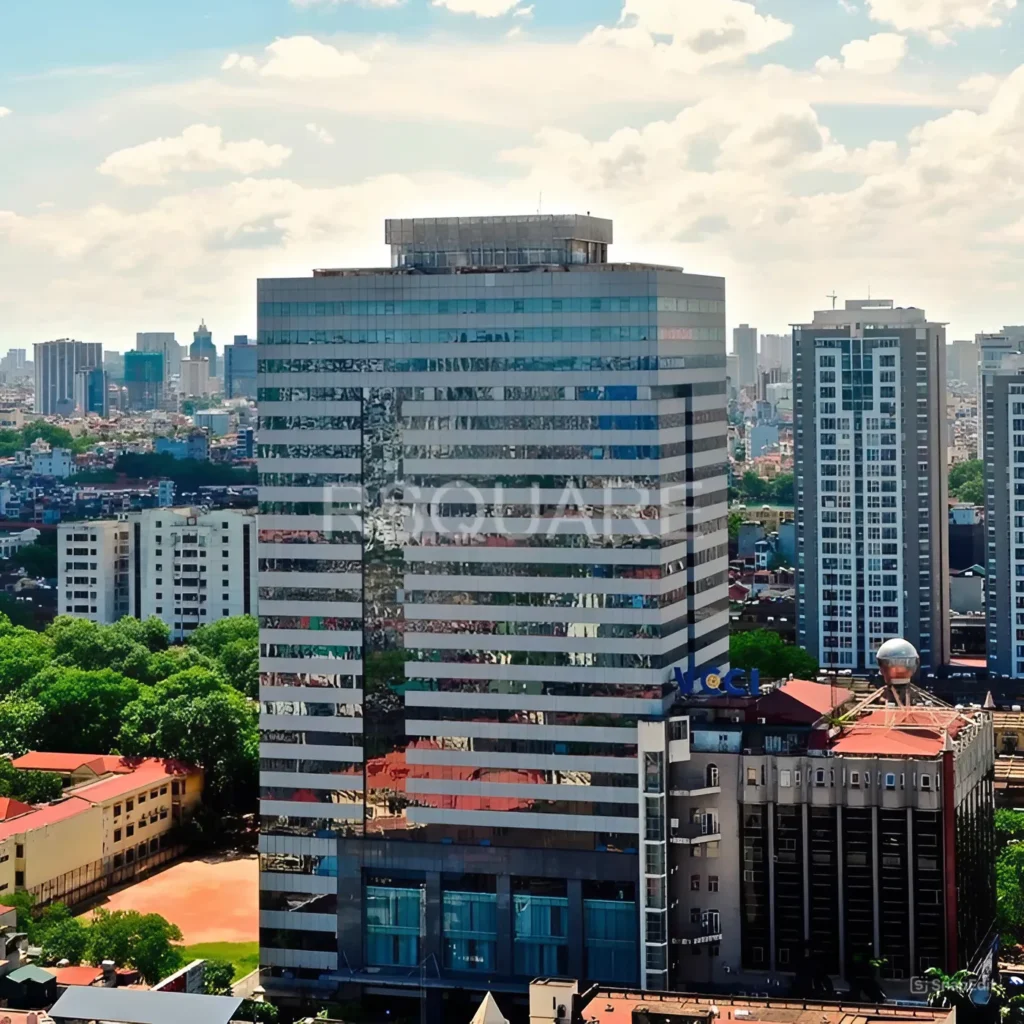
Budgeting for a new office is one of the most critical financial decisions for a business. Office rents in Hanoi are not just a fixed number; they represent a complex combination of costs influenced by location, building class, and a host of ancillary fees. Budgeting mistakes can lead to annual deficits of hundreds of millions of VND.
This article is a detailed, data-driven report designed to help managers, CEOs, and procurement departments gain a clear view of the Hanoi office leasing market in 2026. RSQUARE Vietnam will analyze prices by segment, break down hidden costs, and provide practical negotiation recommendations so you can make the most informed decisions.
1. Executive Summary
For busy managers, here are the key highlights of the Hanoi office leasing market in 2026:
Price Highlights by Class (A/B/C) & 3 Key Areas
The market is distinctly segmented into 3 main areas with characteristic price ranges:
-
Central Business District (CBD – Hoan Kiem, Ba Dinh): Highest Class A rents, $40 – $55/sqm. Class B hovers around $25 – $32/sqm.
-
Fringe CBD (Cau Giay, Dong Da, Nam Tu Liem): Abundant supply, competitive pricing. Class A (West) is $28 – $35/sqm. Class B, the most active segment, is $18 – $28/sqm.
-
Cost-Optimized Areas (Thanh Xuan, Long Bien, Ha Dong): Affordable Class C and Class B, $10 – $17/sqm.
3 Insights Significantly Impacting Your 2026 Leasing Budget
-
The “Flight-to-Quality” continues: Businesses are willing to pay a premium for high-quality buildings (Class A, B+) with green certifications (LEED, EDGE) and professional management to attract top talent. However, they are prioritizing “quality” in fringe CBD areas (Cau Giay, Nam Tu Liem) rather than the CBD to balance costs.
-
Operational costs (CAM) are heavily scrutinized: Net rent may not increase sharply, but fees such as Common Area Maintenance (CAM), after-hours air conditioning, and parking are being fiercely negotiated. These are the primary factors that dictate the actual total cost.
-
Flexibility is king: The hybrid office model is driving businesses to prioritize flexible terms for expansion/contraction and shorter lease durations. Escalation clauses are also a focal point in negotiations.
2. Methodology & Data Scope
This report is compiled and analyzed based on RSQUARE Vietnam’s database, cross-referenced with market reports from CBRE, Savills, and JLL in Hanoi.
Spatial Scope and Building Types Included
-
Space: Data focuses on 5 key office districts: Hoan Kiem, Ba Dinh, Cau Giay, Nam Tu Liem, and Dong Da. It extends to cost-optimized areas like Thanh Xuan and Long Bien.
-
Building types: We exclusively analyze professional Class A, B, and C office buildings. This report does not include rents for shophouses, street-front houses, or co-working spaces.
How to Read the Data: Rent, CAM, VAT, and After-hours
To budget accurately, you must understand these 4 cost components:
-
Net Rent: This is the listed price, typically quoted in USD/sqm/month. This is NOT the total cost.
-
Service Charge (CAM): Fees for operational management, security, common area cleaning, etc. Typically ranges from $3 – $8/sqm/month (Class A can be higher).
-
VAT: A 10% VAT is applied to the total of (Net Rent + CAM Fee).
-
Overtime (OT) Costs: Costs for using electricity and air conditioning outside standard working hours, usually calculated by the hour or by the system. This can be very high.
Formula for Calculating Total Monthly Cost (Excluding OT):
Total Cost = [(Net Rent + CAM Fee) x 1.10] x Net Area
3. Overall Picture of the Hanoi Market in 2026
Supply – Demand & Vacancy Rates by Area
-
Supply: New supply in 2026 primarily comes from the Western area (Nam Tu Liem, Cau Giay) with modern, large-scale Class A and B+ buildings. The CBD (Hoan Kiem) has virtually no new supply, maintaining its scarcity.
-
Demand: Primary demand stems from the IT/Tech, Finance – Banking, and Manufacturing sectors. Foreign Direct Investment (FDI) enterprises continue to be the main driver for the Class A segment.
-
Vacancy Rate: The CBD has a very low vacancy rate (under 10%), keeping rents high. The Western area has a higher vacancy rate (around 15-20%) due to continuous new supply entering the market. This presents a golden opportunity for tenants to negotiate favorable terms.
Shift Trend: CBD to Fringe CBD & Hybrid Offices
We are observing a clear migration of medium and large enterprises from the CBD (Hoan Kiem) to fringe areas like Ba Dinh, Cau Giay, and Nam Tu Liem.
-
Reason: They are willing to trade a central “address” for newer buildings (e.g., Capital Place, Keangnam Landmark 72, Indochina Plaza Hanoi), large column-free floor plates, better infrastructure, and more competitive rents.
-
The hybrid working model also prompts businesses to optimize their space. They require fewer dedicated desks but demand more collaborative spaces, high-tech meeting rooms, and shared amenities.
4. Price Table by Building Class (A/B/C)
Building classification directly dictates rental prices and your brand image.
| Class | Popular Areas | Net Rent (USD/sqm/mo) | CAM Fee (USD/sqm/mo) | Key Characteristics |
| Class A | Hoan Kiem, Ba Dinh, Nam Tu Liem | $28 – $55 | $6 – $10 | Prime locations, international standards (LEED/EDGE), professional management, grand lobbies, high-speed elevators. |
| Class B | Cau Giay, Dong Da, Thanh Xuan | $18 – $28 | $4 – $6 | Located on major roads, good construction quality, modern equipment, perfectly balances cost and image. |
| Class C | Inner-city districts | $10 – $17 | $2 – $4 | Small scale, located in alleys/side streets, basic equipment. Optimal for tight budgets. |
Class A: The Pinnacle of Branding
-
Class A rent in the CBD (Lotte Center Hanoi, Pacific Place): $40 – $55/sqm.
-
Class A rent in the West (Capital Place, Keangnam Landmark 72): $28 – $35/sqm.
-
Strengths: Affirms market position, premium address, high-end amenities, easily attracts senior personnel and international partners.
-
Considerations: Very high total cost (rent + CAM + OT); heavy traffic congestion.
Class B: Balancing Cost & Image
This is the “sweet spot” and the most sought-after segment. Buildings like ROX Tower Hanoi, PVI Tower, or the Duy Tan office cluster offer a professional working environment at a reasonable price.
-
Cau Giay District office rent (Class B): $18 – $26/sqm.
-
Strengths: Perfect balance between location, quality, and cost. Abundant supply, good infrastructure.
-
Considerations: Some older buildings may require interior renovation; competition for parking spaces.
Class C: Budget Optimization, Operational Considerations
Suitable for startups, back-offices, or businesses that do not need to host clients frequently.
-
Strengths: Lowest rent in the market.
-
Considerations: Carefully check the fire protection system, operational quality, after-hours fees (which are often very high), and parking capacity (often insufficient).
5. Price Table by Area (Map View)
Location determines 50% of the cost and convenience for a business.
CBD Area (Hoan Kiem – Ba Dinh)
-
Characteristics: The administrative and economic “heart”. Headquarters for financial corporations, law firms, and embassies.
-
Hoan Kiem District rent (Class A): $40 – $55/sqm.
-
Ba Dinh District rent (Class A): $35 – $45/sqm.
-
Pros: Top-tier status, brand image.
-
Challenges: Highest prices, scarcity of large floor spaces, traffic jams.
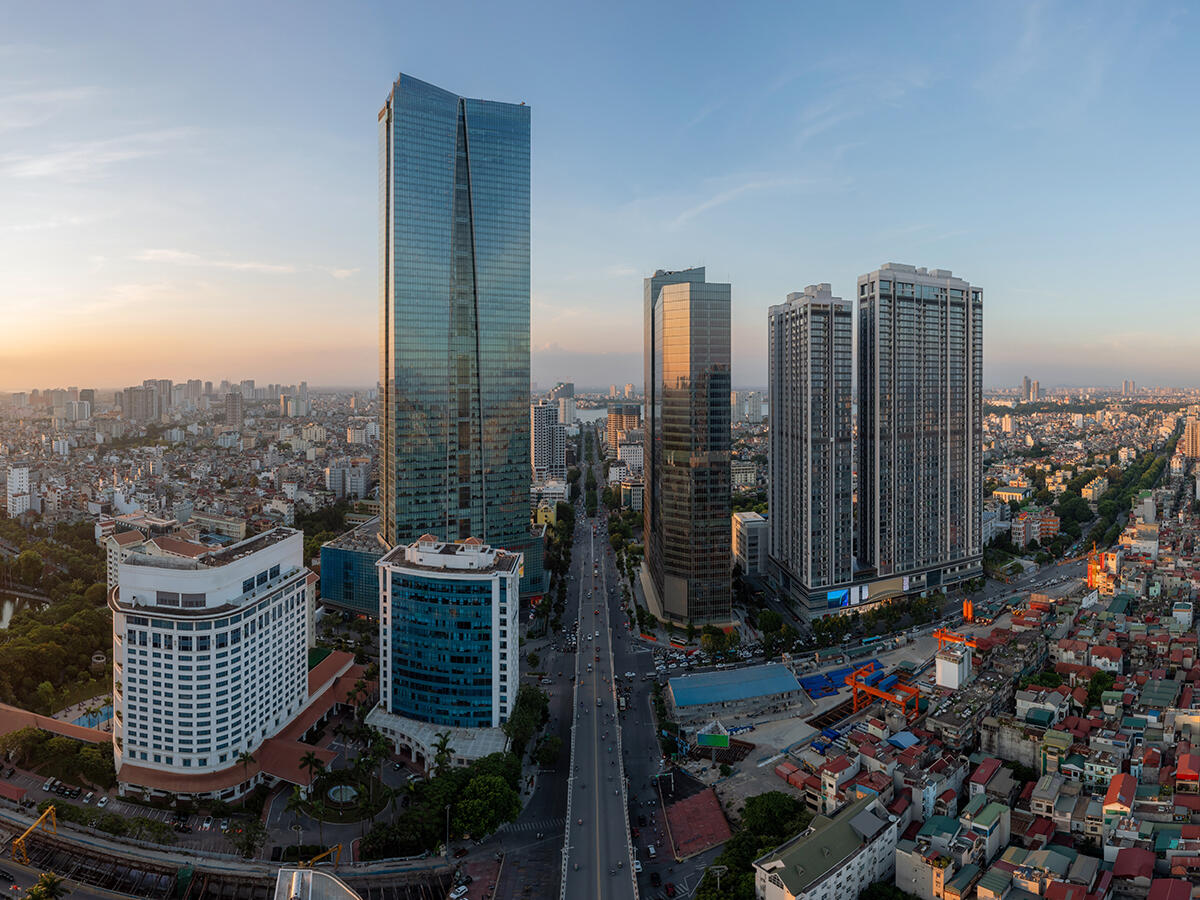
Tech & Service Belt (Cau Giay – Nam Tu Liem)
-
Characteristics: The “Silicon Valley of Hanoi”, especially the Duy Tan and Pham Hung clusters. A new hub with modern infrastructure.
-
Class A rent (Keangnam Landmark 72, Capital Place): $28 – $35/sqm.
-
Class B rent (TTC Tower, PVI Tower): $18 – $26/sqm.
-
Pros: Abundant supply, new buildings, large floor plates, competitive prices, easy to recruit IT personnel.
-
Challenges: High building density, traffic is starting to become overloaded.
Cost-Optimized Area (Thanh Xuan – Long Bien – Ha Dong)
-
Characteristics: Major roads like Nguyen Trai (Thanh Xuan) or new urban areas (Long Bien).
-
Class B/C rent: $12 – $20/sqm.
-
Pros: Best rental prices, connection to densely populated residential areas.
-
Challenges: Far from the core center; brand image may not be as prestigious.
6. “Hidden” Costs & Variables Affecting the Budget
Net rent is just the tip of the iceberg. Your budget will be heavily influenced by the following:
CAM / Service Charge: What is and isn’t included?
This is the most crucial question when receiving a quote.
-
Usually Includes: 24/7 security, common area cleaning, lobby reception, shared electricity/water, system maintenance (elevators, fire protection).
-
Usually EXCLUDES (or only during office hours): Air conditioning electricity within the leased area. This is often the largest hidden expense.
-
Ask Clearly: What do the service charges include? Do they cover air conditioning during working hours (e.g., 8:00 AM – 6:00 PM, Mon-Fri)?
After-Hours AC, Parking, and Signage
-
Overtime Air Conditioning (OT AC): Very expensive. Class A buildings charge by the system (VND/hour), while Class B/C may charge by area or a separate meter. Budget for this if your company frequently works OT.
-
Parking: Central buildings always lack car parking spaces. You will receive a “quota” (fixed number of vehicles) and must pay fees for additional vehicles (if space is available). Cost: 1,500,000 – 3,000,000 VND/car/month.
-
Signage: Typically, one sign on the common directory board in the lobby is free. Other placements will incur fees.
Fit-out & Make-good, Escalation, and Deposits
-
Fit-out Costs: Most buildings hand over a “bare” shell. Costs to complete the interior (floors, ceilings, partitions, electricity, network) range from $100 – $300/sqm.
-
Make-good Costs (Reinstatement): A mandatory contract clause. Upon lease expiration, you must restore the premises to their original condition. This is a significant, often overlooked cost.
-
Escalation: Rents increase periodically, usually by 5-10% every 2 or 3 years.
-
Deposit: Typically equals 3 months’ rent (Net Rent + CAM).
7. Case Snapshots
SME Moves from Class C to B: Increased Costs but Boosted Productivity
-
Case: An IT company (50 employees) moved from Class C in Thanh Xuan to Class B in Cau Giay.
-
Result: Total rental costs increased by 25% (around 60 million VND/month). In return, recruitment speed increased by 40% due to the convenient location, employees were more satisfied, and the professional image helped close deals with major clients more easily.
Startup Chooses Non-CBD: Saves 30% on Total Costs Through CAM Negotiation
-
Case: A Fintech startup (30 employees) debated between Class B in Dong Da and Class B+ in Nam Tu Liem.
-
Result: Chose Nam Tu Liem, saving 30% on total rental costs. RSQUARE Vietnam successfully negotiated a 2-month free fit-out period and a 50% reduction in after-hours AC fees for the first 6 months.
Foreign Enterprise: Chooses Class A to Ensure Compliance & Recruitment
-
Case: A Japanese manufacturing corporation opened a representative office in Hanoi.
-
Result: Prioritized Class A (Lotte Center Hanoi) despite the premium price. Reason: Guaranteed 100% fire safety standards and clear building legality (mandatory for licensing), while building a premium brand image to attract key executives.
8. Negotiation Recommendations & 6-Step Leasing Roadmap
Determine the “Total Cost of Occupancy”
Never compare two buildings based solely on the Net Rent. Request detailed quotes and create a comparison spreadsheet for the “Total Cost of Occupancy”, including: (Net Rent + CAM + VAT + Estimated OT AC + Parking Fees).
Negotiate: Free-fit-out Period, Reduced Make-good, Tiered Escalation
Everything is negotiable. Here are the 3 best points to help you save costs:
-
Free-fit-out period: Negotiate for 30-60 days of free rent (paying only service charges) to give you time to complete the interior.
-
Reduced Make-good: Negotiate upfront to retain basic items (flooring, glass partitions) if they are still in good condition upon exit, instead of having to demolish everything.
-
Tiered Escalation: Try to negotiate a fixed escalation rate of 5% every 2 years, rather than floating with the market or a 10% annual increase.
Professional 6-Step Office Leasing Roadmap
-
Shortlist: Define your needs (area, budget, location) and list 5-7 potential buildings.
-
Tour: Conduct site visits to experience the space, lobby, and operational quality.
-
RFP (Request for Proposal): Send official requests for quotes to your top 3-5 choices.
-
BAFO (Best and Final Offer): Compare quotes and negotiate commercial terms (price, fees, free-rent periods).
-
Sign Contract: Carefully review legal terms, especially clauses on deposits, payments, and reinstatement (make-good).
-
Fit-out & Relocation: Plan your construction and office move.
9. Conclusion & Actionable Recommendations
The Hanoi office leasing market in 2026 is diverse, offering opportunities for both prestige-seeking businesses (Class A CBD) and cost-optimizing businesses (Class B/C fringe CBD).
The keys to success are:
-
Choose the area based on your objectives: Hoan Kiem (Brand), Cau Giay (Personnel/Balance), Nam Tu Liem (Cost/Large floor plates).
-
Understand total costs: Don’t be “fooled” by the Net price alone.
-
Negotiate smartly: Leverage market advantages (like abundant supply in the West) to secure favorable terms.
The best way to save time and money is to work with a professional consulting firm. They have real transaction data, understand the landlords, and know exactly where to push in negotiations.
Ready to find the perfect space?
The market changes daily. Don’t rely on outdated quotes. Contact RSQUARE Vietnam today to book a free tour of 3 suitable buildings within 24 hours.
Frequently Asked Questions (FAQ)
1. Does the listed price per sqm include service charges (CAM) and VAT?
Usually NOT. The listed price you see (e.g., $20/sqm) is the Net rent. You need to add the Service Charge (usually $3 – $8/sqm), and then add a 10% VAT on the total of both to calculate your fixed monthly cost.
2. Why do tenants in the same building pay different actual prices?
Rent depends on several factors:
-
Signing time: Signing during a market downturn yields better prices.
-
Leased area: Leasing a larger area (a whole floor) usually secures a better price per sqm.
-
Lease term: A 5-year contract usually gets a better rate than a 3-year contract.
-
Negotiation skills: A professional representative can help you negotiate better rates and terms based on live market data.
3. What is the difference between Net vs. Gross area, and how does it affect the budget?
-
Net Area: The actual usable space inside your office. This is the standard calculation method in Vietnam.
-
Gross Area: The Net Area PLUS a portion of shared spaces (corridors, elevator lobbies).
-
Always clarify whether the contract uses Net or Gross. If you compare 100sqm Net vs. 100sqm Gross, the actual amount paid for Gross will be higher because you are paying for the corridor. The Hanoi market primarily uses Net Area.
4. How can I negotiate make-good and free-fit-out periods to my advantage?
-
Free-fit-out: Ask for a rent-free period (paying only the CAM fee) that corresponds to your construction time, usually 30-60 days. If leasing a large space, you can negotiate for a longer period.
-
Make-good (Reinstatement): Negotiate this before signing. Ask the landlord to exempt basic items (like raised flooring, gypsum ceilings, or AC systems) if they remain in good condition and can be reused by the next tenant, saving you heavy demolition costs.